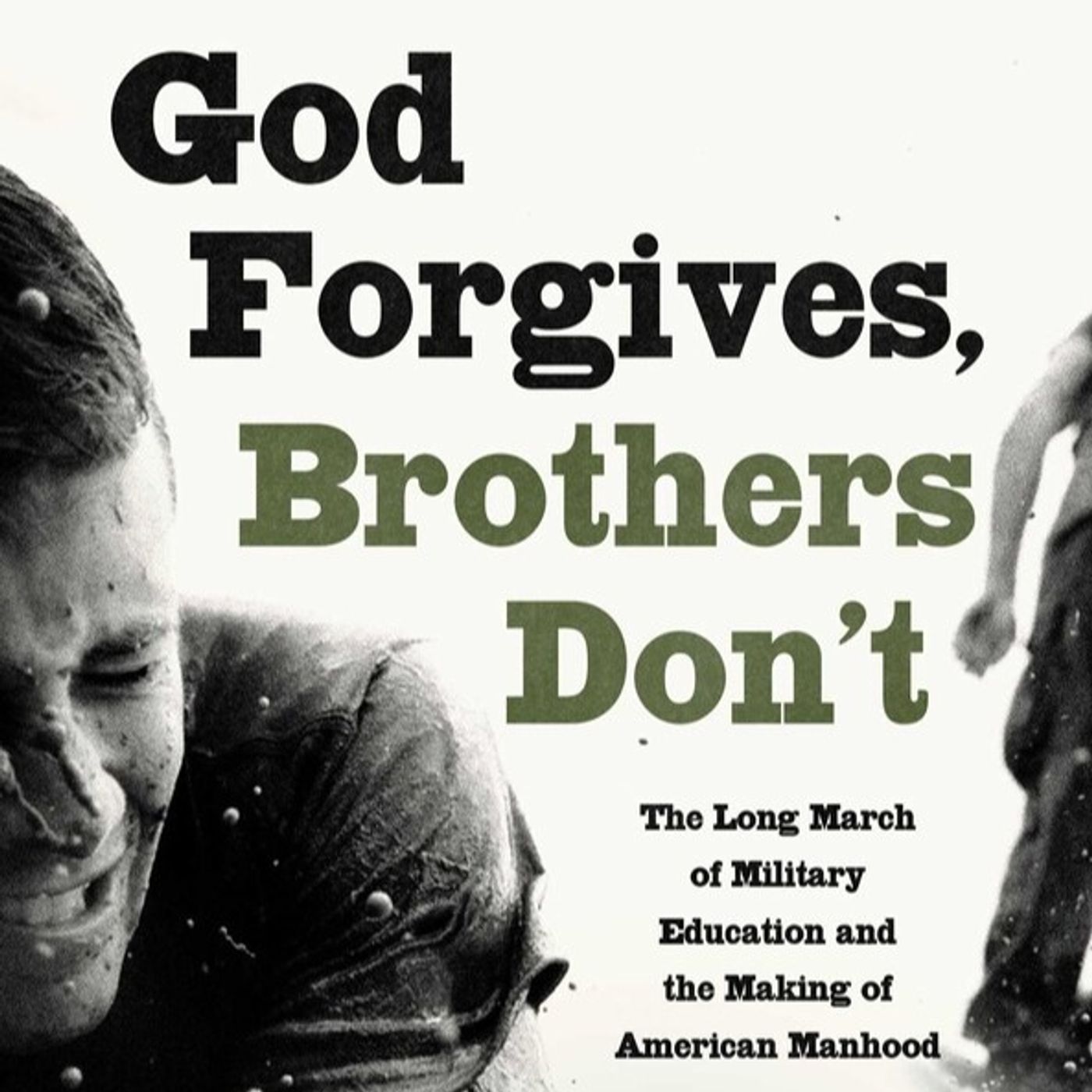
Military Education and American Manhood (w/ Jasper Craven)
Matt and Sam talk to Jasper Craven about his new book, God Forgives, Brothers Don't: The Long March of Military Education and the Making of American Manhood.
Duration
1h 32m
Broadcast on
26 May 2026
Audio Format
other
This episode appears to contain dynamically inserted ads. Transcript timestamps may be approximate.
In this episode we have a conversation with reporter Jasper Craven about his new book, God Forgives, Brothers Don't: The Long March of Military Education and the Making of American Manhood, which is a made-for-KYE feat of research that offers a fascinating way into perennial themes of this show: masculinity, U.S. empire, the relationship between violence and civilization, and the surprising camp of conservatism. Along the way we discuss Donald Trump, the mob, Peter Brian Hegseth, Graham Platner, and more.
All right welcome listeners to episode 136 of Know Your Enemy I'm Matt Sippman your podcast co-host and I'm here as always with my great friend Sam Adler Bell hello Sam hi Matt man I'm very excited to share this episode but I do think we want to start by thanking everyone who came to our live show earlier this month it was a packed house almost 800 of you showed up enthusiastically. I won't lie I felt a lot of love that night from Know Your Enemy listeners yeah so we want to thank all of you who came out and also all our friends at Descent especially Rosalie Ryan who corralled most of this Patrick Iber co-editor of Descent Nick Murphy everyone on the Descent team because you know when you work for a little magazine everyone pitches in when you're having a big event thank you thank you to everyone at Descent and thank you for all the listeners who came out it was great. I thanks to Mike Duncan well everyone loves Mike I don't want to you know offer me more praise but yes Mike was awesome I know he doesn't need it he does not need it but totally it was great and I think for those of you listening who were not able to make it to the Upper West side on a Thursday night we're going to do more of these I had fun I think we kind of worked out some of the kinks even and we'll do more live events and maybe in different parts of the country too so if you're desperate for Know Your Enemy and you've got you know say a couple hundred friends you can get to come. We'll be there we'll figure it out but I had a great time well this episode is coming out bright and early Tuesday May 26 that is the day after Memorial Day and I kind of feel like I swear I didn't have this in mind when we scheduled it but we ended up kind of celebrating Memorial Day in a very Know Your Enemy fashion we sure did we had on Jasper Craven who's the author of a really fantastic new book we praise it so much during the conversation. It's titled "God Forgives, Brothers Don't, the Long March of Military Education and the Making of American Manhood." It's just out hot off the presses and as the title alone indicates it takes up a lot of the themes we've been preoccupied with on Know Your Enemy. Yeah masculinity American Empire I mean the particular sort of thing that Jasper's reporting on is the military education system the military academies for middle and high school students as well as the academies that educate officers for the Air Force and the Army and Coast Guard and the Navy. It's a fascinating book it's pretty harrowing there's some bleak stuff in here it won't be giving too much away to say that these institutions are fairly corrupt and abusive and are generating up a pretty unappealing and damaging version of masculinity or are aiming to produce it and Jasper has written a book about that and it's fantastic and he was a great conversationalist as well which we're always grateful for. I'll say a few other things about Jasper which is that he is a freelance journalist who covers the military and veterans his work which you should read has appeared in the New York Times the Atlantic the New Republic the baffler we talked on the podcast in the past about his long piece about Peter Brian Heg Seth and we I had a great time talking to him about this yes should we get some housekeeping items yes well we already mentioned our wonderful partners at Descent one thing they do as the podcast sponsor is if you subscribe to Know Your Enemy for $10 a month or more at patreon.com/ Know Your Enemy not only do you get access to all of our bonus episodes and the Know Your Enemy Discord but you get a free digital subscription to Descent and of course for $5 a month. You get access to all of our bonus episodes there's been some good ones lately I've had a lot of fun with the bonus you should really sign up we're cooking I feel like lately in the episodes for subscribers we kind of let loose a little bit yeah well as always we want to thank our intrepid producer Jesse Breneman who did a great job with this episode he does with all of them I want to make a note here that the reduced audio fidelity of this intro on my end is not Jesse's fault it's because I am on vacation and did not bring the right chord for my microphone that is my fault not Jesse's he's the greatest and also we want to thank Will Epstein who does the music for the podcast indeed shall we get to it yes here's our episode with Jasper Craven about his fantastic new book God Forgives Brother Stone the long march of military education in the making of American manhood enjoy happy Memorial Day all right let's do it welcome to Know Your Enemy Jasper Craven hello I like how cheer your disposition is despite the sort of topics you write about in your reporting and in this book well I think men in general take themselves too seriously part of my rollout with the book has been the sort of like emasculate all of us collectively I think that's good that's a good idea and it makes sense for this book yes we're here to talk about your brand new book God Forgives Brothers Stone the long march of military education in the making of American manhood it's out just this week May 19th it's still hot off the presses so first of all congratulations Jasper thanks a lot Matt I said all these nice things before we started recording but as Jasper knows I love this book I thought it was really excellent it's a ripping read there's a lot of information here there's a whole historical trajectory as well as lots of contemporaneous reporting you did a lot you talked to a lot of people for this book too which added a lot to the kind of texture and intimacy of it and you know just to be clear and there's this long historical narrative in in here and it all works and I think our listeners will love this book I agree as well and I want to say too one of the things I loved about the book it's really kind of an incredible narrative the way everything builds and coheres together I just really thought it was exceptionally well organized we love a well organized book well before we get into some of the substance of the book I mean there's so much here Donald Trump believed or not listeners he was a cadet at New York Military Academy some of the mob stories I was fascinated by and I'm kind of interested in you know who goes to some of these military academies not just the men they produce but the men and women now that they attract but before we get into all that how did you land upon this story how did you fall in love with military education yes well I mean I've always been curious about military culture by dent of the fact that I was so sheltered from it as a child my father Jay Craven dropped out of Boston University in 1970 to become enmeshed in the anti-war movement he had Howard's in as a professor there and lived sort of these romantic few years in his early 20s where he was smoking pot with John Lennon and hanging out with members of the Chicago 7 he briefly dated Jane Fonda your father briefly dated Jane Fonda yeah he's still kind of hung up on that brief affair fair enough he bought like a 10 foot tall poster of Barbara L like three years ago and hung it up oh my god I'm not sure you want to say that on the podcast it's okay I dedicate the book to him but that's interesting so it's kind of like because your upbringing was in this piece Nick environment you became interested in military culture yeah I think so and I also you know I mean I was frustrated as a boy that I couldn't watch war movies that I didn't have video games I used to call our television chaplain TV because I would just I would just be fed like silent slapstick movies like you heard the story about Trump his aides creating that channel just for him of like gorillas fighting yeah it's like his television in like his bedroom in the White House or whatever they you know Jerry rigged this stream of just gorillas fighting to entertain Trump and I kind of like imagining that's what your parents did I like the idea that Trump's is like gorillas fighting and then like a number from cats and that I mean that's sort of fantasy actually sort of perfectly illustrates the dynamics that exist within military environments much of the time like this sort of like base brutality that in this strange way creates a permission structure to be kind of like a feminine or loving or vulnerable in a way that's kind of not permitted in civilian society well that's interesting it's like Trump really is a kind of natural product of of the military academy he attended in the sense that he is a person totally obsessed with domination and also loves a big strong man who he kind of praises in home erotic terms absolutely did you see his comments just today or yesterday at the Coast Guard Academy graduation I did yeah incredible congratulations to Thomas Rhodes Thomas get up here please want to see I want to check him out oh he's we're not gonna fight with him I'm not fighting him I'm not this is not UFC please understand that Thomas look at this guy look at the muscles on this guy he did the same thing at West Point last year he always just invites like the strongest boy on stage to marvel at but Jasper it's it's such an interesting idea that like your form of rebellion maybe initially was to become really interested in military culture but then ultimately it does make sense that this book is dedicated to your father or activist because the book is ultimately a searing damning indictment of that culture yeah I mean I've come to grow into a masculinity that you know is not perfect but I think is is healthy allows for vulnerability love humor imagination I was very grateful to my parents ultimately for the environment that they built around me and so when I started covering the military and veterans issues I sort of had this history that was taught to me at the dinner table my father I was deeply skeptical of the Pentagon and you know initially I covered the VA not DoD so I kind of saw initially the sort of damage that occurs within the Pentagon many other people on this beat start by you know embedding in a war zone and I think in that work can get pretty easily sort of like caught up in the romance of military service and sort of feel like they want to impress the brass in front of them and all of the pomp in the circumstance you know the military is very good at sort of like establishing loyalty among the press corps and they benefit from their sort of universal public acclaim but I conversely saw a lot of damage and I mean there's sort of the the actual conflict and what that does to a body and to a mind but then there's sort of this separate ideology a training ideology that you know primes someone to enter that space and I hadn't thought a whole lot about that until about five years ago I got a tip that Valley Forge Military Academy which is one of the oldest military schools in the country just outside of Philly famously is where JD Salinger went and inspired the catcher in the rye but also reared some pretty legendary brass like HR McMaster and Stormin Norman Schwarzkopf I got a tip that this place was sort of violently seized by hazing administrative corruption and spent basically a month sort of getting up to speed on that culture and from there sort of was illuminated a broader network military education as I define it which includes service academies like West Point and Annapolis and the Air Force Academy plus the 5200 ROTC and JROTC units in American high schools and colleges plus the Boy Scouts the young Marines the Civil Air Patrol which are sort of these like youth groups that have a more subtle military bent but have like explicit ties and funding channels to the military and then sort of troubled teen style military schools Valley Forge is one of those but it also includes like an officer commissioning channel as most of them do and it was here where I sort of started to understand the pedagogy of these places this highly honed curriculum that the military applies even in you know a bridge versions with you know basic training and how that can really exert serious damage in and of itself I mean many cadets I spoke to suffered from PTSD having never you know been on a battlefield PTSD from like high school because of the hazing the nature of the discipline there the kind of culture at the school exactly Jasper one quick question for you your rebellion never went so far as you never joined the military you never attended a military academy I did not my father oddly enough before he sort of found himself in the antiwar movement flirted with actually going to Valley Forge he grew up just a few miles away in Potstown Pennsylvania and you know like a lot of young boys was looking for a way out of his family there was a lot of alcoholism and chaos and he very much so was looking for a new identity in a new community and thankfully he sort of I mean he went to a Quaker school which was huge and then landed at BU at this sort of brief moment where like you know the hippie subculture was added Zenith but he very much could have ended up at Valley Forge and sort of adopted a military identity because he was in a place where he was searching for something new
Transcription truncated.
Matt and Sam talk to Jasper Craven about his new book, God Forgives, Brothers Don't: The Long March of Military Education and the Making of American Manhood.