ArchiveFM

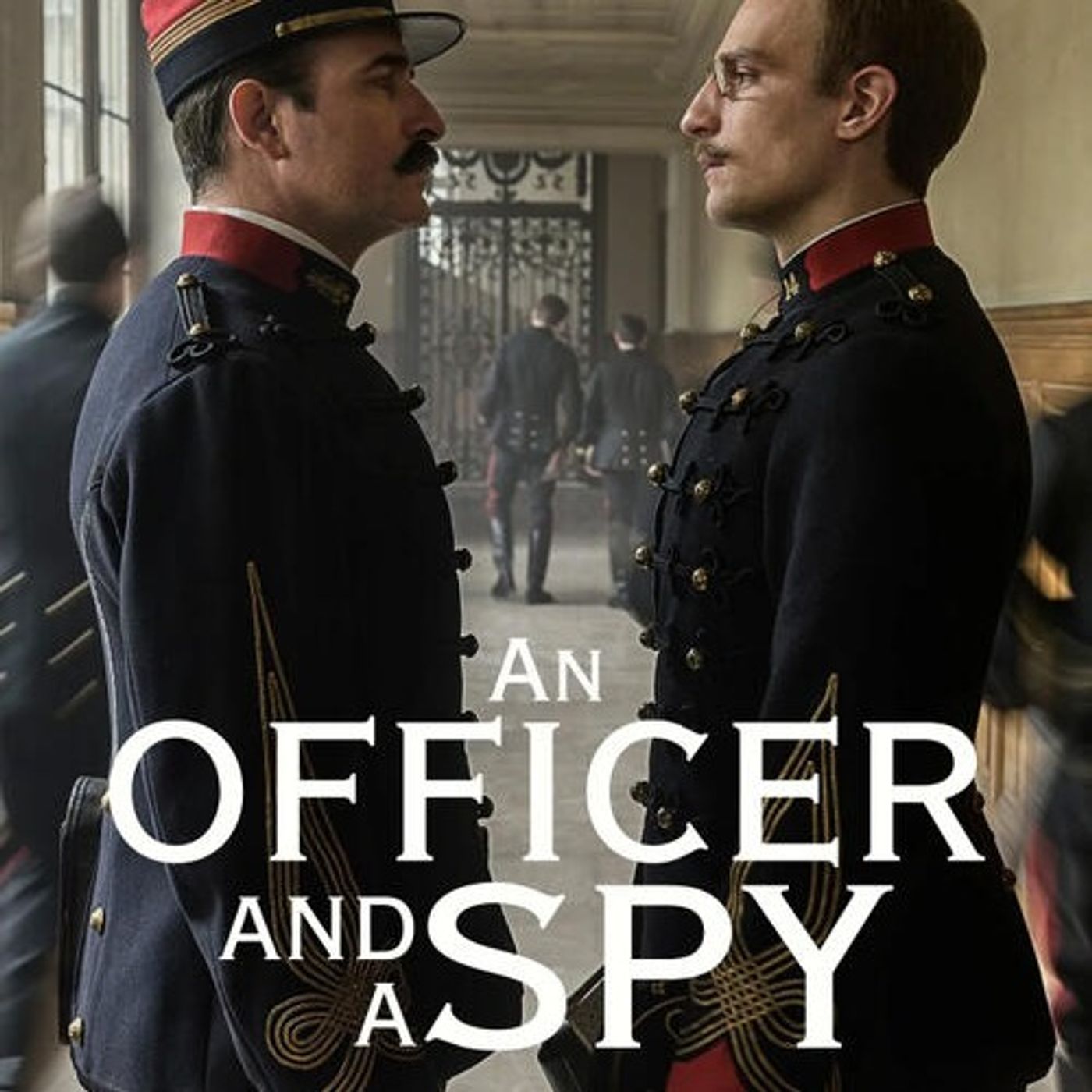
Matt and Sam discuss Roman Polanski's 2019 film about the Dreyfus affair, An Officer and a Spy, with John Ganz.
Duration
3m
Broadcast on
05 Sep 2025
Audio Format
other

Listen to the rest of this premium episode by subscribing at patreon.com/knowyourenemy.

Roman Polanski's 2019 film about the Dreyfus affair, An Officer and a Spy, only recently made it's U.S. "premier," running for a few weeks in August at Film Forum in New York City. When it originally was released, it couldn't find an American distributor (and likewise was shunned by streaming services), a consequence of the MeToo moment meeting Polanski's criminal past—in 1978 he fled to Europe after being indicted for the rape of a 13 year-old girl in the United States. Polanski's past is particularly relevant for his film about the falsely accused Jewish officer in the French military, to whom, in publicity materials circulated when An Officer and a Spy came out in Europe in 2019, the director explicitly compared himself.

Of course, we couldn't possibly have had on any other guest than John Ganz to help us understand the politics of the Dreyfus affair, both in 1895 and 2025, and what to make of Polanski's cinematic rendering of it. Topics include: Polanski's life and crimes; Hannah Arendt's treatment of the Dreyfus affair in The Origins of Totalitarianism; anti-semitism in 19th and early 20th century France; the way Polanski largely ignores the political convulsions caused by the Dreyfus affair, instead handling it more as a crime procedural, and why he might have done so; and more.

Sources:

John Ganz, "Reading, Watching," Unpopular Front, Aug 10, 2025

— "Gramscians vs Sorelians," Unpopular Front, Jan 23, 2021

— "The Third Republic and Today," Unpopular Front, Jan 27, 2021

— "The Century of Rubbish," Unpopular Front, Feb 2, 2021

— "From Republic to Reaction," Unpopular Front, Feb 4, 2021

David Bell, "An Officer and a Spy," H-France, March 2021

Hannah Arendt, The Origins of Totalitarianism (1951)

I think that this movie has a liberal sensibility. And I don't necessarily mean that as a criticism, but it focuses on the procedures and the honesty of people going through their procedures, right? Removing politics from proceduralism. People trying to do their best and be honest and you see the same thing in Conclave. Let's do the procedure, right? He's like a Jim Comey hero. A hero who is inside of the thing recognizes something criminal or not according to the rules going on and then diligently tries to undo it. Right, right. And the thing about it is that in actual point of fact, there was a whole social, almost revolution that happens during the Dreyfus Affair. And what's fascinating to me about it was the political alliance that was formed between-- let's just, for the sake of simplicity, call them liberals-- and the socialists. The socialists began the affair by saying, look, this is between the bourgeoisie. Then many socialists realized that French Republic, the freedoms that had been secured for workers, were under threat by the kind of right-wing cabal that was forming around, trying to frame up Dreyfus. It was this unholy alliance of the army and then these extremely reactionary sections of the church and the bureaucracy and-- And the literal inventors of anti-Semitism in its political form. Yeah, exactly. And Jean-Gérez, the main thinker behind this, he had to kind of throw the weight of the socialists and the workers behind Dreyfus' cause. And I just think that that's fascinating from a political standpoint, where as many of the people who went to form the popular front and France got their beginnings as Dreyfusards. The other thing that I thought was so resonant and brings us into the 20th century is these are the first people, the people who became anti-Dreyfusards, and kind of built a whole political ideology around it. These are the first people who called themselves national socialists. These were the first people who kind of came up with an ideology that was able to bridge a petty bourgeois fear of modernity and capitalism with an aristocratic and elite one.

Transcription truncated.

Matt and Sam discuss Roman Polanski's 2019 film about the Dreyfus affair, An Officer and a Spy, with John Ganz.