ArchiveFM

It’s been 25 years since 9/11. Today we talk about the 60 words that ushered in everything that came after.
Duration
1h 4m
Broadcast on
04 Sep 2026
Audio Format
other

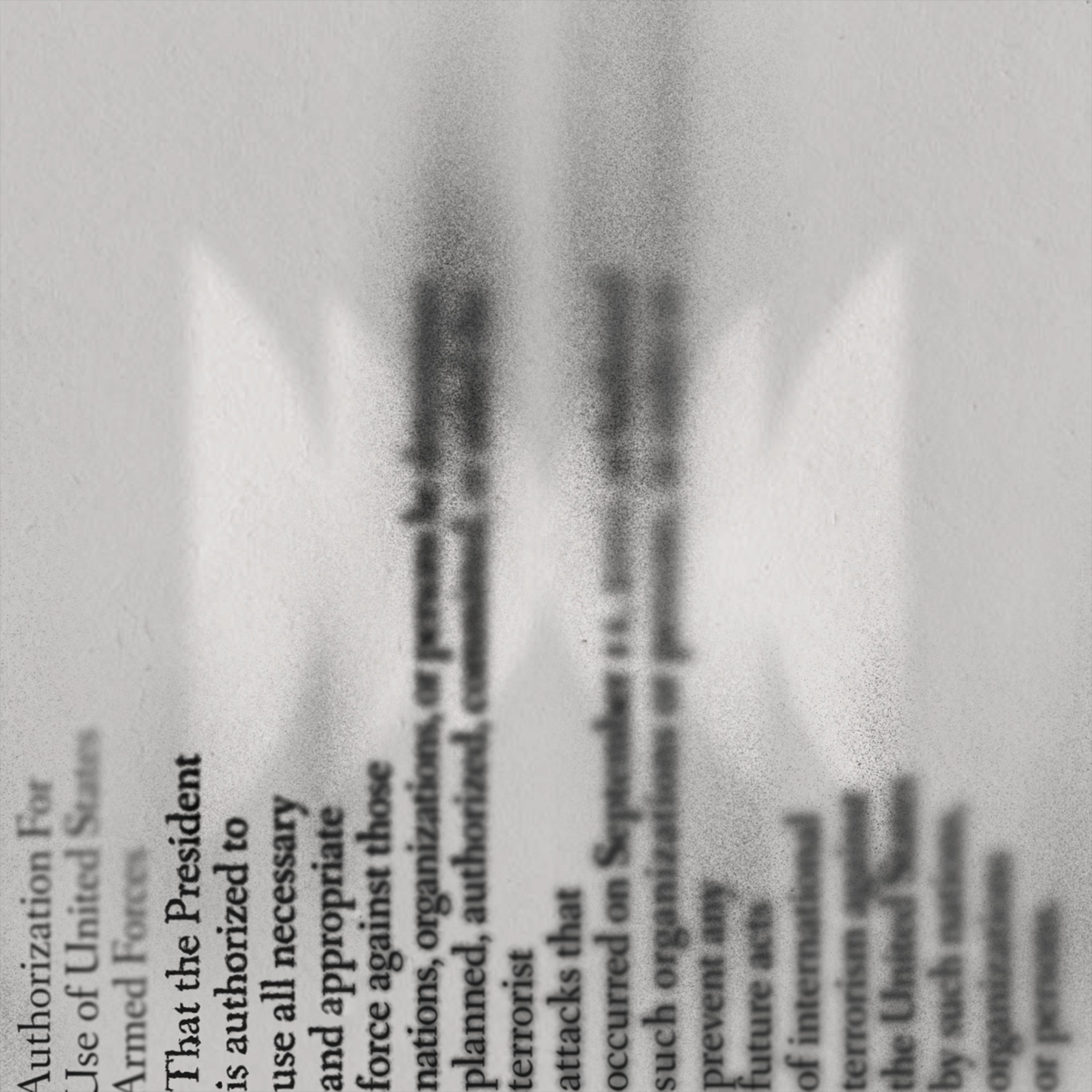
We’re coming up on the 25th anniversary of the 9/11 attacks, and it had us thinking about an episode we produced in 2014. It’s the story of one sentence, written in the hours after September 11th, 2001, that has led to the longest war in U.S. history. We examine how just 60 words of legal language have blurred the line between war and peace. 

In the hours after the attacks of Sept. 11, 2001, a lawyer sat down in front of a computer and started writing a legal justification for taking action against those responsible. The language that he drafted and that President George W. Bush signed into law—called the Authorization for Use of Military Force (AUMF)—has at its heart one single sentence, 60 words long. Over the last decade, those 60 words have become the legal foundation for the "war on terror." In this collaboration with BuzzFeed, reporter Gregory Johnsen tells us the story of how this has come to be one of the most important, confusing, troubling sentences of the last two decades. We go into the meetings that took place in the chaotic days just after 9/11, speak with Congresswoman Barbara Lee and former Congressman Ron Dellums about the vote on the AUMF. We hear from former White House and State Department lawyers John Bellinger & Harold Koh. We learn how this legal language unleashed Guantanamo, Navy Seal raids and drone strikes. And we speak with journalist Daniel Klaidman, legal expert Benjamin Wittes and Virginia Senator Tim Kaine about how these words came to be interpreted, and what they mean for the future of war and peace. 

LATERAL CUTS -
Really anything from our sister show, More Perfect

EPISODE CREDITS: 
Reported by - Kelsey Padgett
with help from - Matt Kielty
Produced by - Matt Kielty
with help from - Kelsey Padgett

Sign up for our newsletter!! It includes short essays, recommendations, and details about other ways to interact with the show. Signup (https://radiolab.org/newsletter)!

Radiolab is supported by listeners like you. Support Radiolab by becoming a member of The Lab (https://members.radiolab.org/) today.

Follow our show on Instagram, Twitter and Facebook @radiolab, and share your thoughts with us by emailing [email protected].

Leadership support for Radiolab’s science programming is provided by the Simons Foundation and the John Templeton Foundation. Foundational support for Radiolab was provided by the Alfred P. Sloan Foundation.


Hosted by Simplecast, an AdsWizz company. See pcm.adswizz.com for information about our collection and use of personal data for advertising.

Hey, this is Radielab. I'm Matt Kilti. So we are coming up on the 25th anniversary of the September 11 attacks actually a week from today. It'll be the 25th anniversary. And a while back, I co-produced a story that was about the legacy of 9/11, only it wasn't about any aspect of 9/11 that I had ever heard before. It's about one single sentence, 60 words long, written in the panicked grief-stricken days right after 9/11 that ended up defining America for decades. In the story, it's a sort of like strange side door into this legal world behind the longest war in our country's history. We have a couple of updates for you at the end, so stick around for that. But for now, we're just going to jump in. So here we go. Okay, wait, you're listening to Radiolab from WNYC. Okay, ready? Hey, I'm Chad Abumrod. I'm Robert Krollwich. And this is Radiolab. Today, we've got a story about the crazy power of words, in particular 60 words. In those sentence, it has, you could say, defined America for the last 12 years. And the place to start is a difficult one. This Justin, you were looking at, obviously, a very disturbing live shot there. September 11th, 2001, 846 AM. A plane has crashed into the World Trade Center. We don't know anything more than that. We don't know it. This is a day that anyone who is old enough to remember does remember. We can remember where we were, who we were with. So you have no idea, Radiolab. All of another one, another plane just hit. Oh my God, another plane has just hit. And of course, we could remember how we felt. Tell me what you just saw. Oh, shit. It fell down. It fell down. Oh my God. It is the worst attack ever on American soil. But. If you really want to understand the world we live in now, you've got to jump ahead one day to September 12th to a corner office in the White House where there's a lawyer sitting at a computer trying to figure out, how are we going to declare war? And one of the things that everybody realizes after sort of an initial discussion is, yes, we'd like to declare war, but we have no idea upon whom we should declare war. That is Gregory Johnson. The Michael Hastings National Security Reporting Fellow at BuzzFeed. Now the reason this lawyer, man by the name of Timothy Flanagan, the reason Flanagan is sitting at a computer in an office is because then President George Bush had to do something. He had to act and he didn't want to act alone.

Transcription truncated.

It’s been 25 years since 9/11. Today we talk about the 60 words that ushered in everything that came after.