ArchiveFM

It’s faster than a speeding bullet. It’s smarter than a polymath genius. It’s everywhere but it’s invisible. It’s artificial intelligence. But what actually is it? Today we ask this simple question and explore why it’s so damn hard to answer. Special thanks to Stephanie Yin and the New York Institute of Go for teaching us the game. Mark, Daria and Levon Hoover Brauner for helping bring NETtalk to life. And a huge thank you to Grant Sanderson for his unending patience explaining the math of neural nets to us. To learn more about how these 'thinking machines' actually think, we highly recommend his wonderful youtube channel 3Blue1Brown (https://www.youtube.com/watch?v=aircAruvnKk).EPISODE CREDITS: Reported by - Simon AdlerProduced by - Simon AdlerOriginal music from - Simon AdlerSound design contributed by - Simon AdlerFact-checking by - Anna Pujol-Mazzini Sign up for our newsletter!! It includes short essays, recommendations, and details about other ways to interact with the show. Signup (https://radiolab.org/newsletter)! Radiolab is supported by listeners like you. Support Radiolab by becoming a member of The Lab (https://members.radiolab.org/) today. Follow our show on Instagram, Twitter and Facebook @radiolab, and share your thoughts with us by emailing [email protected]. Leadership support for Radiolab’s science programming is provided by the Gordon and Betty.
Duration
1h 3m
Broadcast on
12 Dec 2025
Audio Format
other

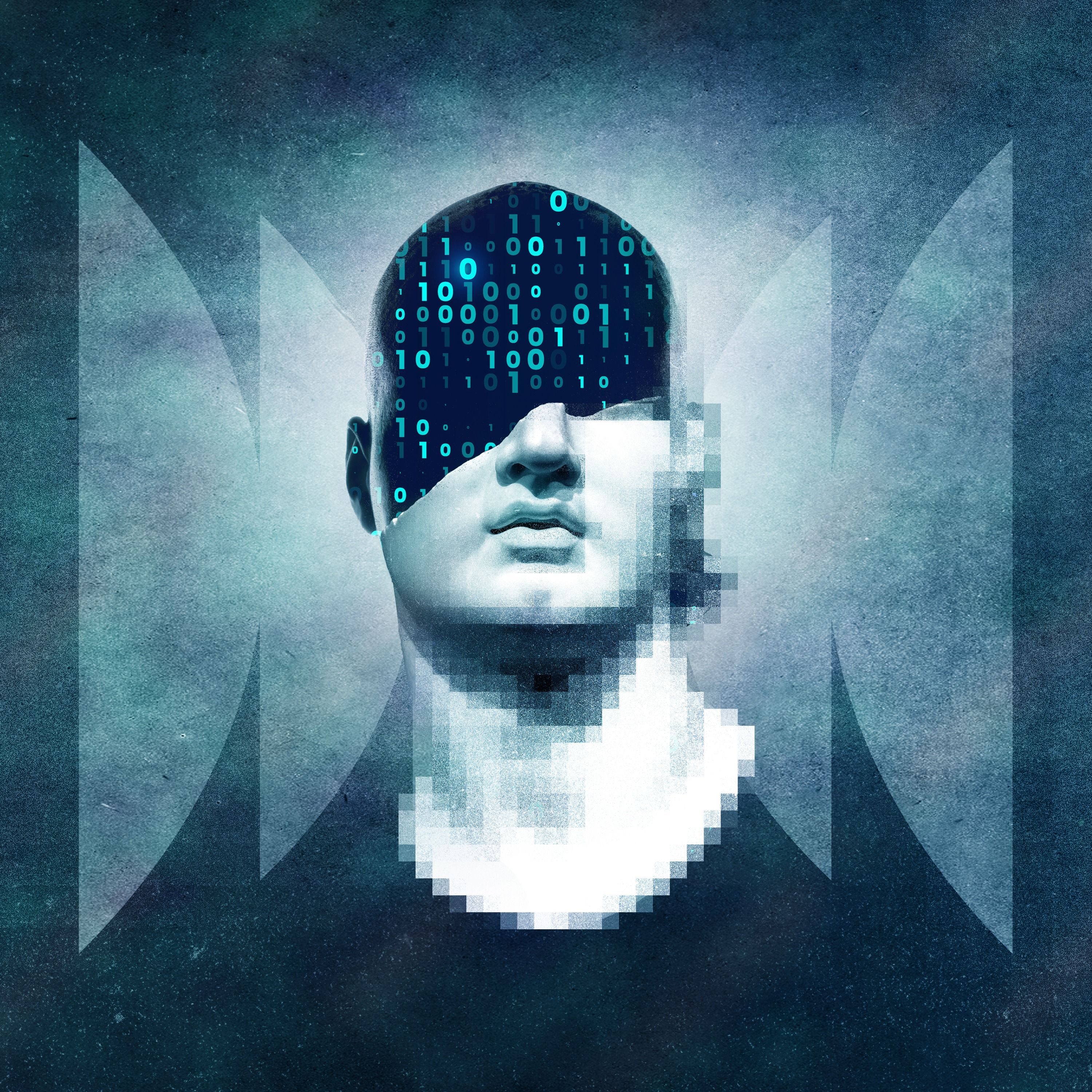
It’s faster than a speeding bullet. It’s smarter than a polymath genius. It’s everywhere but it’s invisible. It’s artificial intelligence. But what actually is it?

Today we ask this simple question and explore why it’s so damn hard to answer.

Special thanks to Stephanie Yin and the New York Institute of Go for teaching us the game. Mark, Daria and Levon Hoover Brauner for helping bring NETtalk to life. 

And a huge thank you to Grant Sanderson for his unending patience explaining the math of neural nets to us. To learn more about how these 'thinking machines' actually think, we highly recommend his wonderful youtube channel 3Blue1Brown (https://www.youtube.com/watch?v=aircAruvnKk).

EPISODE CREDITS: 
Reported by - Simon Adler
Produced by - Simon Adler
Original music from - Simon Adler
Sound design contributed by - Simon Adler
Fact-checking by - Anna Pujol-Mazzini 

Sign up for our newsletter!! It includes short essays, recommendations, and details about other ways to interact with the show. Signup (https://radiolab.org/newsletter)!

Radiolab is supported by listeners like you. Support Radiolab by becoming a member of The Lab (https://members.radiolab.org/) today.

Follow our show on Instagram, Twitter and Facebook @radiolab, and share your thoughts with us by emailing [email protected].

Leadership support for Radiolab’s science programming is provided by the Gordon and Betty


Hosted by Simplecast, an AdsWizz company. See pcm.adswizz.com for information about our collection and use of personal data for advertising.

RIDILEB is supported by AT&T. We all love to connect via video calls or texts. Right now, at AT&T, you can get the new iPhone 18 Pro for $0 with iPhone trade-in. Any condition. It has the ultimate pro camera system and big leap in battery life, so you can turn this deal into a long-lasting connection. Learn how you can trade in your iPhone for the new iPhone 18 Pro requires trade-in of iPhone 14 or higher, excluding iPhone 16E, an eligible plan. Terms and restrictions apply, subject to change, visit an AT&T store for details. Okay, after all of that, it is time to finally discuss Lutif the topic, the theme of the moment, perhaps. Climate change. No, nobody cares about climate change, man. Come on. Simon! Hey, I'm Lutif Nasser. This is Radio Lab, where despite what reporter producer Simon Adler just said, we hear at the show, including Simon, do care about climate change, but we're here today to talk about a different, huge, overwhelming thing that we're all in the middle of. I mean, I don't want to put words in your mouth, but what I have been feeling is a general sense of frustration, something that everybody's talking about, but nobody seems to actually understand. You and I have even done interviews together with people on this stuff, which is, of course, artificial intelligence. So much of the coverage about this stuff right now is this running debate, right, where you've got people on one side saying, "These AI, they think they are intelligent, and eventually they'll outsmart and destroy us all." And then on the other side, you've got people being like, "No, they aren't actually intelligent. They're just mimicking us, and it's not as big a deal as everyone says." And I don't actually know who to believe, and I think it's because I don't know what AI is. I don't know how it does what it does under the hood. Yeah, because we don't know versus one of the most extraordinary things about machine learning AI is that we don't really know what they are. But after reading countless articles, talking to tech people and scientists, I finally felt like I was getting at that question when I talked to this guy. Stephen Cave, I'm the director of the Leave-A-Home Center for the Future of Intelligence. He leads this sort of think tank at the University of Cambridge, and it was about 50 of us now, trying to understand these systems using a really wide range of methods, including tests taken from animal psychology, tests designed to measure how well a mouse can problem solve, and applying them to AI agents in order to understand, well, where are we in the kind of evolutionary cognitive tree of life of AI? And they've actually turned these tests into a sort of competition that they call the Animal AI Olympics. Yes, indeed. Okay. That just sounds fun. Right. Yeah, exactly. Yeah.

Transcription truncated.

It’s faster than a speeding bullet. It’s smarter than a polymath genius. It’s everywhere but it’s invisible. It’s artificial intelligence. But what actually is it? Today we ask this simple question and explore why it’s so damn hard to answer. Special thanks to Stephanie Yin and the New York Institute of Go for teaching us the game. Mark, Daria and Levon Hoover Brauner for helping bring NETtalk to life. And a huge thank you to Grant Sanderson for his unending patience explaining the math of neural nets to us. To learn more about how these 'thinking machines' actually think, we highly recommend his wonderful youtube channel 3Blue1Brown (https://www.youtube.com/watch?v=aircAruvnKk).EPISODE CREDITS: Reported by - Simon AdlerProduced by - Simon AdlerOriginal music from - Simon AdlerSound design contributed by - Simon AdlerFact-checking by - Anna Pujol-Mazzini Sign up for our newsletter!! It includes short essays, recommendations, and details about other ways to interact with the show. Signup (https://radiolab.org/newsletter)! Radiolab is supported by listeners like you. Support Radiolab by becoming a member of The Lab (https://members.radiolab.org/) today. Follow our show on Instagram, Twitter and Facebook @radiolab, and share your thoughts with us by emailing [email protected]. Leadership support for Radiolab’s science programming is provided by the Gordon and Betty.