ArchiveFM

A call to oceanographer Edie Widder about a fish with a very odd immune system quickly becomes something else: a dive into the deep sea, into a world of brilliant light. But down there, the light doesn’t behave like light -- it sparkles and glows, but also drips, squirts, and dribbles. Today, find out how creatures make the light and how they use it, from hunting and hiding to maybe even … talking. And hear about a series of mysterious moments where Edie goes from studying the creatures to becoming one of them. EPISODE CREDITS: Hosted by - Molly WebsterReported by - Molly WebsterProduced by - Maria Paz Gutierrezwith help from - Molly WebsterFact-checking by - Diane A. Kelly LATERAL CUTS (Other Radiolab episodes you may like): Octomom - https://radiolab.org/podcast/octomom The Darkest Dark - https://radiolab.org/podcast/the-darkest-dark EPISODE CITATIONS:Documentary - Coming soon, there’ll be a new doc about Edie’s life and work studying bioluminescence in deep sea creatures. According to Edie, “A Life Illuminated”, contains some of the best deep sea bioluminescence footage ever recorded. It’s from our friends at Sandbox Films, and director Tasha Van Zandt.https://www.sandboxfilms.org/films/a-life-illuminated/Books - Edie Widder wrote a memoir! Go read, “Below the Edge of Darkness: A Memoir of Exploring Light and Life in the Deep Sea”.https://www.penguinrandomhouse.com/books/564185/below-the-edge-of-darkness-by-edith-widder-phd/Videos - It’s not in the episode, but a few years back, Edie’s fame reached new heights when she captured footage of a never-before-seen Giant Squid … here’s the story, and video.https://www.youtube.com/watch?v=krDdv9KLmuM Articles - A look at some glowing shrimps.https://zpr.io/3jyHWi7VFBw5A photogallery of different types of deep sea glow, from different types of deep sea creatures, including one of counterillumination, which Edie talks about in the episode.https://zpr.io/hdFFsArGjhau Signup for our newsletter!! It includes short essays, recommendations, and details about other ways to interact with the show. Sign up (https://radiolab.org/newsletter)! Radiolab is supported by listeners like you. Support Radiolab by becoming a member of The Lab (https://members.radiolab.org/) today. Follow our show on Instagram, Twitter and Facebook @radiolab, and share your thoughts with us by emailing [email protected]. Leadership support for Radiolab’s science programming is provided by the Simons Foundation and the John Templeton Foundation. Foundational support for Radiolab was provided by the Alfred P. Sloan Foundation.
Duration
31m
Broadcast on
31 Oct 2025
Audio Format
other

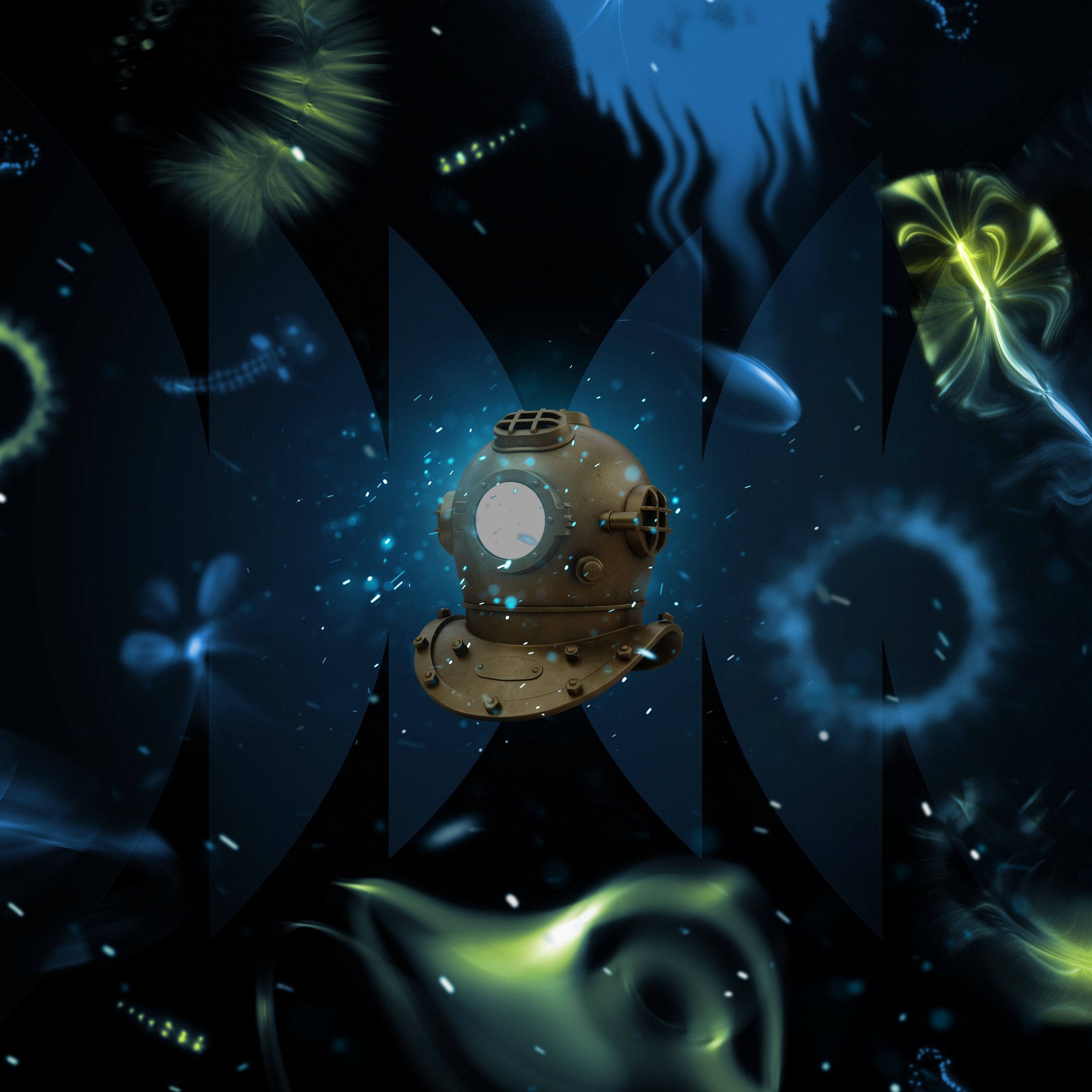
A call to oceanographer Edie Widder about a fish with a very odd immune system quickly becomes something else: a dive into the deep sea, into a world of brilliant light. But down there, the light doesn’t behave like light -- it sparkles and glows, but also drips, squirts, and dribbles. Today, find out how creatures make the light and how they use it, from hunting and hiding to maybe even … talking. And hear about a series of mysterious moments where Edie goes from studying the creatures to becoming one of them. 

EPISODE CREDITS: 
Hosted by - Molly Webster
Reported by - Molly Webster
Produced by - Maria Paz Gutierrez
with help from - Molly Webster
Fact-checking by - Diane A. Kelly

LATERAL CUTS (Other Radiolab episodes you may like):
Octomom - https://radiolab.org/podcast/octomom
The Darkest Dark - https://radiolab.org/podcast/the-darkest-dark

EPISODE CITATIONS:
Documentary - 
Coming soon, there’ll be a new doc about Edie’s life and work studying bioluminescence in deep sea creatures. According to Edie, “A Life Illuminated”, contains some of the best deep sea bioluminescence footage ever recorded. It’s from our friends at Sandbox Films, and director Tasha Van Zandt.
https://www.sandboxfilms.org/films/a-life-illuminated/

Books - 
Edie Widder wrote a memoir! Go read, “Below the Edge of Darkness: A Memoir of Exploring Light and Life in the Deep Sea”.https://www.penguinrandomhouse.com/books/564185/below-the-edge-of-darkness-by-edith-widder-phd/

Videos - 
It’s not in the episode, but a few years back, Edie’s fame reached new heights when she captured footage of a never-before-seen Giant Squid … here’s the story, and video.
https://www.youtube.com/watch?v=krDdv9KLmuM
 

Articles - 
A look at some glowing shrimps.
https://zpr.io/3jyHWi7VFBw5

A photo gallery of different types of deep sea glow, from different types of deep sea creatures, including one of counterillumination, which Edie talks about in the episode.
https://zpr.io/hdFFsArGjhau
 

Sign up for our newsletter!! It includes short essays, recommendations, and details about other ways to interact with the show. Sign up (https://radiolab.org/newsletter)!

Radiolab is supported by listeners like you. Support Radiolab by becoming a member of The Lab (https://members.radiolab.org/) today.

Follow our show on Instagram, Twitter and Facebook @radiolab, and share your thoughts with us by emailing [email protected].

Leadership support for Radiolab’s science programming is provided by the Simons Foundation and the John Templeton Foundation. Foundational support for Radiolab was provided by the Alfred P. Sloan Foundation.


Hosted by Simplecast, an AdsWizz company. See pcm.adswizz.com for information about our collection and use of personal data for advertising.

Radiolab supporters include the Howard Hughes Medical Institute. Picture this, years of guaranteed research support in a vibrant scientific community that has your back. If you're a PhD student, postdoc, or early career faculty in the biological or biomedical sciences, that doesn't have to be a fantasy. HHMI has a program for you. The Howard Hughes Medical Institute supports scientists at every career stage with a "people, not-projects" approach, long-term support, and the resources for breakthrough science. Applications open now. Find your program at HHMI.org/Radiolab. This is Radiolab. I'm Molly Webster. I'm going to open up the show today with Deepsea Explore and Oceanographer Edie Whitter. Why don't you tell me how you bumped into our friend? I called Edie because I wanted to talk to her about Anglerfish and this weird thing I'd heard about their immune systems and how they mate with each other. But then Edie wooed me with a story that had to do with none of that about being a grad student in the 80s, working on the back of a boat, and pulling sea creatures out of the deep. I was going to see on ships with scientists who had developed a way to bring animals up from the deep sea alive. So they usually come up dead when you bring them up in the net because of temperature changes. They're basically cooked alive. So he had developed what was called a thermally insulated closing cot end that went on the end of a net. And so you'd bring them up and they'd still be alive. So they'd be swirling around in that tub and you'd have to plunge your hand into this icy cold water and your hand would go to completely numb. And one of the first animals I pulled out was this bright red shrimp about the size of a hamster. And it was squirting neon blue light out of tubes on either side of its mouth. And it pulled in my hand and then dripped between my fingers back into the tub. Really? It was astonishing. What was it like to hold dripping light? I can't describe it any other way. I mean, it was cold light and it was brilliantly blue. If you're fully dark adapted, bioluminescence can look very bright. And it went on glowing in the water and then kind of swirled around and disappeared. Wow, I can't even because I didn't, I guess I always think of light or something that creates light as like in a container. You know, like almost like a light bulb has a border. I never think of it as like oozy. Oh, for me, it was revelatory. I just couldn't believe that all of this existed. And you know, at that time you could pick up a marine biology textbook and find no mention of bioluminescence. No way. Oh, really? Yes, it's not that they didn't know about it. It just didn't think it was very important. After that experience, Edie spent the next 40 years and counting because she's still going, chasing the light, diving into the ocean over and over and over again in search of creatures that glowed like the shrimp. How many times have you gone down 3000 feet in the ocean? I stopped counting after about 300. I mean, the hundreds definitely. Oh, yeah, so many things I've seen from submersibles that I'm pretty sure nobody's ever seen. Edie has plunged into the unknown in a way that few people on the planet ever have. And so I very quickly abandoned my sort of angler fish interest, and I just followed her into the deep into a world of brilliance and color where light suddenly comes to life. My first open ocean dive was in the Santa Barbara channel. I was testing this diving suit called wasps that was developed by the offshore oil industry for diving on oil rigs down to 2000 feet. Is it like you're in like an astronaut suit that you can control? Yeah, it's exactly like an astronaut suit. It's got a plexiglass bubble for the head, Michelin man arms, no legs for walking on the bottom, just a pod with thrusters that are attached to it and you control the thrusters with foot switches on the bottom of the suit. It's like being in a fishbowl, but the fish are on the outside and the people are on the inside. You're the fish. Yep. Wait, your first like big dive was in this like marshmallow man suit? Yep. But that first dive was just to be to 800 feet to make sure I wasn't going to have a claustrophobic meltdown. Oh my god, you are so gutsy. Did you get nervous? Yeah. Okay, I was nervous. It was an early evening dive and they lowered me off the back of the ship.

Transcription truncated.

A call to oceanographer Edie Widder about a fish with a very odd immune system quickly becomes something else: a dive into the deep sea, into a world of brilliant light. But down there, the light doesn’t behave like light -- it sparkles and glows, but also drips, squirts, and dribbles. Today, find out how creatures make the light and how they use it, from hunting and hiding to maybe even … talking. And hear about a series of mysterious moments where Edie goes from studying the creatures to becoming one of them. EPISODE CREDITS: Hosted by - Molly WebsterReported by - Molly WebsterProduced by - Maria Paz Gutierrezwith help from - Molly WebsterFact-checking by - Diane A. Kelly LATERAL CUTS (Other Radiolab episodes you may like): Octomom - https://radiolab.org/podcast/octomom The Darkest Dark - https://radiolab.org/podcast/the-darkest-dark EPISODE CITATIONS:Documentary - Coming soon, there’ll be a new doc about Edie’s life and work studying bioluminescence in deep sea creatures. According to Edie, “A Life Illuminated”, contains some of the best deep sea bioluminescence footage ever recorded. It’s from our friends at Sandbox Films, and director Tasha Van Zandt.https://www.sandboxfilms.org/films/a-life-illuminated/Books - Edie Widder wrote a memoir! Go read, “Below the Edge of Darkness: A Memoir of Exploring Light and Life in the Deep Sea”.https://www.penguinrandomhouse.com/books/564185/below-the-edge-of-darkness-by-edith-widder-phd/Videos - It’s not in the episode, but a few years back, Edie’s fame reached new heights when she captured footage of a never-before-seen Giant Squid … here’s the story, and video.https://www.youtube.com/watch?v=krDdv9KLmuM Articles - A look at some glowing shrimps.https://zpr.io/3jyHWi7VFBw5A photogallery of different types of deep sea glow, from different types of deep sea creatures, including one of counterillumination, which Edie talks about in the episode.https://zpr.io/hdFFsArGjhau Signup for our newsletter!! It includes short essays, recommendations, and details about other ways to interact with the show. Sign up (https://radiolab.org/newsletter)! Radiolab is supported by listeners like you. Support Radiolab by becoming a member of The Lab (https://members.radiolab.org/) today. Follow our show on Instagram, Twitter and Facebook @radiolab, and share your thoughts with us by emailing [email protected]. Leadership support for Radiolab’s science programming is provided by the Simons Foundation and the John Templeton Foundation. Foundational support for Radiolab was provided by the Alfred P. Sloan Foundation.