ArchiveFM

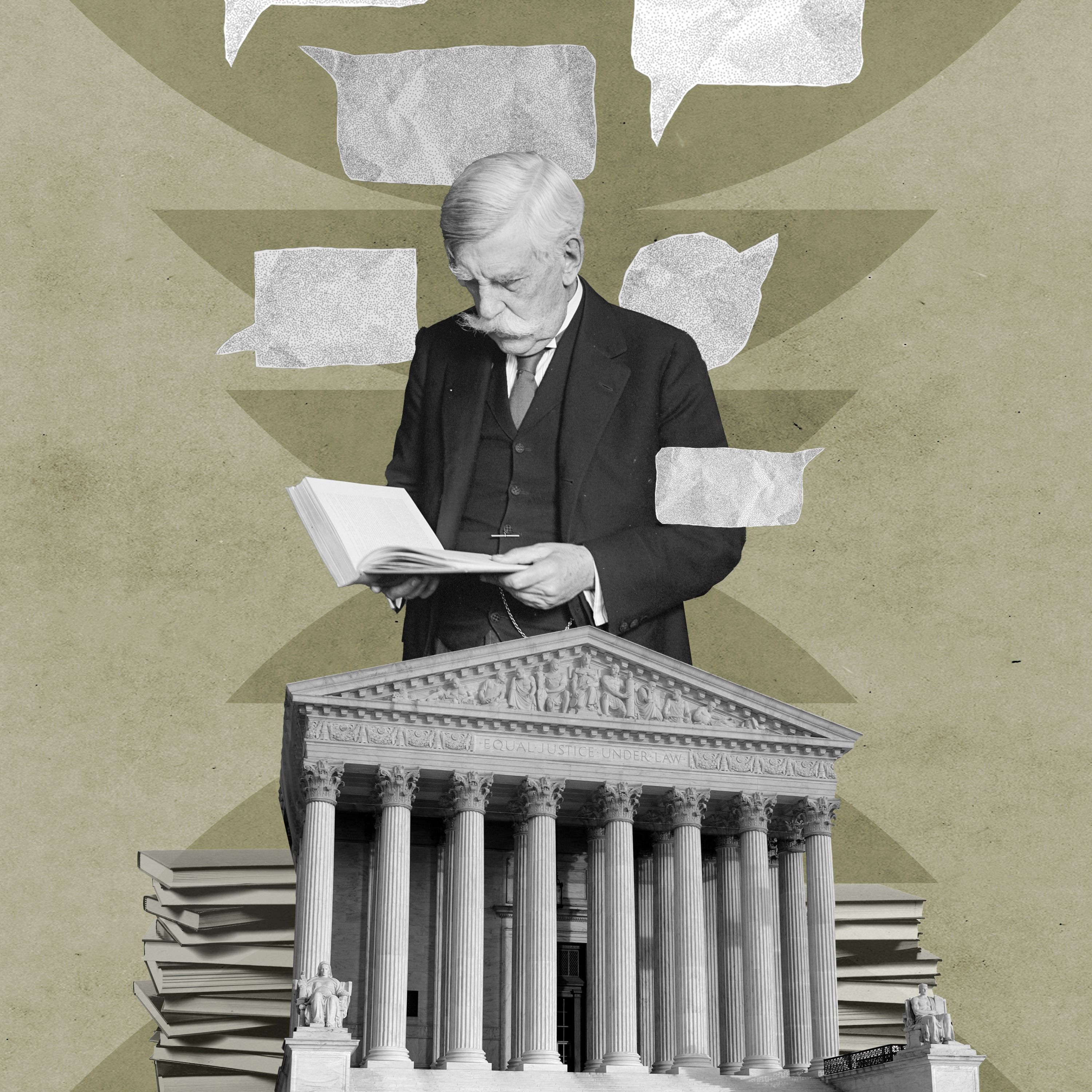
Love it or hate it, the freedom to say obnoxious and subversive things is the quintessence of what makes America America. But our say-almost-anything approach to free speech is actually relatively recent, and you can trace it back to one guy: a Supreme Court justice named Oliver Wendell Holmes. Even weirder, you can trace it back to one seemingly ordinary eight-month period in Holmes’s life when he seems to have done a logical U-turn on what should be say-able.  Why he changed his mind during those eight months is one of the greatest mysteries in the history of the Supreme Court. (Spoiler: the answer involves anarchists, a house of truth, and a cry for help from a dear friend.)  Join us in an episode we originally released in 2021, as we investigate why he changed his mind, how that made the country change its mind, and whether it’s now time to change our minds again. Special thanks to Jenny Lawton, Soren Shade, Kelsey Padgett, Mahyad Tousi and Soroush Vosughi.LATERAL CUTS:Content WarningFacebook Supreme CourtThe Trust EngineersEPISODE CREDITS: Reported by - Latif NasserProduced by - Sarah Qariwith help from - Anisa Vietze Signup for our newsletter!! It includes short essays, recommendations, and details about other ways to interact with the show. Sign up (https://radiolab.org/newsletter)! Radiolab is supported by listeners like you. Support Radiolab by becoming a member of The Lab (https://members.radiolab.org/) today. Follow our show on Instagram, Twitter and Facebook @radiolab, and share your thoughts with us by emailing [email protected]. Leadership support for Radiolab’s science programming is provided by the Simons Foundation and the John Templeton Foundation. Foundational support for Radiolab was provided by the Alfred P. Sloan Foundation.
Duration
38m
Broadcast on
24 Oct 2025
Audio Format
other

Love it or hate it, the freedom to say obnoxious and subversive things is the quintessence of what makes America America. But our say-almost-anything approach to free speech is actually relatively recent, and you can trace it back to one guy: a Supreme Court justice named Oliver Wendell Holmes. Even weirder, you can trace it back to one seemingly ordinary eight-month period in Holmes’s life when he seems to have done a logical U-turn on what should be say-able.  Why he changed his mind during those eight months is one of the greatest mysteries in the history of the Supreme Court. (Spoiler: the answer involves anarchists, a house of truth, and a cry for help from a dear friend.)  Join us in an episode we originally released in 2021, as we investigate why he changed his mind, how that made the country change its mind, and whether it’s now time to change our minds again.

Special thanks to Jenny Lawton, Soren Shade, Kelsey Padgett, Mahyad Tousi and Soroush Vosughi.

LATERAL CUTS:
Content Warning
Facebook Supreme Court
The Trust Engineers

EPISODE CREDITS: 
Reported by - Latif Nasser
Produced by - Sarah Qari
with help from - Anisa Vietze


Signup for our newsletter!! It includes short essays, recommendations, and details about other ways to interact with the show. Sign up (https://radiolab.org/newsletter)!

Radiolab is supported by listeners like you. Support Radiolab by becoming a member of The Lab (https://members.radiolab.org/) today.

Follow our show on Instagram, Twitter and Facebook @radiolab, and share your thoughts with us by emailing [email protected].


Leadership support for Radiolab’s science programming is provided by the Simons Foundation and the John Templeton Foundation. Foundational support for Radiolab was provided by the Alfred P. Sloan Foundation.


Hosted by Simplecast, an AdsWizz company. See pcm.adswizz.com for information about our collection and use of personal data for advertising.

WNYC Studios is supported by ODU. When you buy business software from lots of vendors, the costs add up and it gets complicated and confusing. ODU solves this. It's a single company that sells a suite of enterprise apps that handles everything from accounting to inventory to sales. ODU is all connected on a single platform in a simple and affordable way. You can save money without missing out on the features you need. Check out ODU at ODOO.com. That's ODOO.com. RIDIOLAB is supported by AT&T. We all love to connect via video calls or texts. Right now, at AT&T, you can get the new iPhone 18 Pro for $0 with iPhone trade-in, any condition. It has the ultimate pro-camera system and big leap in battery life so you can turn this deal into a long lasting connection. Learn how you can trade in your iPhone for the new iPhone 18 Pro requires trade-in of iPhone 14 or higher, excluding iPhone 16E, an eligible plan. Terms and restrictions apply subject to change. Visit an AT&T store for details. Wait, you're listening to RIDIOLAB from WNYC. Thank you, rewind. Hey, it's Latif. This is RIDIOLAB. So just last week, here on the show, we had a conversation between our own Simon Adler and law professor Kate Klonick talking about how the idea of free speech in this country is playing out and often not playing out online right now. But these questions of free speech in the United States go back literally to the beginning. It's the first amendment for trying out loud. And as we argue over what people should be seeing on these apps, on social media apps, it took me back to a story we did a couple of years ago that feels like it gets to the origin of the modern notion of free speech. In particular, the idea that there should be an open marketplace of ideas, right? That's the reason any of these social media platforms are allowed to be as wild as they are because they are theoretically open marketplaces of ideas. And as I told our then host, Jad Abramrod, surprisingly, that whole idea of the marketplace of ideas came from one moment and even more surprisingly from one guy. [MUSIC PLAYING] Oliver Wendell Holmes.

Transcription truncated.

Love it or hate it, the freedom to say obnoxious and subversive things is the quintessence of what makes America America. But our say-almost-anything approach to free speech is actually relatively recent, and you can trace it back to one guy: a Supreme Court justice named Oliver Wendell Holmes. Even weirder, you can trace it back to one seemingly ordinary eight-month period in Holmes’s life when he seems to have done a logical U-turn on what should be say-able.  Why he changed his mind during those eight months is one of the greatest mysteries in the history of the Supreme Court. (Spoiler: the answer involves anarchists, a house of truth, and a cry for help from a dear friend.)  Join us in an episode we originally released in 2021, as we investigate why he changed his mind, how that made the country change its mind, and whether it’s now time to change our minds again. Special thanks to Jenny Lawton, Soren Shade, Kelsey Padgett, Mahyad Tousi and Soroush Vosughi.LATERAL CUTS:Content WarningFacebook Supreme CourtThe Trust EngineersEPISODE CREDITS: Reported by - Latif NasserProduced by - Sarah Qariwith help from - Anisa Vietze Signup for our newsletter!! It includes short essays, recommendations, and details about other ways to interact with the show. Sign up (https://radiolab.org/newsletter)! Radiolab is supported by listeners like you. Support Radiolab by becoming a member of The Lab (https://members.radiolab.org/) today. Follow our show on Instagram, Twitter and Facebook @radiolab, and share your thoughts with us by emailing [email protected]. Leadership support for Radiolab’s science programming is provided by the Simons Foundation and the John Templeton Foundation. Foundational support for Radiolab was provided by the Alfred P. Sloan Foundation.