ArchiveFM

In the 1920s, a Russian biologist studying onion roots made a surprising discovery: underground, down in the darkness, it seemed like the cells inside the onion roots were making their own … light. The “onion root experiment” went on to become something of a cult classic in science, and eventually the biologically-made light was dubbed “biophotons.” In the ensuing century, biophoton discoveries moved from onion roots to bacteria, frog embryos, and humans. Today, scientist Nirosha Murugan is on a career-defining journey to learn more about the light. As she and her colleagues study this mysterious phenomenon, they find themselves racing from question to question, wondering what gives off light, where it might be coming from, and what, if anything, it could tell us about life, disease, and even death. Correction: In this episode, when Nirosha spoke about her melanoma study, she misstated the lab animal involved in the study. It was mice. EPISODE CREDITS: Hosted by - Molly WebsterReported by - Molly WebsterProduced by - Sarah Qariwith help from - Molly WebsterFact-checking by - Natalie Middleton EPISODE CITATIONS:Videos -The “Life Flash” video! Note that fluorescent dye was added to the experiment, by the researchers, to enhance the zinc sparks (https://www.youtube.com/watch?v=b9tmOyrIlYM) Articles - The Onion Root Experiment (https://www.brmi.online/gurwitsch)Enjoy this Wikipedia rabbit-hole about Fritz Albert Popp (https://zpr.io/nxJFcAMvZkBz)Original Paper on zinc sparks (https://zpr.io/GfbazBqU3e3y) at the time of fertilization, a moment referred to as the “life flash”Read more about the “death flash,” (https://zpr.io/TqG3mcCGYEgQ) and other end-of-life phenomenon, as reported by medical caregiversResearch from Nirosha’s lab on photon emissions (https://zpr.io/mtpbwSeY4iEp) and brain activityResearch from Nirosha’s lab on biophoton emission (https://zpr.io/3in9LSmzW6m5) and cancer diagnosisSignup for our newsletter!! It includes short essays, recommendations, and details about other ways to interact with the show. Sign up (https://radiolab.org/newsletter)! Radiolab is supported by listeners like you. Support Radiolab by becoming a member of The Lab (https://members.radiolab.org/) today. Follow our show on Instagram, Twitter and Facebook @radiolab, and share your thoughts with us by emailing [email protected]. Leadership support for Radiolab’s science programming is provided by the Simons Foundation and the John Templeton Foundation. Foundational support for Radiolab was provided by the Alfred P. Sloan Foundation.
Duration
39m
Broadcast on
19 Sep 2025
Audio Format
other

In the 1920s, a Russian biologist studying onion roots made a surprising discovery: underground, down in the darkness, it seemed like the cells inside the onion roots were making their own … light. 

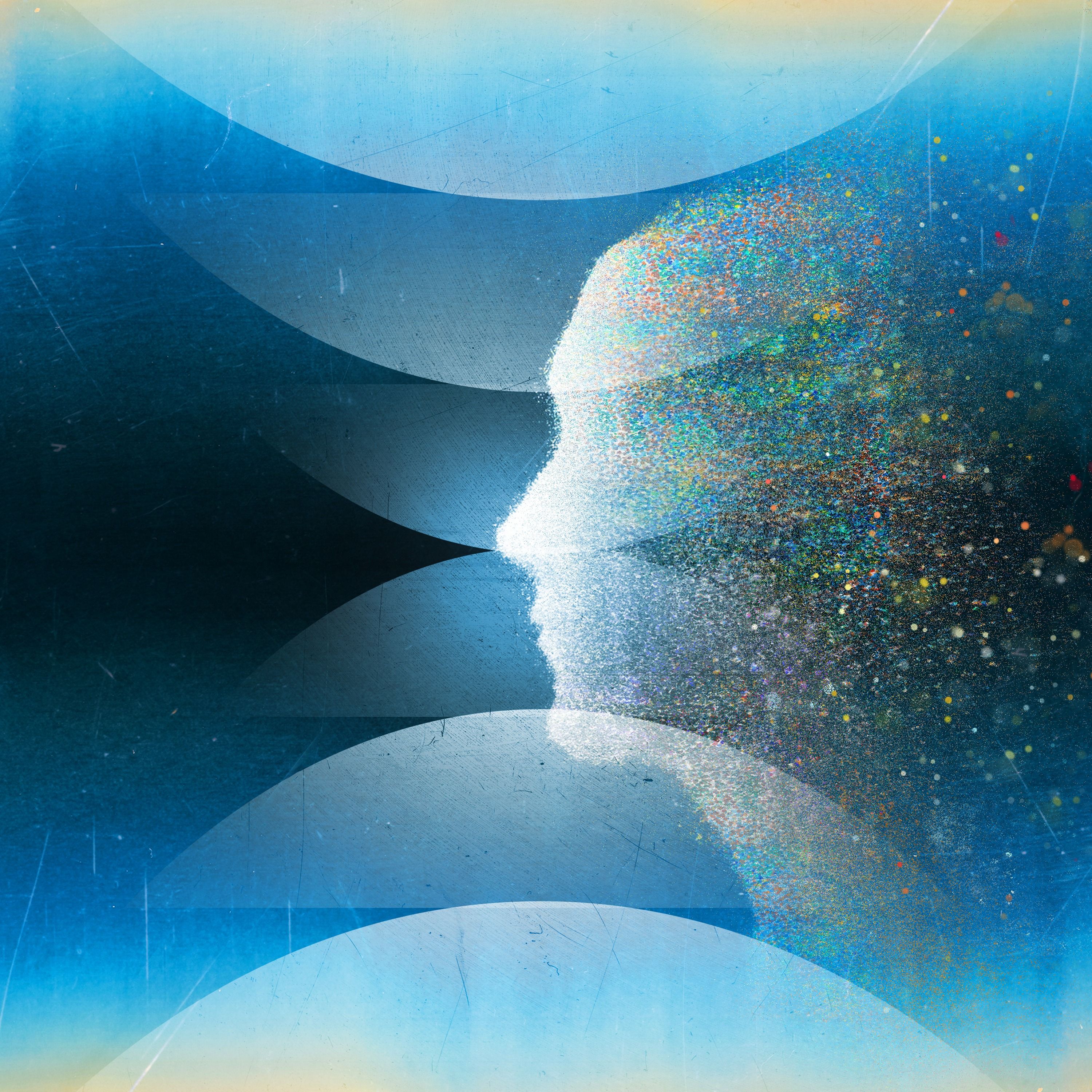
The “onion root experiment” went on to become something of a cult classic in science, and eventually the biologically-made light was dubbed “biophotons.” In the ensuing century, biophoton discoveries moved from onion roots to bacteria, frog embryos, and humans. Today, scientist Nirosha Murugan is on a career-defining journey to learn more about the light. As she and her colleagues study this mysterious phenomenon, they find themselves racing from question to question, wondering what gives off light, where it might be coming from, and what, if anything, it could tell us about life, disease, and even death. 

Correction: In this episode, when Nirosha spoke about her melanoma study, she misstated the lab animal involved in the study. It was mice.

EPISODE CREDITS:
Hosted by - Molly Webster
Reported by - Molly Webster
Produced by - Sarah Qari
with help from - Molly Webster
Fact-checking by - Natalie Middleton

EPISODE CITATIONS:
Videos -
The “Life Flash” video! Note that fluorescent dye was added to the experiment, by the researchers, to enhance the zinc sparks (https://www.youtube.com/watch?v=b9tmOyrIlYM) 

Articles -

The Onion Root Experiment (https://www.brmi.online/gurwitsch)

Enjoy this Wikipedia rabbit-hole about Fritz Albert Popp (https://zpr.io/nxJFcAMvZkBz)

Original Paper on zinc sparks (https://zpr.io/GfbazBqU3e3y) at the time of fertilization, a moment referred to as the “life flash”

Read more about the “death flash,” (https://zpr.io/TqG3mcCGYEgQ) and other end-of-life phenomenon, as reported by medical caregivers

Research from Nirosha’s lab on photon emissions (https://zpr.io/mtpbwSeY4iEp) and brain activity

Research from Nirosha’s lab on biophoton emission (https://zpr.io/3in9LSmzW6m5) and cancer diagnosis

Signup for our newsletter!! It includes short essays, recommendations, and details about other ways to interact with the show. Sign up (https://radiolab.org/newsletter)!

Radiolab is supported by listeners like you. Support Radiolab by becoming a member of The Lab (https://members.radiolab.org/) today.

Follow our show on Instagram, Twitter and Facebook @radiolab, and share your thoughts with us by emailing [email protected].

Leadership support for Radiolab’s science programming is provided by the Simons Foundation and the John Templeton Foundation. Foundational support for Radiolab was provided by the Alfred P. Sloan Foundation.


Hosted by Simplecast, an AdsWizz company. See pcm.adswizz.com for information about our collection and use of personal data for advertising.

No, wait, wait, you're listening to Radio Lab from WNYC. Wait, wait, am I glowing right now? You certainly are. Yeah. Hey, this is Radio Lab. I'm Molly Webster. So I was a bio major, and we had to take maybe one physics class, and then we never thought about it again. And this is often how it goes in the sciences. You've got biology, the environment, animals, our bodies, the kind of organic, messy physical stuff. That's on one side. And then you have physics, all the abstract stuff, waves, energy, invisible particles. That's all on the other side. I know how to use it. They very much feel like two different worlds. Can I ask you a couple questions before we get started? You can ask me so many questions. But for Narosha Morugan, they go hand in hand. I'm Narosha Morugan, an applied biophysicist from Waterloo, Canada, and most biophysicists look at mostly bio. I'm on the other end who likes to be 50/50. What I learned from talking to Narosha and what you're going to hear in our conversation today is definitely a leap into the unknown, but it starts with a very simple idea about how living things, bacteria, cactuses, humans, whatever, how they do what they do. And it's an idea that made me think about the kind of mark we leave on the world. So we're going to start with Narosha as a student. I mean, I can tell you a very specific moment in grad school that tell me when I was living in the dorms and I was making mashed potatoes and I burnt myself. And then I don't know why I thought this, but I thought it was really exciting. Yeah. How quickly that information of me burning my hand went into my body for me to remove my hand. Like that signal had to go up my arm, things had to change and move all the way back down my arm for me to remove it. Think of the molecular interactions. Narosha says she was standing there thinking about all the little molecules in her skin and nerves and spine, all these proteins bumping into each other, interacting and passing along a signal. Burn. Ow. Until it reached her spine and then a signal goes back. More proteins bumping into each other, interacting, signaling, move, move your hand, move your hand back down her arm all in a split second and suddenly it just seemed impossible. When we think about a protein, proteins have a very specific shape and that shape determines their function. So when you think of a cell doing it, what it needs to do on the surface of a cell, there are other proteins, which is what we call receptors and those receptors have a shape to them and for them to interact, there needs to be a physical interaction of that protein into the receptor.

Transcription truncated.

In the 1920s, a Russian biologist studying onion roots made a surprising discovery: underground, down in the darkness, it seemed like the cells inside the onion roots were making their own … light. The “onion root experiment” went on to become something of a cult classic in science, and eventually the biologically-made light was dubbed “biophotons.” In the ensuing century, biophoton discoveries moved from onion roots to bacteria, frog embryos, and humans. Today, scientist Nirosha Murugan is on a career-defining journey to learn more about the light. As she and her colleagues study this mysterious phenomenon, they find themselves racing from question to question, wondering what gives off light, where it might be coming from, and what, if anything, it could tell us about life, disease, and even death. Correction: In this episode, when Nirosha spoke about her melanoma study, she misstated the lab animal involved in the study. It was mice. EPISODE CREDITS: Hosted by - Molly WebsterReported by - Molly WebsterProduced by - Sarah Qariwith help from - Molly WebsterFact-checking by - Natalie Middleton EPISODE CITATIONS:Videos -The “Life Flash” video! Note that fluorescent dye was added to the experiment, by the researchers, to enhance the zinc sparks (https://www.youtube.com/watch?v=b9tmOyrIlYM) Articles - The Onion Root Experiment (https://www.brmi.online/gurwitsch)Enjoy this Wikipedia rabbit-hole about Fritz Albert Popp (https://zpr.io/nxJFcAMvZkBz)Original Paper on zinc sparks (https://zpr.io/GfbazBqU3e3y) at the time of fertilization, a moment referred to as the “life flash”Read more about the “death flash,” (https://zpr.io/TqG3mcCGYEgQ) and other end-of-life phenomenon, as reported by medical caregiversResearch from Nirosha’s lab on photon emissions (https://zpr.io/mtpbwSeY4iEp) and brain activityResearch from Nirosha’s lab on biophoton emission (https://zpr.io/3in9LSmzW6m5) and cancer diagnosisSignup for our newsletter!! It includes short essays, recommendations, and details about other ways to interact with the show. Sign up (https://radiolab.org/newsletter)! Radiolab is supported by listeners like you. Support Radiolab by becoming a member of The Lab (https://members.radiolab.org/) today. Follow our show on Instagram, Twitter and Facebook @radiolab, and share your thoughts with us by emailing [email protected]. Leadership support for Radiolab’s science programming is provided by the Simons Foundation and the John Templeton Foundation. Foundational support for Radiolab was provided by the Alfred P. Sloan Foundation.