ArchiveFM

As he finished his medical school exam, David Fajgenbaum felt off.  He walked down to the ER and checked himself in.  Soon he was in the ICU with multiple organ failure.  The only drug for his condition didn’t work. He had months to live, if that.  If he was going to survive, he was going to have to find his own cure. Miraculously, he pulled it off in the nick of time. From that ordeal, he realized that our system of discovering and approving drugs is far from perfect, and that he might be able to use AI to find dozens, hundreds, even thousands of cures, hidden in plain sight, for as-yet untreatable diseases. EPISODE CREDITS:Reported by - Latif NasserProduced by - Maria Paz Gutiérrezwith mixing help from - Jeremy S. BloomFact-checking by - Natalie A. MiddletonVISIT:Everycure.org (https://www.everycure.org)EPISODE CITATIONS:Books -Blair Bigham - Death Interrupted: How Modern Medicine is Complicating the Way We Die David Fajgenbaum - Chasing My Cure, (https://davidfajgenbaum.com/) Radiolab | Lateral Cuts:Check out Death Interrupted (https://radiolab.org/podcast/death-interrupted), a conversation with Blair Bigham about a worldview shifting change of heart.The Dirty Drug and the Ice Cream Tub (https://radiolab.org/podcast/dirty-drug-and-ice-cream-tub) to hear the crazy story about how Rapamycin was discovered. Signup for our newsletter!! It includes short essays, recommendations, and details about other ways to interact with the show. Sign up (https://radiolab.org/newsletter)! Radiolab is supported by listeners like you. Support Radiolab by becoming a member of The Lab (https://members.radiolab.org/) today. Follow our show on Instagram, Twitter and Facebook @radiolab, and share your thoughts with us by emailing [email protected] support for Radiolab’s science programming is provided by the Simons Foundation and the John Templeton Foundation. Foundational support for Radiolab was provided by the Alfred P. Sloan Foundation.
Duration
1h 6m
Broadcast on
22 Aug 2025
Audio Format
other

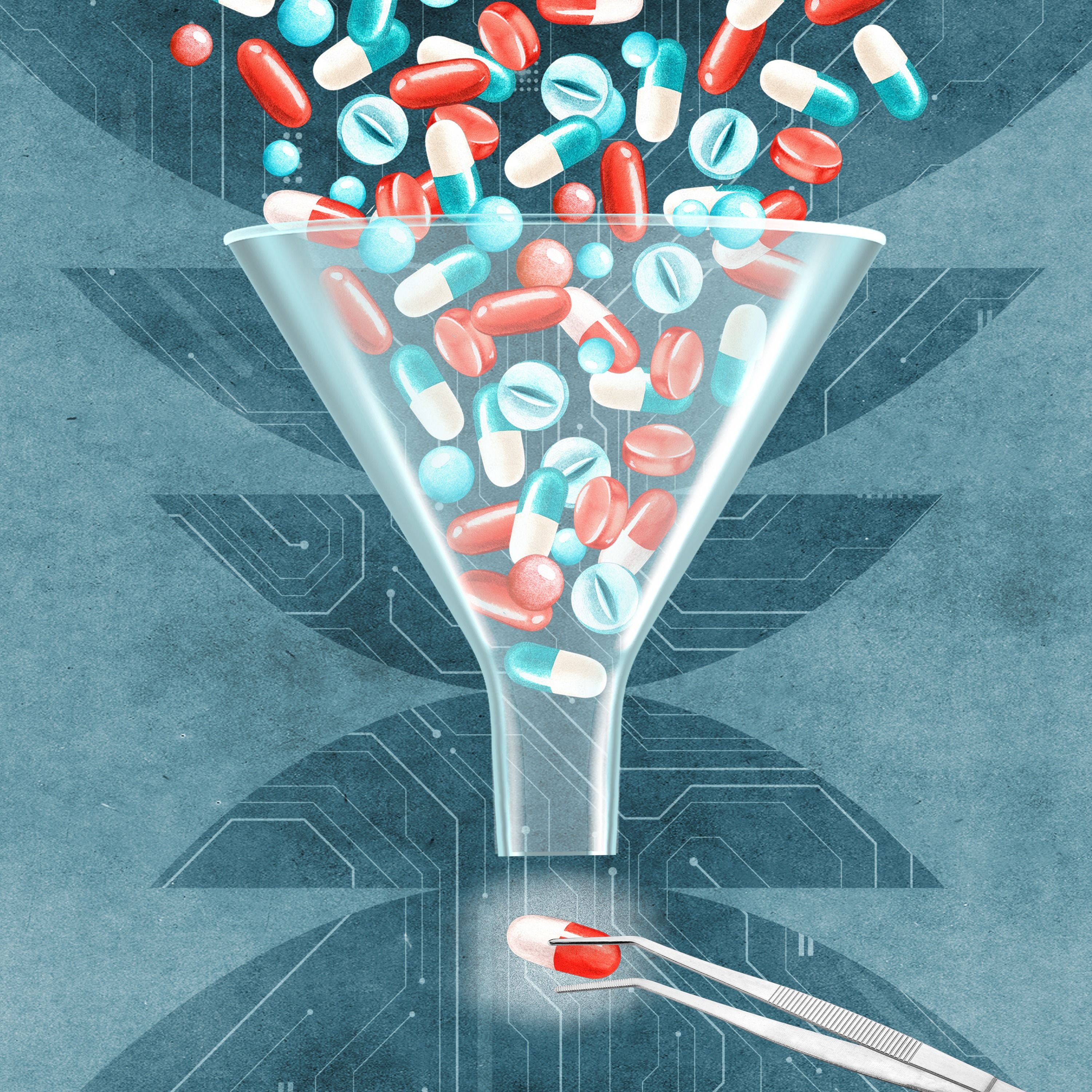
As he finished his medical school exam, David Fajgenbaum felt off.  He walked down to the ER and checked himself in.  Soon he was in the ICU with multiple organ failure.  The only drug for his condition didn’t work. He had months to live, if that.  If he was going to survive, he was going to have to find his own cure. Miraculously, he pulled it off in the nick of time. From that ordeal, he realized that our system of discovering and approving drugs is far from perfect, and that he might be able to use AI to find dozens, hundreds, even thousands of cures, hidden in plain sight, for as-yet untreatable diseases. 

EPISODE CREDITS:
Reported by - Latif Nasser
Produced by - Maria Paz Gutiérrez
with mixing help from - Jeremy S. Bloom
Fact-checking by - Natalie A. Middleton

VISIT:
Everycure.org (https://www.everycure.org)

EPISODE CITATIONS:
Books -
Blair Bigham -  Death Interrupted: How Modern Medicine is Complicating the Way We Die

David Fajgenbaum - Chasing My Cure, (https://davidfajgenbaum.com/)

Radiolab | Lateral Cuts:
Check out Death Interrupted (https://radiolab.org/podcast/death-interrupted), a conversation with Blair Bigham about a worldview shifting change of heart.

The Dirty Drug and the Ice Cream Tub (https://radiolab.org/podcast/dirty-drug-and-ice-cream-tub) to hear the crazy story about how Rapamycin was discovered.

Signup for our newsletter!! It includes short essays, recommendations, and details about other ways to interact with the show. Sign up (https://radiolab.org/newsletter)!

Radiolab is supported by listeners like you. Support Radiolab by becoming a member of The Lab (https://members.radiolab.org/) today.

Follow our show on Instagram, Twitter and Facebook @radiolab, and share your thoughts with us by emailing [email protected].

Leadership support for Radiolab’s science programming is provided by the Simons Foundation and the John Templeton Foundation. Foundational support for Radiolab was provided by the Alfred P. Sloan Foundation.


Hosted by Simplecast, an AdsWizz company. See pcm.adswizz.com for information about our collection and use of personal data for advertising.

- Wait, you're listening to Radio Lab from WNYC. - Hey, I'm Latif Nasser, this is Radio Lab, and today I want to share a conversation that I had with a guy named David Faganbaum. He's a doctor and a professor at the University of Pennsylvania, and there's a combination of reasons why I think his personal story is so extraordinary and why I wanted to share it with you. Part of it is this staggering series of crises that he faced in his personal life starting when he was in university. Part of it is kind of his personality, like how he, what there was in him that made him stand up to these crises in a really particular way. And part of it is the way that he took his response to those crises, and now he's scaling it up using one of the most controversial technologies around AI. The result of all of this is that he is right now in the middle of doing something wildly ambitious, something I find kind of miraculous, also maybe troubling. Either way, it is definitely going to change the medical system down to the level of the pills that you put in your mouth. That said, I just found my conversation with David so fascinating, and his personal backstory in general, I found it so dramatic, that I wanted to let it unfold at its own pace without jumping too quickly to the end. So here we go. Yeah. Let's go. And then I'll hit Join Studio. Lattice. Hey. How's it going? Oh my God. It's great. How you doing? Doing good. We've got double mics here. I've got a friend who's here helping with helping with the audio. So we're double mics right now. Great. So are we good to begin? Sure. Okay. Let's begin with the beast. Tell me, who is the beast and what is the beast and where did the beast start? So yeah, I don't know if I've ever answered a question this way, but so when I was in medical school, I worked out all the time. And part of that was because for the previous 15 years of my life, I was obsessed with wanting to be a college quarterback. And why? Why was it? Why was that the thing? So I grew up in Ryanworth, Carolina where college sports are really big and NC State had a football team and I grew up sort of like loving their team, but I think maybe more than anything is once I started playing football and I started like I'm biased, but I think football is unique among team sports and that you connect with your teammates in

Transcription truncated.

As he finished his medical school exam, David Fajgenbaum felt off.  He walked down to the ER and checked himself in.  Soon he was in the ICU with multiple organ failure.  The only drug for his condition didn’t work. He had months to live, if that.  If he was going to survive, he was going to have to find his own cure. Miraculously, he pulled it off in the nick of time. From that ordeal, he realized that our system of discovering and approving drugs is far from perfect, and that he might be able to use AI to find dozens, hundreds, even thousands of cures, hidden in plain sight, for as-yet untreatable diseases. EPISODE CREDITS:Reported by - Latif NasserProduced by - Maria Paz Gutiérrezwith mixing help from - Jeremy S. BloomFact-checking by - Natalie A. MiddletonVISIT:Everycure.org (https://www.everycure.org)EPISODE CITATIONS:Books -Blair Bigham - Death Interrupted: How Modern Medicine is Complicating the Way We Die David Fajgenbaum - Chasing My Cure, (https://davidfajgenbaum.com/) Radiolab | Lateral Cuts:Check out Death Interrupted (https://radiolab.org/podcast/death-interrupted), a conversation with Blair Bigham about a worldview shifting change of heart.The Dirty Drug and the Ice Cream Tub (https://radiolab.org/podcast/dirty-drug-and-ice-cream-tub) to hear the crazy story about how Rapamycin was discovered. Signup for our newsletter!! It includes short essays, recommendations, and details about other ways to interact with the show. Sign up (https://radiolab.org/newsletter)! Radiolab is supported by listeners like you. Support Radiolab by becoming a member of The Lab (https://members.radiolab.org/) today. Follow our show on Instagram, Twitter and Facebook @radiolab, and share your thoughts with us by emailing [email protected] support for Radiolab’s science programming is provided by the Simons Foundation and the John Templeton Foundation. Foundational support for Radiolab was provided by the Alfred P. Sloan Foundation.