Kittens Kick The Giggly Blue Robot All Summer
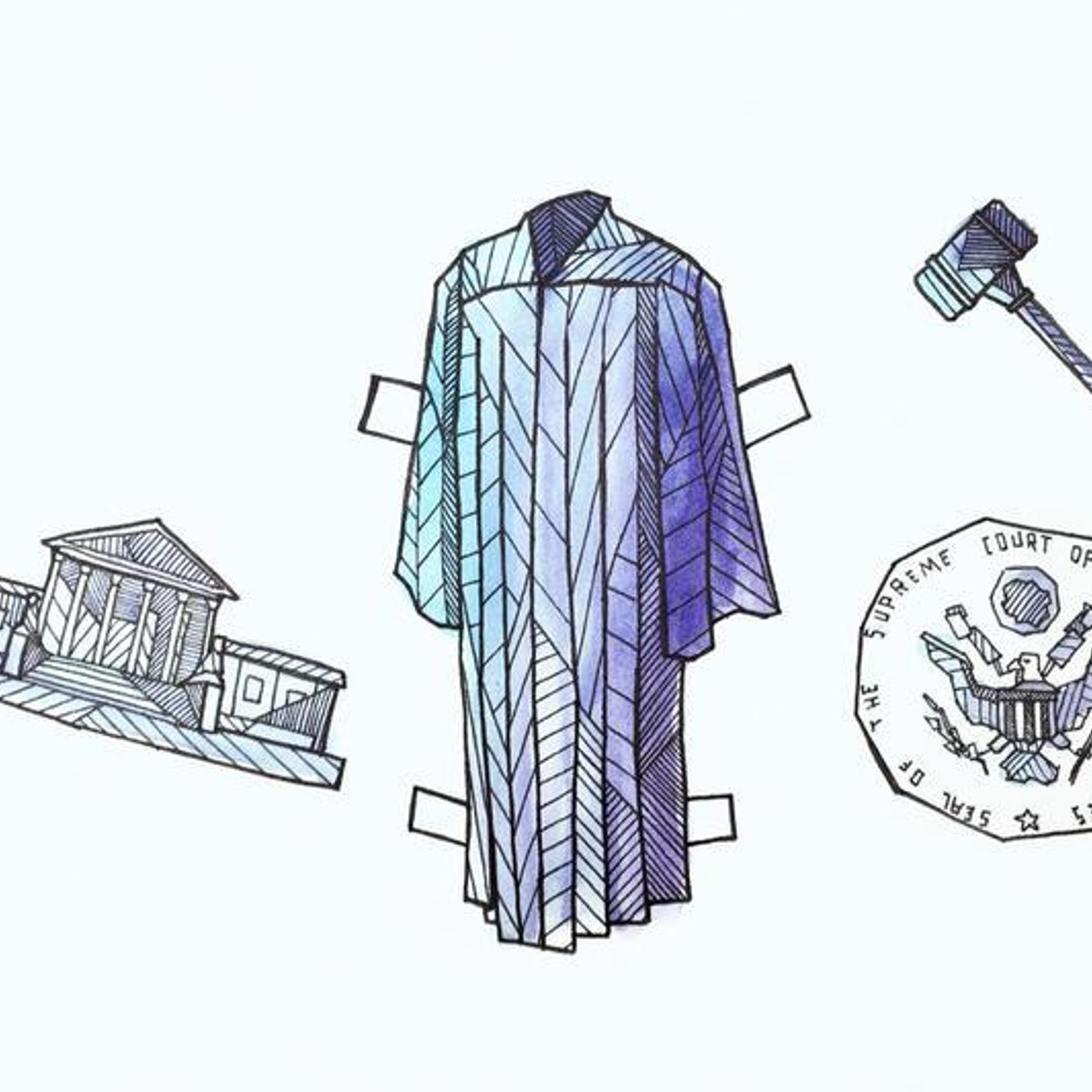
With the recent passing of Ruth Bader Ginsburg, there's been a lot of debate about how much power the Supreme Court should really have.
We think of the Supreme Court justices as all-powerful beings, issuing momentous rulings from on high. But they haven’t always been so, you know, supreme. On this episode, we go all the way back to the case that, in a lot of ways, started it all.
Support Radiolab by becoming a member today at Radiolab.org/donate.
- Duration
- 42m
- Broadcast on
- 08 Oct 2020
- Audio Format
- other
This episode appears to contain dynamically inserted ads. Transcript timestamps may be approximate.
With the recent passing of Ruth Bader Ginsburg, there's been a lot of debate about how much power the Supreme Court should really have.
We think of the Supreme Court justices as all-powerful beings, issuing momentous rulings from on high. But they haven’t always been so, you know, supreme. On this episode, we go all the way back to the case that, in a lot of ways, started it all.
Support Radiolab by becoming a member today at Radiolab.org/donate.
Hosted by Simplecast, an AdsWizz company. See pcm.adswizz.com for information about our collection and use of personal data for advertising.
Oh wait, you're listening to Radio Lab from WNYC. Oh, Susie's own. Silly. It's so hot under this blanket chat. I'm sorry. No, okay, it started again. All right, since you're under a blanket, we'll be fast. So you are Susie Lechtenberg and what is your role? I am the executive producer of Radio Lab. Yes. And a few years ago, actually four years ago, 2016, we created another little spinoff show. Yes. And the question that we get, and it's a very flattering question, but uncomfortable one, we get it all the time, is what happened more perfect? Is it coming back? Susie, what do you know, what can you tell us? I wish I had a satisfying answer to this, but the answer for now is, I don't know, never say never, but we have so much to do at Radio Lab that maybe? Yeah, quite possibly, but not at the moment. But with there being so much attention on the court with RBG passing, may she rest in peace in Valhalla, and with all the attention around Amy Coney Barrett's nomination and confirmation process on the horizon. And with all the conversation about court packing and whether to pack or not, it did call to mind an episode we created for more perfect 2016, four years ago, as you said, that really addressed one of the big questions that sort of lurks behind all of these recent events. Yeah, which is how much power should they have? How much power should nine unelected officials who have lifetime appointments have? And how do they get that power? And why nine? Why nine? And this is kind of the origin story of how the Supreme Court got to be, I guess you could say, so supreme. So let's just roll it. More perfect. Hey, I'm Chad. I'm Rod. This is more perfect. A mini series about the Supreme Court to begin. And by the way, we'll explain the title of this podcast at the end. We live in a democracy with three branches in it. You got the executive branch, the legislative branch, and the judicial branch. Now that third branch, the judicial, the courts consists of about 100 ish federal courts. And on top of those courts is the court, this, this, this temple of nine, now eight unelected lifetime appointees who seem to have this tremendous power, almost tyrannical power. They are wickedly important. And we're reminded of this. School, he is death throws a huge unknown factor into this campaign. Every time we turn on the TV, we are one justice away from losing our fundamental rights in this country. Because here we are in an election and the phrase that you hear a lot. One of the most important things in that election, I think this might be the most important thing to those of you who are young outside today. Is it one of the most important things the next president's gonna do? This next president may very well appoint between one and three. Four Supreme Court justices. Now, never mind that most Americans have no idea who the justices are. Two-thirds can't even name a single justice. I can't even name the one that just died. I honestly couldn't tell you any of your names. I can't tell anyone any. I am you there. The only name of a judge I know is Judge Judy. Doesn't matter. We all know that whoever they are, they're incredibly powerful people. That they can, boom, instantly strike down a law that took years to pass. The Supreme Court reversed a century of law that I believe will open the floodgates. They can undo executive orders, they can even change these long-held definitions, like what makes a person, what makes a marriage. They can even decide an election. Justice Scalia. My usual response is get over it. Get over the possible corrupting of the American presidential system. Now, with all the background chatter on the election, it's sort of interesting to think about the fact that when it comes to the court and their power, it didn't have to be this way. It didn't have to be this way. And it wasn't for a long time. And it wasn't for a long time. Yeah. Reporter Kelsey Patrick will take it from here. I mean, if you go back in time, say like early 1800s, the court had so little power. In fact, they were meeting in the basement of Congress. That's a Linda Monk constitutional scholar. One newspaper refers to it later as a dark dang potato hole. A potato hole? Like, it was damp or something? I mean, DC at this time was like a swamp. So I imagine there were spiders in there, and they said there weren't very many windows. Well, maybe it wasn't that bad, but still. We think of three separate branches. It's kind of hard to think of yourself as a
Transcription truncated.
With the recent passing of Ruth Bader Ginsburg, there's been a lot of debate about how much power the Supreme Court should really have.
We think of the Supreme Court justices as all-powerful beings, issuing momentous rulings from on high. But they haven’t always been so, you know, supreme. On this episode, we go all the way back to the case that, in a lot of ways, started it all.
Support Radiolab by becoming a member today at Radiolab.org/donate.