ArchiveFM

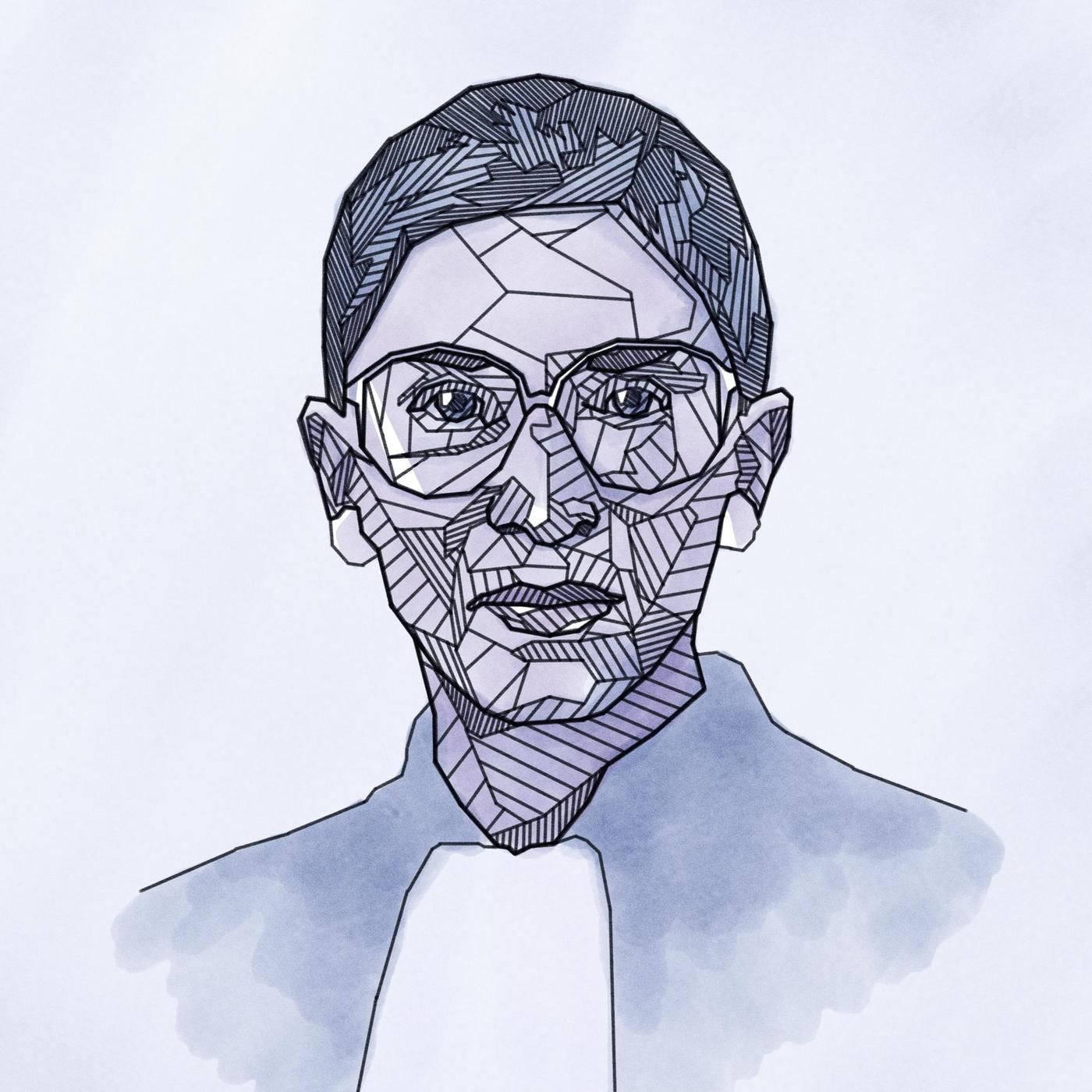
We lost a legend. Supreme Court Justice Ruth Bader Ginsburg died on September 18th, 2020. She was 87. In honor of her passing we are re-airing the More Perfect episode dedicated to one of her cases, because it offers a unique portrait of how one person can make change in the world.   This is the story of how Ginsburg, as a young lawyer at the ACLU, convinced an all-male Supreme Court to take discrimination against women seriously - using a case on discrimination against men.  This episode was reported by Julia Longoria. Special thanks to Stephen Wiesenfeld, Alison Keith, and Bob Darcy. Supreme Court archival audio comes from Oyez®, a free law project in collaboration with the Legal Information Institute at Cornell. Support Radiolab today at Radiolab.org/donate. 
Duration
55m
Broadcast on
18 Sep 2020
Audio Format
other

We lost a legend. Supreme Court Justice Ruth Bader Ginsburg died on September 18th, 2020. She was 87. In honor of her passing we are re-airing the More Perfect episode dedicated to one of her cases, because it offers a unique portrait of how one person can make change in the world. 

 This is the story of how Ginsburg, as a young lawyer at the ACLU, convinced an all-male Supreme Court to take discrimination against women seriously - using a case on discrimination against men. 

This episode was reported by Julia Longoria.

Special thanks to Stephen Wiesenfeld, Alison Keith, and Bob Darcy.

Supreme Court archival audio comes from Oyez®, a free law project in collaboration with the Legal Information Institute at Cornell.

Support Radiolab today at Radiolab.org/donate. 


Hosted by Simplecast, an AdsWizz company. See pcm.adswizz.com for information about our collection and use of personal data for advertising.

Hey, it's Jad. This is RadioLab. Tonight, we lost a legend. Supreme Court Justice Ruth Bader Ginsburg died. She was 87. It's a lot to think about. A few years ago, RadioLab created a spin-off series more perfect about Supreme Court. And in one episode, we told a story about RBG that has, um... And it stuck with me. I think it's a story we should all listen to right now. Because it's, um... It's a sort of snapshot of how one person can make change in the world. In memory of Ruth Bader Ginsburg, we wanted to re-release it for you again tonight. It comes to you from producer Julia Longoria. I'm gonna ask you an utterly false question, which is where would you like to start? As if we haven't been doing this for so damn long. Okay, so let me outline the basic dilemma that's at the heart of the story here. Right. And I'm gonna put it to you as a question. Bring it. If you were to do a control F in the Constitution, like, how many times do you think the word sex comes up? Oh. That's interesting. Six? I'm guessing it was the answer. It's one, one time in the 19th Amendment, which grants people the right to vote based on sex. Really? Yes. That's the only time? That's the only time, which is crazy 'cause we already have. Was there, like, a non... is there a sex word that's not sex, like, gender or something, something? No, nothing. Is there, like, ladies in the Constitution? No. Really? Okay, constitutionally women have a problem, which is that basically we're not in the Constitution, except, like, in this one little spot. So, when it comes to discriminating against women, some people have argued that you... There's nothing in the Constitution that says you can't do it. Certainly, if the Constitution does not require sexual discrimination on the basis of sex, Constitution doesn't require it, it simply doesn't forbid it. That's the lead justice to Antonin Scalia. It doesn't. Nobody ever voted for that. So, where do you get it from? There was nothing that said that. I mean, not those words explicitly, but there was nothing that says you can't discriminate. Not on the basis of sex. That's legal editor Christian Ferris. We had a 14th Amendment that told people that we are equal under the law, that everyone has equal protection of the laws, but doesn't that say it means kind of enough? They never applied the 14th Amendment to women. They didn't apply the 15th. That's Martha Griffith's Congresswoman.

Transcription truncated.

We lost a legend. Supreme Court Justice Ruth Bader Ginsburg died on September 18th, 2020. She was 87. In honor of her passing we are re-airing the More Perfect episode dedicated to one of her cases, because it offers a unique portrait of how one person can make change in the world.   This is the story of how Ginsburg, as a young lawyer at the ACLU, convinced an all-male Supreme Court to take discrimination against women seriously - using a case on discrimination against men.  This episode was reported by Julia Longoria. Special thanks to Stephen Wiesenfeld, Alison Keith, and Bob Darcy. Supreme Court archival audio comes from Oyez®, a free law project in collaboration with the Legal Information Institute at Cornell. Support Radiolab today at Radiolab.org/donate.