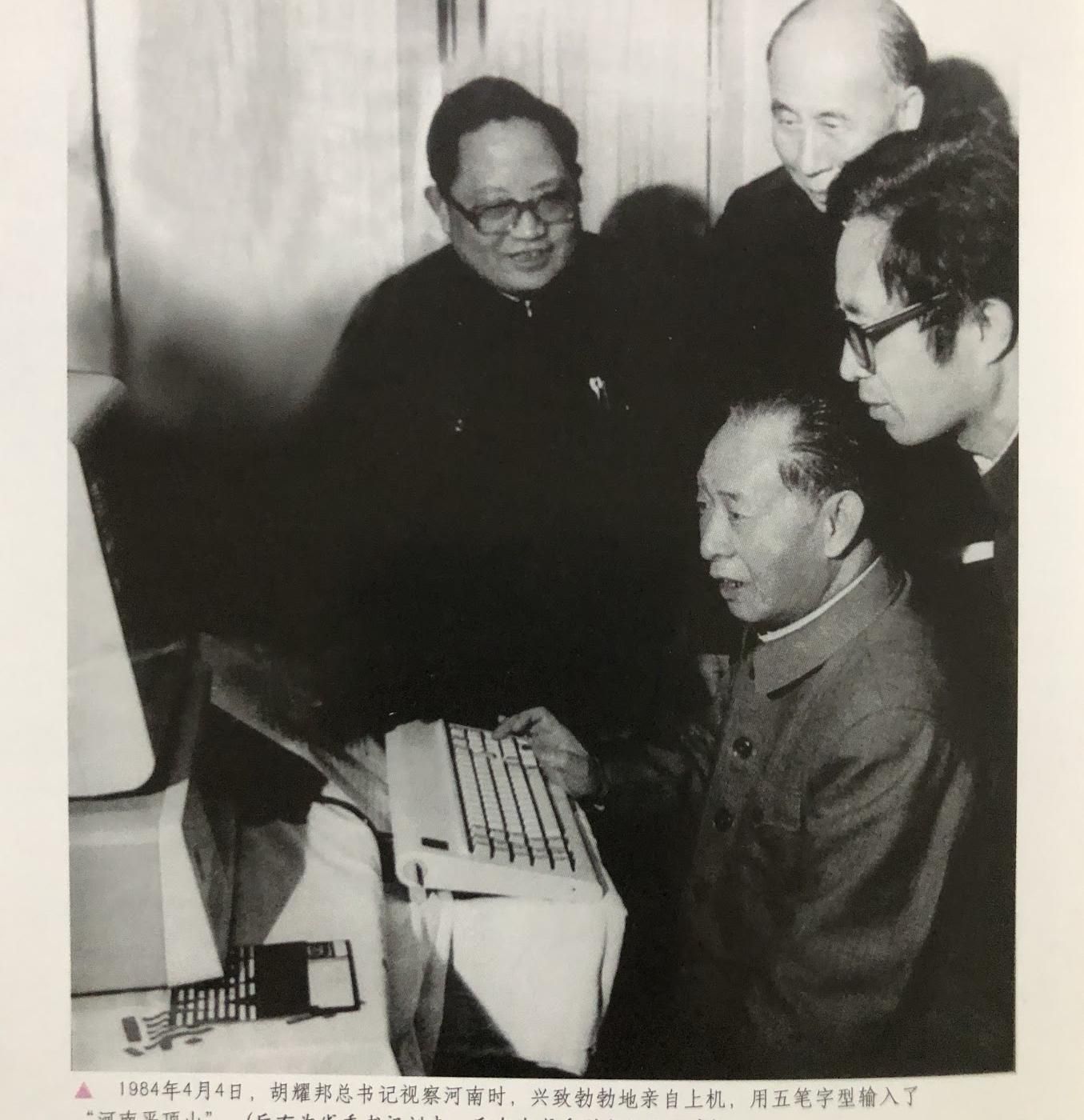
When we think of China today, we think of a technological superpower. From Huawei and 5G to TikTok and viral social media, China is stride for stride with the United States in the world of computing. However, China’s technological renaissance almost didn’t happen. And for one very basic reason: The Chinese language, with its 70,000 plus characters, couldn’t fit on a keyboard.
Today, we tell the story of Professor Wang Yongmin, a hard headed computer programmer who solved this puzzle and laid the foundation for the China we know today.
This episode was reported and produced by Simon Adler with reporting assistance from Yang Yang.
Special thanks to Martin Howard. You can view his renowned collection of typewriters at: antiquetypewriters.com
Support Radiolab today at Radiolab.org/donate.
Duration
55m
Broadcast on
14 Aug 2020
Audio Format
other
This episode appears to contain dynamically inserted ads. Transcript timestamps may be approximate.
When we think of China today, we think of a technological superpower. From Huawei and 5G to TikTok and viral social media, China is stride for stride with the United States in the world of computing. However, China’s technological renaissance almost didn’t happen. And for one very basic reason: The Chinese language, with its 70,000 plus characters, couldn’t fit on a keyboard.
Today, we tell the story of Professor Wang Yongmin, a hard headed computer programmer who solved this puzzle and laid the foundation for the China we know today.
This episode was reported and produced by Simon Adler with reporting assistance from Yang Yang.
Special thanks to Martin Howard. You can view his renowned collection of typewriters at: antiquetypewriters.com
Hosted by Simplecast, an AdsWizz company. See pcm.adswizz.com for information about our collection and use of personal data for advertising.
RIDILEB is supported by AT&T. We all love to connect via video calls or texts. Right now, at AT&T, you can get the new iPhone 18 Pro for $0 with iPhone trade-in. Any condition. It has the ultimate pro camera system and big leap in battery life, so you can turn this deal into a long-lasting connection. Learn how you can trade in your iPhone for the new iPhone 18 Pro requires trade-in of iPhone 14 or higher, excluding iPhone 16E, an eligible plan. Terms and restrictions apply, subject to change, visit an AT&T store for details. Hey, I'm Chad Ebenrod. This is RadioLab to start things off today, a couple months ago. In that magical forgotten time before the coronavirus, our reporter Simon Adler somewhat watched me a few blocks from our office, Mike in hand, to a coffee shop. Okay, with our coffee purchased, let's go stand in the corner where it's maybe a little less loud. Sort of a fancy one, exposed brick, bare Edison bulbs. So let's gaze out upon the hipsters of Lower Manhattan. It's a survey and count the number of laptops. Yeah, so how many laptops do you think are in here? Okay, starting from the left, we're going to circle around, we've got one, two, three, four, five, six... Two more on the phone. Two more on the mark. And they're all typing the same way, right? They're all using a QWERTY keyboard? Yeah, yes. And the reason he dragged me there, as I now know, now let's imagine we're in Shenzhen in a Chinese Starbucks. Was to point out a massive cultural difference hidden in plain sight and to propose a bit of a reporting trip? Are you going to send somebody to Starbucks in Shenzhen? Well, that's my hope that I will be the one sent to a Starbucks in Shenzhen. Well played, Adler. Now you did not bite on that reporting trip. Nope. Plus, pretty soon thereafter, traveling to China became a lot more difficult. So... Okay, I'm in this big Starbucks shop here in Hong Kong. To play out this comparison I had in mind, instead, we hired and sent local reporter Yang Yang to scope it out for us. There are about 50 people here, maybe 30 laptops or tablets open. Because, and here is where we get to the point, everyone in this Starbucks, you know, typing and writing and browsing on the internet, we're all using their keyboards in a different way. I mean, so using it in different ways, in the way that they use the keyboard or that the keyboards that they're using themselves are different. The physical keyboard is going to be the exact same thing. They're QWERTY keyboards. Just like here in New York. Oh, okay.
Transcription truncated.
When we think of China today, we think of a technological superpower. From Huawei and 5G to TikTok and viral social media, China is stride for stride with the United States in the world of computing. However, China’s technological renaissance almost didn’t happen. And for one very basic reason: The Chinese language, with its 70,000 plus characters, couldn’t fit on a keyboard.
Today, we tell the story of Professor Wang Yongmin, a hard headed computer programmer who solved this puzzle and laid the foundation for the China we know today.
This episode was reported and produced by Simon Adler with reporting assistance from Yang Yang.
Special thanks to Martin Howard. You can view his renowned collection of typewriters at: antiquetypewriters.com
Support Radiolab today at Radiolab.org/donate.