ArchiveFM

First things first: our very own Latif Nasser has an exciting new show on Netflix. He talks to Jad about the hidden forces of the world that connect us all. Then, with an eye on the upcoming election, we take a look back: at two pieces from More Perfect Season 3 about Constitutional amendments that determine who gets to vote. Former Radiolab producer Julia Longoria takes us to Washington, D.C. The capital is at the heart of our democracy, but it’s not a state, and it wasn’t until the 23rd Amendment that its people got the right to vote for president. But that still left DC without full representation in Congress; D.C. sends a "non-voting delegate" to the House. Julia profiles that delegate, Congresswoman Eleanor Holmes Norton, and her unique approach to fighting for power in a virtually powerless role. Second, Radiolab producer Sarah Qari looks at a current fight to lower the US voting age to 16 that harkens back to the fight for the 26th Amendment in the 1960s. Eighteen-year-olds at the time argued that if they were old enough to be drafted to fight in the War, they were old enough to have a voice in our democracy. But what about today, when even younger Americans are finding themselves at the center of national political debates? Does it mean we should lower the voting age even further? Music in this episode by Carling & Will This episode was reported and produced by Julia Longoria and Sarah Qari. Check out Latif Nasser’s new Netflix show Connected here. Support Radiolab today at Radiolab.org/donate. 
Duration
52m
Broadcast on
07 Aug 2020
Audio Format
other

First things first: our very own Latif Nasser has an exciting new show on Netflix. He talks to Jad about the hidden forces of the world that connect us all.

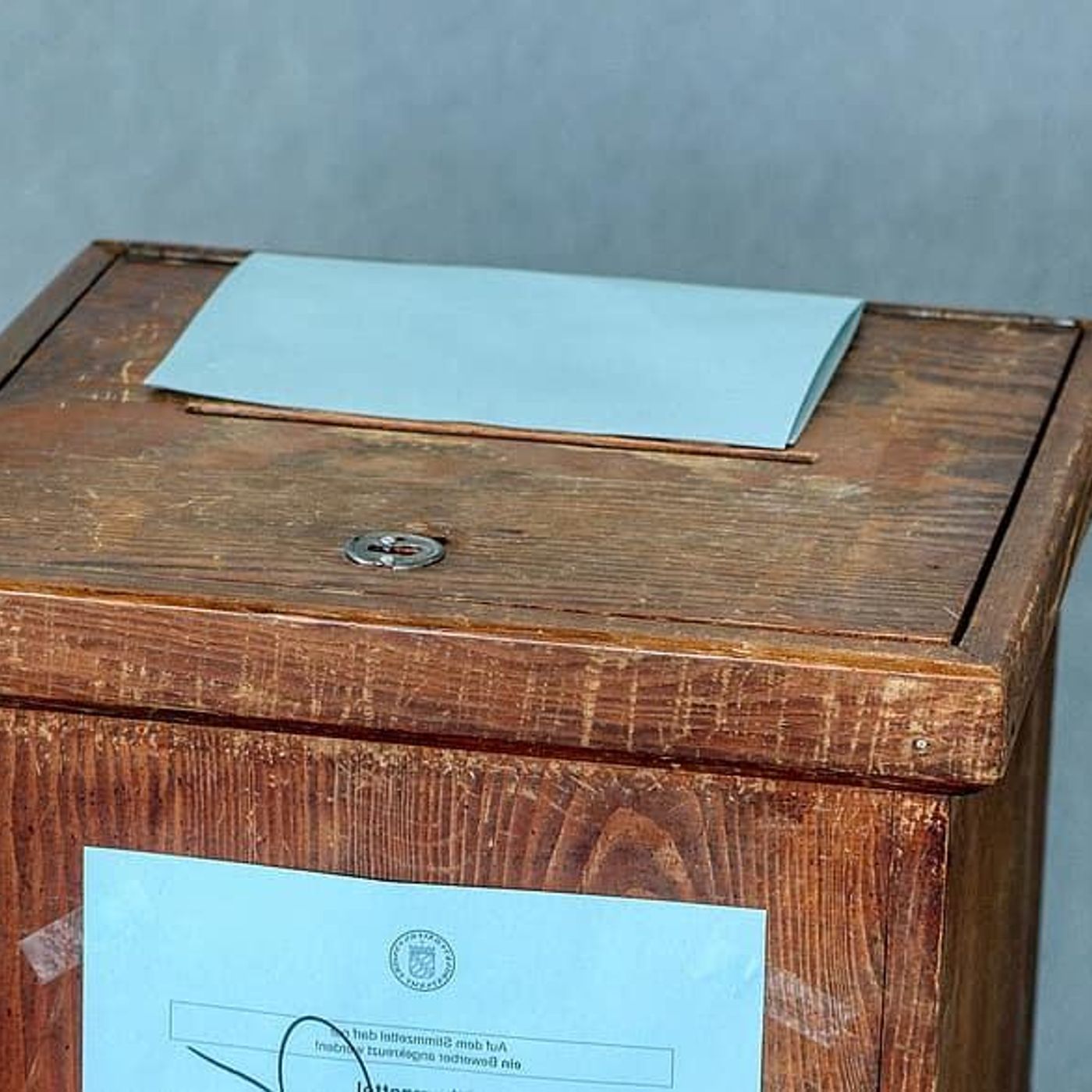
Then, with an eye on the upcoming election, we take a look back: at two pieces from More Perfect Season 3 about Constitutional amendments that determine who gets to vote.

Former Radiolab producer Julia Longoria takes us to Washington, D.C. The capital is at the heart of our democracy, but it’s not a state, and it wasn’t until the 23rd Amendment that its people got the right to vote for president. But that still left DC without full representation in Congress; D.C. sends a "non-voting delegate" to the House. Julia profiles that delegate, Congresswoman Eleanor Holmes Norton, and her unique approach to fighting for power in a virtually powerless role.

Second, Radiolab producer Sarah Qari looks at a current fight to lower the US voting age to 16 that harkens back to the fight for the 26th Amendment in the 1960s. Eighteen-year-olds at the time argued that if they were old enough to be drafted to fight in the War, they were old enough to have a voice in our democracy. But what about today, when even younger Americans are finding themselves at the center of national political debates? Does it mean we should lower the voting age even further?

Music in this episode by Carling & Will

This episode was reported and produced by Julia Longoria and Sarah Qari.

Check out Latif Nasser’s new Netflix show Connected here.

Support Radiolab today at Radiolab.org/donate. 


Hosted by Simplecast, an AdsWizz company. See pcm.adswizz.com for information about our collection and use of personal data for advertising.

- Wait, you're listening to Radio Lab from WNYC. - Hey, well first caveat, I feel like I need to do, which is that I have my, I literally just got a call. I have my phone on because my wife could go into labor at any minute. - Yeah, you just got a call from my sister, probably trying to see if my wife is going in labor. - Hey, I'm Chad Abumra, this is Radio Lab. We've got a couple things for you today. We have a look forward, then a couple looks back, which turn into a look forward. But to get going, I want to share a conversation I had this week with our director of research, lots of Nasser, who among other things hosted the recent series, The Other Lautif. Might think of Our Lautif as The Other Lautif. And I want to feature, I just want to point a spotlight at him for a second, because man, he has a lot going on right now. In addition to having a kid, he just released a TV show he did with Netflix, and I wanted to talk about it. So two days ago, my show came out and then today, hopefully, supposedly, my baby's coming out. So it's a lot going on right now. - Let's talk about the creative child, the creative baby that you just had. What is it? How did it come to be? And just sort of set it up for me. - Yeah, so I made this TV show. It's called Connected, and the idea is it's sort of a, it's a kind of meditation on the, like, many scientifically observed ways that each of us are connected to each other and our world, and that are sort of so surprising. And the kinds of things, like I think a great Radialab show, will make you kind of look at a thing you take for granted and see it in a whole new way. - It's one of these, like, Jason Bourne-esque shows, where literally every scene is in a different country. You know, there's lots of in the desert. There's lots of on a plane. There's lots of in space. I don't know if you were ever in space, but I was-- - I was not in space. I did go in a hot air balloon over a volcano. - I was like, I was jealous of you from the very beginning. So how did you, let me ask you about that. Let's talk about dust, because that's one of the six episodes, where you follow dust literally blowing across the earth. - Yeah. - How did you decide on dust? - It was from a press release that NASA put out, and it felt like this globe-spanning, subtle, hidden force that's, like, nudging different people in different places in different ways that you just-- you never could have guessed that all of those came from the same thing. And then that thing happened to be, like, this random dust from this random spot in the middle of the Sahara Desert. - So it turns out getting to the dustiest place on planet Earth is really, really difficult. I've been traveling for, like, three days now. - So, okay, so we start in the Sahara. Beautiful overhead shot of you walking through this, like, dusting landscape. - And it's a great scene of you and a scientist leaning over a prehistoric fish, dried up in the dust, because you explained that this used to be an ocean. - It's a catfish. It was, like, it almost felt like a religious experience. Like, I felt like I was communing with this prehistoric catfish. - Okay, so you point at this fish, and you say, "This ancient fish is part of what has created the dust of this desert, and this dust literally blows across the entire globe. Walk me through the sort of places you follow it." - Yeah. Okay, so this dust, so it's like in this special spot where there are these mountain ranges and it creates this kind of wind tunnel effect, so the wind just, like, digs it up and kind of grates it down this fish and all the other creatures that lived in this, like, prehistoric lake, it, like, gets into these fine, fine, fine grains, like, even finer than

Transcription truncated.

First things first: our very own Latif Nasser has an exciting new show on Netflix. He talks to Jad about the hidden forces of the world that connect us all. Then, with an eye on the upcoming election, we take a look back: at two pieces from More Perfect Season 3 about Constitutional amendments that determine who gets to vote. Former Radiolab producer Julia Longoria takes us to Washington, D.C. The capital is at the heart of our democracy, but it’s not a state, and it wasn’t until the 23rd Amendment that its people got the right to vote for president. But that still left DC without full representation in Congress; D.C. sends a "non-voting delegate" to the House. Julia profiles that delegate, Congresswoman Eleanor Holmes Norton, and her unique approach to fighting for power in a virtually powerless role. Second, Radiolab producer Sarah Qari looks at a current fight to lower the US voting age to 16 that harkens back to the fight for the 26th Amendment in the 1960s. Eighteen-year-olds at the time argued that if they were old enough to be drafted to fight in the War, they were old enough to have a voice in our democracy. But what about today, when even younger Americans are finding themselves at the center of national political debates? Does it mean we should lower the voting age even further? Music in this episode by Carling & Will This episode was reported and produced by Julia Longoria and Sarah Qari. Check out Latif Nasser’s new Netflix show Connected here. Support Radiolab today at Radiolab.org/donate.