ArchiveFM

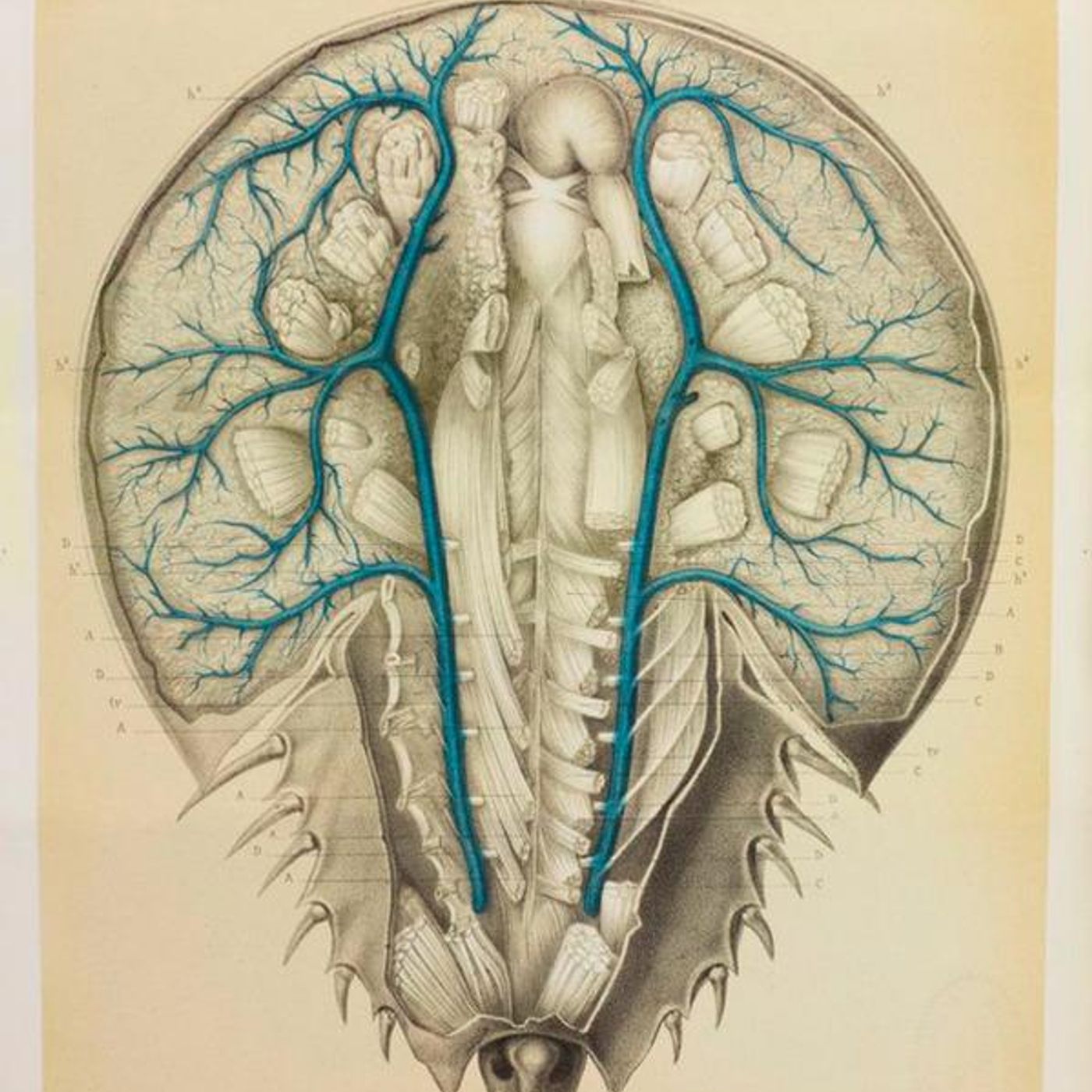
Horseshoe crabs are not much to look at.  But beneath their unassuming catcher’s-mitt shell, they harbor a half-billion-year-old secret: a superpower that helped them outlive the dinosaurs and survive all the Earth’s mass extinctions.  And what is that secret superpower? Their blood. Their baby blue blood.  And it’s so miraculous that for decades, it hasn’t just been saving their butts, it’s been saving ours too. But that all might be about to change.    Follow us as we follow these ancient critters - from a raunchy beach orgy to a marine blood drive to the most secluded waterslide - and learn a thing or two from them about how much we depend on nature and how much it depends on us. This episode was reported by Latif Nasser with help from Damiano Marchetti and Lulu Miller, and was produced by Annie McEwen and Matt Kielty with help from Liza Yeager. Special thanks to Arlene Shaner at the NY Academy of Medicine, Tim Wisniewski at the Alan Mason Cheney Medical Archives at Johns Hopkins University, Jennifer Walton at the library of the Marine Biological Lab, and Glenn Gauvry at the Ecological Research and Development Group. Support Radiolab today at Radiolab.org/donate. 
Duration
1h 7m
Broadcast on
23 Jul 2020
Audio Format
other

Horseshoe crabs are not much to look at.  But beneath their unassuming catcher’s-mitt shell, they harbor a half-billion-year-old secret: a superpower that helped them outlive the dinosaurs and survive all the Earth’s mass extinctions.  And what is that secret superpower? Their blood. Their baby blue blood.  And it’s so miraculous that for decades, it hasn’t just been saving their butts, it’s been saving ours too.

But that all might be about to change.  

 Follow us as we follow these ancient critters - from a raunchy beach orgy to a marine blood drive to the most secluded waterslide - and learn a thing or two from them about how much we depend on nature and how much it depends on us.

This episode was reported by Latif Nasser with help from Damiano Marchetti and Lulu Miller, and was produced by Annie McEwen and Matt Kielty with help from Liza Yeager.

Special thanks to Arlene Shaner at the NY Academy of Medicine, Tim Wisniewski at the Alan Mason Cheney Medical Archives at Johns Hopkins University, Jennifer Walton at the library of the Marine Biological Lab, and Glenn Gauvry at the Ecological Research and Development Group.

Support Radiolab today at Radiolab.org/donate. 


Hosted by Simplecast, an AdsWizz company. See pcm.adswizz.com for information about our collection and use of personal data for advertising.

(swooshing) RadioLab is supported by AT&T. We all love to connect via video, a text, or a group chat that never stops. And right now, AT&T has a deal that will keep the connection going. You can get the new iPhone 18 Pro for $0 with eligible trade-in. It has the Ultimate Pro camera system and a big leap in battery life. So you can turn this deal into a long lasting connection. Learn how you can trade in your phone for the new iPhone 18 Pro at AT&T. Connecting changes everything. Required trade-in of $230 or more and eligible plan, terms, and restrictions apply, subject to change, visit an AT&T store for details. (swooshing) - Hey, this is Jad, RadioLab. I'm gonna replay an episode that we made back in 2018 because it's a good one, first and foremost, and also we got some pretty surprising coronavirus related updates to it, which we're gonna share near the end of the episode. So first, here's the original, and then we'll come back and talk a little bit. Wait, you're listening to RadioLab, from W.N.Y.S. (swooshing) - Hey, I'm Jad, I'm Rod. - I'm Robert Kowich. - I'm with Danny Beach, or a Pickering Beach. - Yeah, you're down 13, you're gonna see this, you're gonna see the store on the right hand side. You're gonna make a left, that's actually a sparrow speech. - And this? - Oh, it's called Bower Speech. - Is reporter lots of now, sir. - Okay, okay, okay. - You don't wanna go first. - Okay, so three years ago? - Three or four years ago? I'd taken the bus down to Delaware, and I stayed in this crappy hotel, and then woke up super early, like 5 a.m., still dark out, to hop in this cab. - Oh, you have gotten me really excited, let me tell you. - Oh, that's the place you go. - I just started working at RadioLab, this is like my first time I'd been sent out to just go out and get tape.

Transcription truncated.

Horseshoe crabs are not much to look at.  But beneath their unassuming catcher’s-mitt shell, they harbor a half-billion-year-old secret: a superpower that helped them outlive the dinosaurs and survive all the Earth’s mass extinctions.  And what is that secret superpower? Their blood. Their baby blue blood.  And it’s so miraculous that for decades, it hasn’t just been saving their butts, it’s been saving ours too. But that all might be about to change.    Follow us as we follow these ancient critters - from a raunchy beach orgy to a marine blood drive to the most secluded waterslide - and learn a thing or two from them about how much we depend on nature and how much it depends on us. This episode was reported by Latif Nasser with help from Damiano Marchetti and Lulu Miller, and was produced by Annie McEwen and Matt Kielty with help from Liza Yeager. Special thanks to Arlene Shaner at the NY Academy of Medicine, Tim Wisniewski at the Alan Mason Cheney Medical Archives at Johns Hopkins University, Jennifer Walton at the library of the Marine Biological Lab, and Glenn Gauvry at the Ecological Research and Development Group. Support Radiolab today at Radiolab.org/donate.