ArchiveFM

People have been doing the square dance since before the Declaration of Independence. But does that mean it should be THE American folk dance? That question took us on a journey from Appalachian front porches, to dance classes across our nation, to the halls of Congress, and finally a Kansas City convention center. And along the way, we uncovered a secret history of square dancing that made us see how much of our national identity we could stuff into that square, and what it means for a dance to be of the people, by the people, and for the people.  Special thanks to Jim Mayo, Claude Fowler, Paul Gifford, Jim Maczko, Jim Davis, Paul Moore, Jack Pladdys, Mary Jane Wegener, Kinsey Brooke and Connie Keener.  This episode was reported by Tracie Hunte and produced by Annie McEwen, Tracie Hunte, and Matt Kielty. Mix by Jeremy Bloom. Support Radiolab today at Radiolab.org/donate.    Check out Phil Jamison's book,  “Hoedowns, Reels, and Frolics: Roots and Branches of Southern Appalachian Dance” Watch this 1948 Lucky Strike Cigarette Square Dancing Commercial A rare image of Black Square Dancers in 1948 The Square Dance History Project Read “America’s Wholesome Square Dancing Tradition is a Tool of White Supremacy,” by Robyn Pennachia for Quartz And Pennachia’s original Twitter thread Read “The State Folk Dance Conspiracy: Fabricating a National Folk Dance,” by Julianne Mangin  
Duration
48m
Broadcast on
23 Oct 2019
Audio Format
other

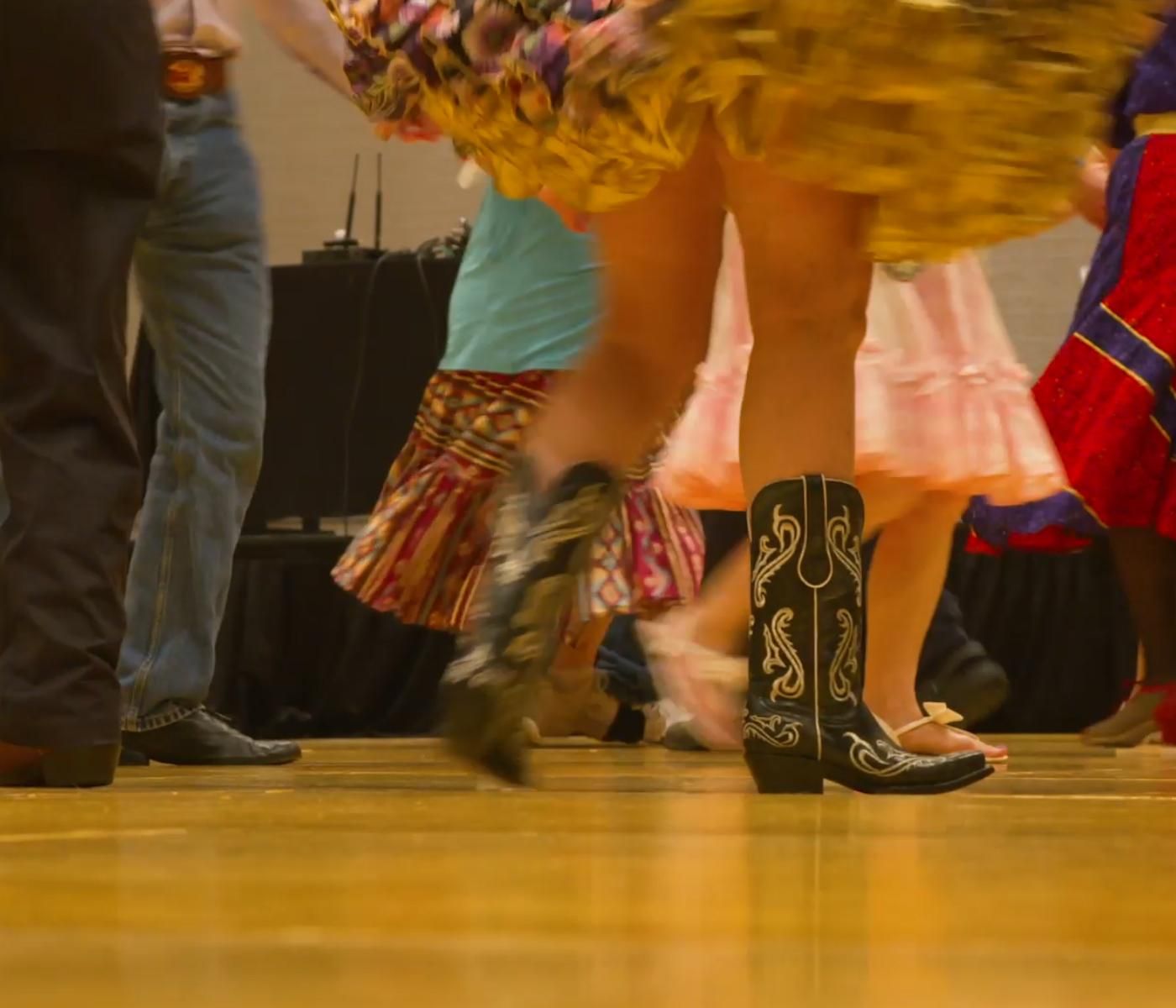
People have been doing the square dance since before the Declaration of Independence. But does that mean it should be THE American folk dance? That question took us on a journey from Appalachian front porches, to dance classes across our nation, to the halls of Congress, and finally a Kansas City convention center. And along the way, we uncovered a secret history of square dancing that made us see how much of our national identity we could stuff into that square, and what it means for a dance to be of the people, by the people, and for the people. 

Special thanks to Jim Mayo, Claude Fowler, Paul Gifford, Jim Maczko, Jim Davis, Paul Moore, Jack Pladdys, Mary Jane Wegener, Kinsey Brooke and Connie Keener. 

This episode was reported by Tracie Hunte and produced by Annie McEwen, Tracie Hunte, and Matt Kielty. Mix by Jeremy Bloom.

Support Radiolab today at Radiolab.org/donate. 


Check out Phil Jamison's book,  “Hoedowns, Reels, and Frolics: Roots and Branches of Southern Appalachian Dance”

Watch this 1948 Lucky Strike Cigarette Square Dancing Commercial

A rare image of Black Square Dancers in 1948

The Square Dance History Project

Read “America’s Wholesome Square Dancing Tradition is a Tool of White Supremacy,” by Robyn Pennachia for Quartz

And Pennachia’s original Twitter thread

Read “The State Folk Dance Conspiracy: Fabricating a National Folk Dance,” by Julianne Mangin


Hosted by Simplecast, an AdsWizz company. See pcm.adswizz.com for information about our collection and use of personal data for advertising.

RIDILEB is supported by AT&T. We all love to connect via video calls or texts. Right now, at AT&T, you can get the new iPhone 18 Pro for $0 with iPhone trade-in. Any condition. It has the ultimate pro camera system and big leap in battery life, so you can turn this deal into a long-lasting connection. Learn how you can trade in your iPhone for the new iPhone 18 Pro requires trade-in of iPhone 14 or higher, excluding iPhone 16E, an eligible plan. Terms and restrictions apply, subject to change, visit an AT&T store for details. I'm Chad Abumran, this is RadioLab, as you may know, I have been working on a series about Dolly Parton. It's called Dolly Partons America, which you can hear if you go to DollyPartonsAmerica.com or you go to iTunes or all the other places and search for Dolly Partons America. And the whole thing is kind of an attempt to look at who we are as a country through the lens of this one singer-songwriter. But... So everybody just find a partner. While I was working on that. And if you don't know them, that's fine. You can just walk up to somebody and say, "Hi, I'm so-and-so, will you dance with me?" I reporter Tracy Hunt was stumbling into a similar set of questions by American-American-ness. If anybody needs a partner, just raise your hand and then look around for other hands that are up. In her case, it was through a dance. Join hands and circle left. Back to the ride, don't take all night. A little while ago, Tracy and I threw a dance party over to a place called the Bell House. That's in Brooklyn. We had a live band. We had a collar named Alex Kramer. We swung our partners around. We dosed he dove. We dove for the clam. I'll swing mine, you swing your. You might have even shot through the hole in the old tin can. Join hands and have pretty little ring. One couple will make an arch, duck for the oyster. There were about a hundred of us there that night learning the very American art of square dancing, but, but, but. You might be asking, why would we do this? Why would Radiolab do a square dancing event in Brooklyn in 2019? Well, it's Tracy's fault. Why can't I hear you? Anything. Oh, ha! It's not plugged in. Oh. It all goes back. I need to find a freaking adapter to a conversation Tracy and I had in the studio before we ever got up on stage together.

Transcription truncated.

People have been doing the square dance since before the Declaration of Independence. But does that mean it should be THE American folk dance? That question took us on a journey from Appalachian front porches, to dance classes across our nation, to the halls of Congress, and finally a Kansas City convention center. And along the way, we uncovered a secret history of square dancing that made us see how much of our national identity we could stuff into that square, and what it means for a dance to be of the people, by the people, and for the people.  Special thanks to Jim Mayo, Claude Fowler, Paul Gifford, Jim Maczko, Jim Davis, Paul Moore, Jack Pladdys, Mary Jane Wegener, Kinsey Brooke and Connie Keener.  This episode was reported by Tracie Hunte and produced by Annie McEwen, Tracie Hunte, and Matt Kielty. Mix by Jeremy Bloom. Support Radiolab today at Radiolab.org/donate.    Check out Phil Jamison's book,  “Hoedowns, Reels, and Frolics: Roots and Branches of Southern Appalachian Dance” Watch this 1948 Lucky Strike Cigarette Square Dancing Commercial A rare image of Black Square Dancers in 1948 The Square Dance History Project Read “America’s Wholesome Square Dancing Tradition is a Tool of White Supremacy,” by Robyn Pennachia for Quartz And Pennachia’s original Twitter thread Read “The State Folk Dance Conspiracy: Fabricating a National Folk Dance,” by Julianne Mangin