ArchiveFM

Albert Einstein asked that when he died, his body be cremated and his ashes be scattered in a secret location. He didn’t want his grave, or his body, becoming a shrine to his genius. When he passed away in the early morning hours of April, 18, 1955, his family knew his wishes. There was only one problem: the pathologist who did the autopsy had different plans. In the third episode of “G”, Radiolab’s miniseries on intelligence, we go on one of the strangest scavenger hunts for genius the world has ever seen. We follow Einstein’s stolen brain from that Princeton autopsy table, to a cider box in Wichita, Kansas, to labs all across the country. And eventually, beyond the brain itself entirely. All the while wondering, where exactly is the genius of a man who changed the way we view the world?    This episode was reported by Rachael Cusick and Pat Walters, and produced by Bethel Habte, Rachael Cusick, and Pat Walters. Music by Alex Overington and Jad Abumrad.  Special thanks to: Elanor Taylor, Claudia Kalb, Dustin O’Halloran, Tim Huson, The Einstein Papers Project, and all the physics for (us) dummies Youtube videos that accomplished the near-impossible feat of helping us understand relativity. Radiolab’s “G” is supported in part by Science Sandbox, a Simons Foundation initiative dedicated to engaging everyone with the process of science. Support Radiolab today at Radiolab.org/donate. 
Duration
1h 5m
Broadcast on
28 Jun 2019
Audio Format
other

Albert Einstein asked that when he died, his body be cremated and his ashes be scattered in a secret location. He didn’t want his grave, or his body, becoming a shrine to his genius. When he passed away in the early morning hours of April, 18, 1955, his family knew his wishes. There was only one problem: the pathologist who did the autopsy had different plans.

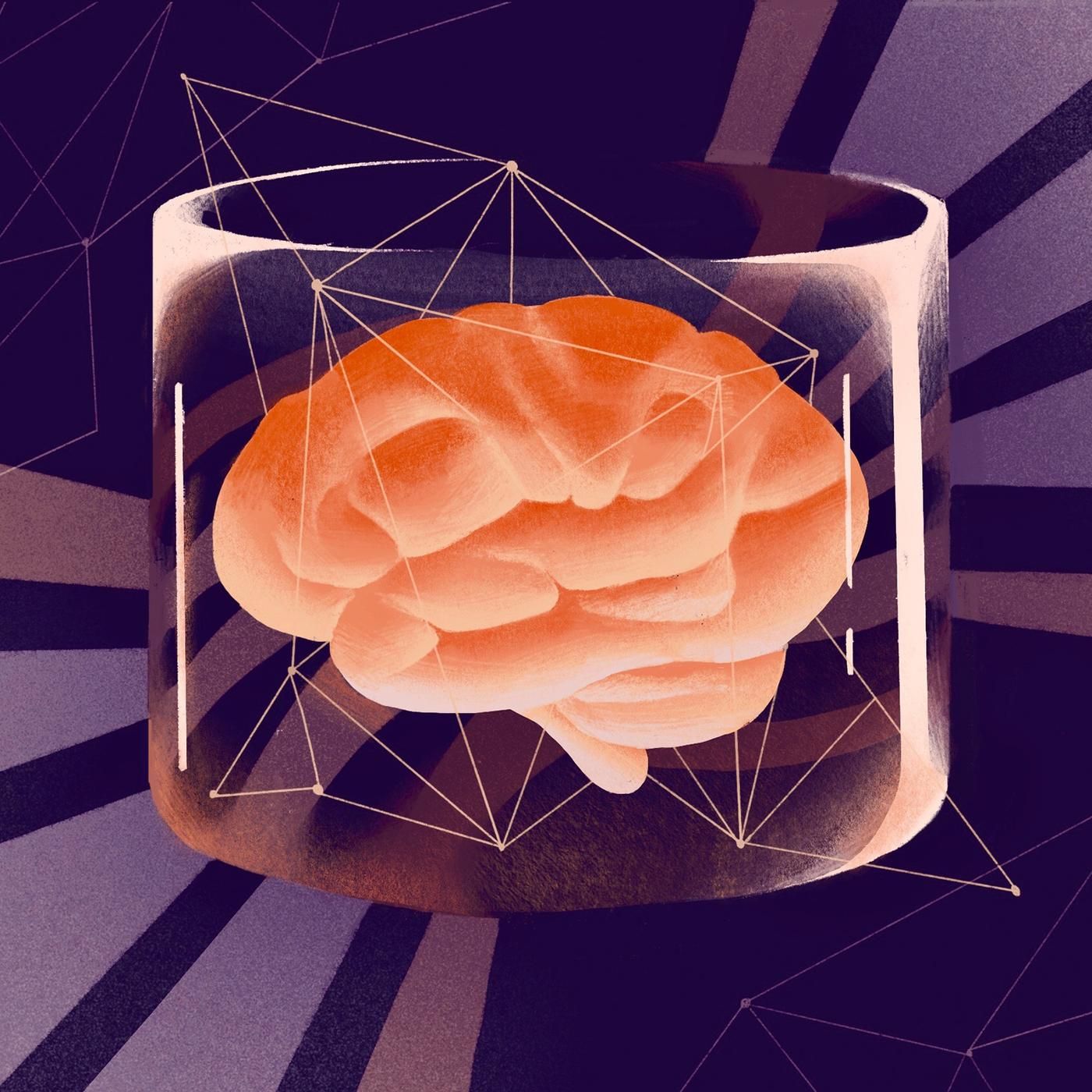
In the third episode of “G”, Radiolab’s miniseries on intelligence, we go on one of the strangest scavenger hunts for genius the world has ever seen. We follow Einstein’s stolen brain from that Princeton autopsy table, to a cider box in Wichita, Kansas, to labs all across the country. And eventually, beyond the brain itself entirely. All the while wondering, where exactly is the genius of a man who changed the way we view the world? 


This episode was reported by Rachael Cusick and Pat Walters, and produced by Bethel Habte, Rachael Cusick, and Pat Walters. Music by Alex Overington and Jad Abumrad. 

Special thanks to: Elanor Taylor, Claudia Kalb, Dustin O’Halloran, Tim Huson, The Einstein Papers Project, and all the physics for (us) dummies Youtube videos that accomplished the near-impossible feat of helping us understand relativity.

Radiolab’s “G” is supported in part by Science Sandbox, a Simons Foundation initiative dedicated to engaging everyone with the process of science.

Support Radiolab today at Radiolab.org/donate. 


Hosted by Simplecast, an AdsWizz company. See pcm.adswizz.com for information about our collection and use of personal data for advertising.

Oh wait, you're listening to Radio Lab from WNYC. Hey, this is G. G, Radio Lab miniseries. I'm Pat Walters and I'm Rachel Cusick. And today we're going to go looking for intelligence in what might seem like one of the more obvious places. Do you need water? Yeah. Water's okay. And the story starts with this guy. Hey, my name is Stephen Levy. I'm an editor large at Wired Magazine. Thank you so much for coming in. Basically, I guess where did this all start for you? In 1978, I was working for a magazine called New Jersey Monthly. Steve was young, fresh out of school. It was my first real job in journalism. Offices were in a suburb outside Princeton, New Jersey. Sort of an office park, a very bland set of offices with cubicles and, you know, really dunder Mifflin-ish. Steve says it was a typical boring entry-level job until this one day. We had a new editor. It got interesting. Yeah. And he went to his office and said, "I want you to find Einstein's brain." And I thought, "What?" Yeah. Were you like, "That sounds exciting," or were you like, "I don't know." I thought, "I thought that. That sounds pretty cool." Yeah. You know, I had been working on a piece about the psychology of the New Jersey driver, right? Right. Right. I mean, I literally did a service piece about racquetball, which was a big trend then. This is better. Now, the reason the editor assigned him this story is there had been these rumors, going back years, that when Einstein died back in 1955, moments after his death, someone had literally stolen his brain and run off with it. Sort of an urban legend, Einstein's brain is somewhere and, you know, there's, you know, the Russians have it and they're trying to clone Einstein and Steve's editor just wanted him to get to the bottom of it. He literally said to me, "I want you to find Einstein's brain." What did you know about Einstein at that point in his brain? Well, you know, what I knew about Einstein is what anyone on the street would know about Einstein, essentially. You know, there's this guy with a funny hair that had relativity, right? Mm-hmm. Whatever that was. What do you would quickly learn?

Transcription truncated.

Albert Einstein asked that when he died, his body be cremated and his ashes be scattered in a secret location. He didn’t want his grave, or his body, becoming a shrine to his genius. When he passed away in the early morning hours of April, 18, 1955, his family knew his wishes. There was only one problem: the pathologist who did the autopsy had different plans. In the third episode of “G”, Radiolab’s miniseries on intelligence, we go on one of the strangest scavenger hunts for genius the world has ever seen. We follow Einstein’s stolen brain from that Princeton autopsy table, to a cider box in Wichita, Kansas, to labs all across the country. And eventually, beyond the brain itself entirely. All the while wondering, where exactly is the genius of a man who changed the way we view the world?    This episode was reported by Rachael Cusick and Pat Walters, and produced by Bethel Habte, Rachael Cusick, and Pat Walters. Music by Alex Overington and Jad Abumrad.  Special thanks to: Elanor Taylor, Claudia Kalb, Dustin O’Halloran, Tim Huson, The Einstein Papers Project, and all the physics for (us) dummies Youtube videos that accomplished the near-impossible feat of helping us understand relativity. Radiolab’s “G” is supported in part by Science Sandbox, a Simons Foundation initiative dedicated to engaging everyone with the process of science. Support Radiolab today at Radiolab.org/donate.