ArchiveFM

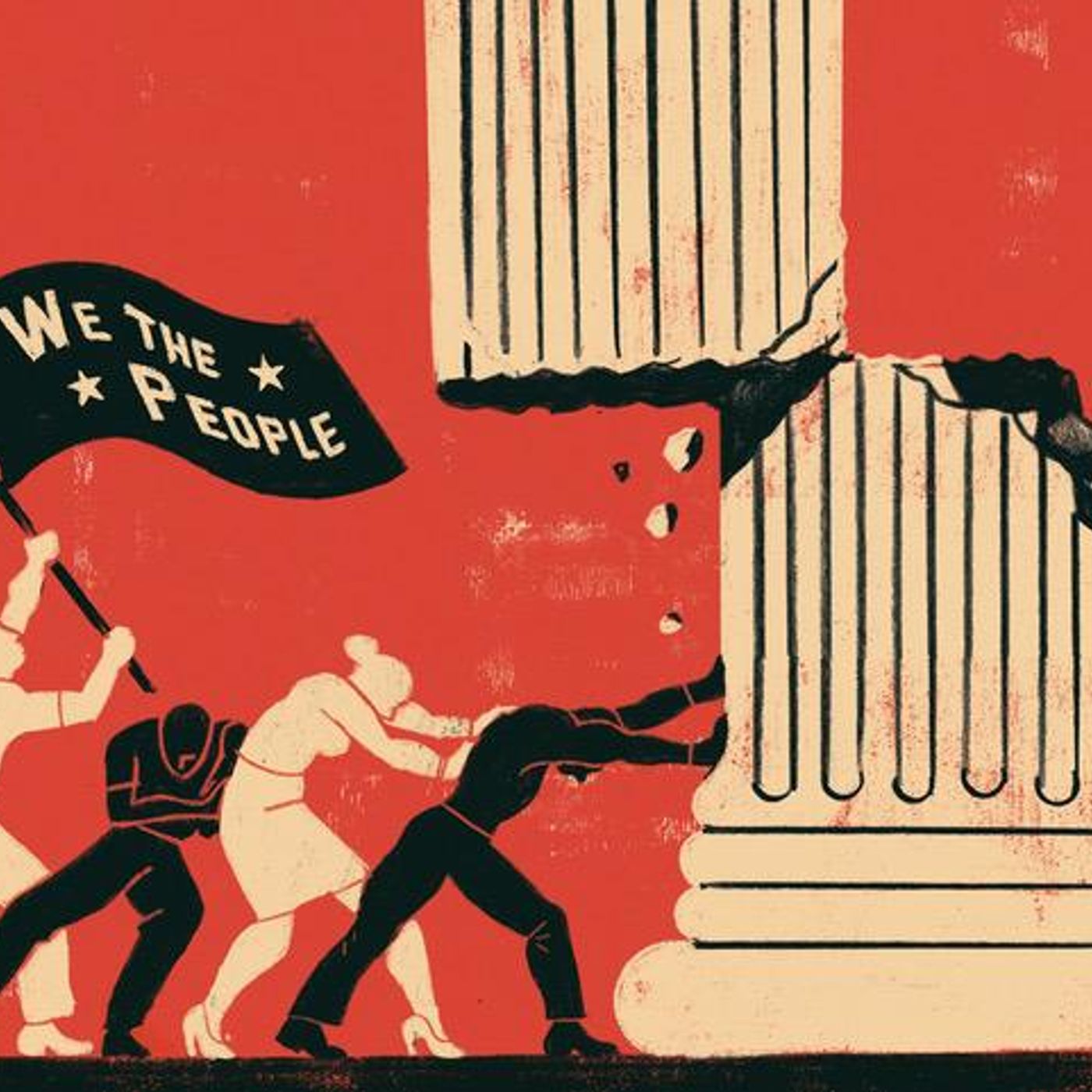
Democracy is on the ropes.  In the United States and abroad, citizens of democracies are feeling increasingly alienated, disaffected, and powerless.  Some are even asking themselves a question that feels almost too dangerous to say out loud: is democracy fundamentally broken?   Today on Radiolab, just a day before the American midterm elections, we ask a different question: how do we fix it?  We scrutinize one proposed tweak to the way we vote that could make politics in this country more representative, more moderate, and most shocking of all, more civil.  Could this one surprisingly do-able mathematical fix really turn political campaigning from a rude bloodsport to a campfire singalong? And even if we could do that, would we want to? This episode was reported by Latif Nasser, Simon Adler, Sarah Qari, Suzie Lechtenberg and Tracie Hunte, and was produced by Simon Adler, Matt Kielty, Sarah Qari, and Suzie Lechtenberg. Special thanks to Rob Richie (and everyone else at Fairvote), Don Saari, Diana Leygerman, Caroline Tolbert, Bobby Agee, Edward Still, Jim Blacksher, Allen Caton, Nikolas Bowie, John Hale, and Anna Luhrmann and the rest of the team at the Varieties of Democracy Institute in Sweden. Support Radiolab today at Radiolab.org/donate.  oh...and GO VOTE!
Duration
1h 9m
Broadcast on
05 Nov 2018
Audio Format
other

Democracy is on the ropes.  In the United States and abroad, citizens of democracies are feeling increasingly alienated, disaffected, and powerless.  Some are even asking themselves a question that feels almost too dangerous to say out loud: is democracy fundamentally broken?  

Today on Radiolab, just a day before the American midterm elections, we ask a different question: how do we fix it?  We scrutinize one proposed tweak to the way we vote that could make politics in this country more representative, more moderate, and most shocking of all, more civil.  Could this one surprisingly do-able mathematical fix really turn political campaigning from a rude bloodsport to a campfire singalong? And even if we could do that, would we want to?

This episode was reported by Latif Nasser, Simon Adler, Sarah Qari, Suzie Lechtenberg and Tracie Hunte, and was produced by Simon Adler, Matt Kielty, Sarah Qari, and Suzie Lechtenberg.

Special thanks to Rob Richie (and everyone else at Fairvote), Don Saari, Diana Leygerman, Caroline Tolbert, Bobby Agee, Edward Still, Jim Blacksher, Allen Caton, Nikolas Bowie, John Hale, and Anna Luhrmann and the rest of the team at the Varieties of Democracy Institute in Sweden.

Support Radiolab today at Radiolab.org/donate. 

oh...and GO VOTE!


Hosted by Simplecast, an AdsWizz company. See pcm.adswizz.com for information about our collection and use of personal data for advertising.

I'm not doing this part of it, but I'm doing it. I'm Robert Krolich and I'm Luthef Nasser and today on Radio Lab, Robert, I am going to make you wrestle with your most cherished ideal American democracy. Oh, I see. Okay, great. Wait. Hang on a second. I'm just struggling with the influence. Now I have a one. Okay. Okay. Great. And I'm going to start things off by introducing you to Yasha. Yasha Monk. I'm a lecturer on government at Harvard. He studies politics. What was I was going to say? Maybe we could just start with where you grew up. Yeah. Um, so I was born in 1982. I grew up in Germany, moved around a bunch of different places in Germany as a kid, and then went to college in England. Cambridge. In 2000. And I was kind of studying politics. I was a history major. So Yasha was studying politics, but he was studying it in the past. So he was looking at, you know, going all the way back to the cradle of democracy and ancient Greece and then how democracy came to thrive around the world. But as he was studying that, he was noticing, you know, in the news, he would see in certain countries like France or Austria, you know, there would be these parties, these far right ultra nationalist, anti-immigrant parties that were starting to gain some traction. And for Yasha, I saw some of this. This was a little bit scary because my family's been in the wrong place at the wrong time for about four generations. His great grandparents perished during the Holocaust. My grandparents sort of barely survived in the Soviet Union. My parents grew up in Poland and were thrown out of a country in a huge sort of antisemitic wave in 1968. And so the idea that, you know, political systems that seemed relatively stable and seemed relatively peaceful might suddenly turn fractures and even violent was something where I suppose I always had to sort of dim awareness of even as a kid. So I remember being quite worried by this and having friends who were quite worried about it, but we were worried about it as sort of this weird bad thing that's going on. But I don't think we actually thought that these people might win. Jump to the early 2010s, they start winning. For the first time, Malin Nopan will have a seat in Parliament, along with seven others from her far right party. These far right parties in Austria and France, they start to gain power. And it's not just there.

Transcription truncated.

Democracy is on the ropes.  In the United States and abroad, citizens of democracies are feeling increasingly alienated, disaffected, and powerless.  Some are even asking themselves a question that feels almost too dangerous to say out loud: is democracy fundamentally broken?   Today on Radiolab, just a day before the American midterm elections, we ask a different question: how do we fix it?  We scrutinize one proposed tweak to the way we vote that could make politics in this country more representative, more moderate, and most shocking of all, more civil.  Could this one surprisingly do-able mathematical fix really turn political campaigning from a rude bloodsport to a campfire singalong? And even if we could do that, would we want to? This episode was reported by Latif Nasser, Simon Adler, Sarah Qari, Suzie Lechtenberg and Tracie Hunte, and was produced by Simon Adler, Matt Kielty, Sarah Qari, and Suzie Lechtenberg. Special thanks to Rob Richie (and everyone else at Fairvote), Don Saari, Diana Leygerman, Caroline Tolbert, Bobby Agee, Edward Still, Jim Blacksher, Allen Caton, Nikolas Bowie, John Hale, and Anna Luhrmann and the rest of the team at the Varieties of Democracy Institute in Sweden. Support Radiolab today at Radiolab.org/donate.  oh...and GO VOTE!