ArchiveFM

At 28 years old, Annie Dauer was living a full life. She had a job she loved as a highschool PE teacher, a big family who lived nearby, and a serious boyfriend. Then, cancer struck. Annie would come to find out she had Stage 4 non-Hodgkin's lymphoma. It was so aggressive, there was a real chance she might die. Her oncologists wanted her to start treatment immediately. Like, end-of-the-week immediately. But before Annie started treatment, she walked out of the doctor’s office and crossed the street to see a fertility doctor doing an experimental procedure that sounded like science fiction: ovary freezing. Further ReadingA medical case report on Annie’s frozen ovariesWhat’s primordial germ cells got to do with it? This episode was reported by Molly Webster, and produced by Pat Walters. With original music and scoring by Dylan Keefe and Alex Overington. The Gonads theme was written, performed, and produced by Majel Connery and Alex Overington. Additional production by Rachael Cusick, and editing by Jad Abumrad. Radiolab is supported in part by Science Sandbox, a Simons Foundation initiative dedicated to engaging everyone with the process of science. And the Alfred P. Sloan Foundation, enhancing public understanding of science and technology in the modern world. More information about Sloan at www.sloan.org. Support Radiolab today at Radiolab.org/donate.
Duration
38m
Broadcast on
23 Jun 2018
Audio Format
other

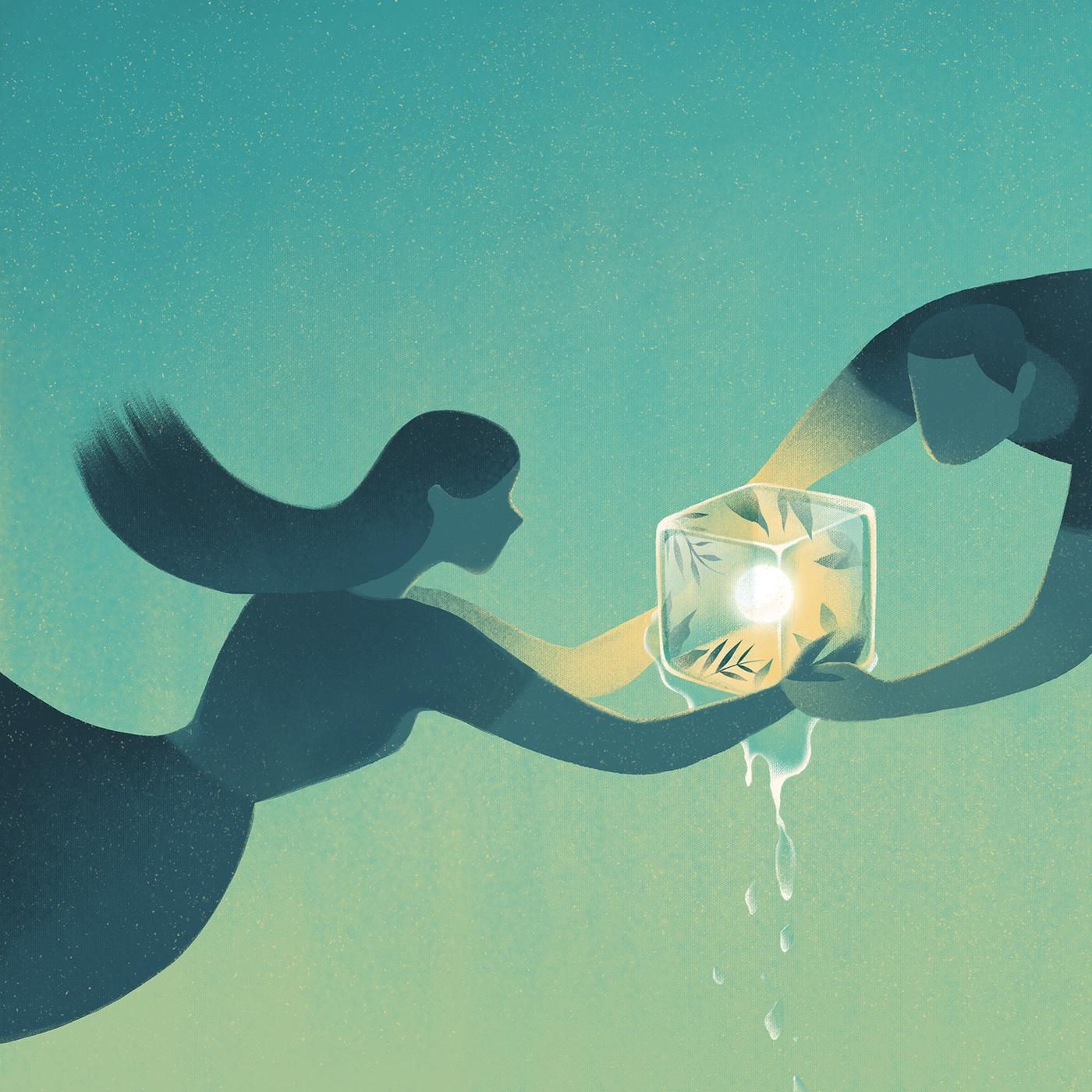
At 28 years old, Annie Dauer was living a full life. She had a job she loved as a highschool PE teacher, a big family who lived nearby, and a serious boyfriend. Then, cancer struck. Annie would come to find out she had Stage 4 non-Hodgkin's lymphoma. It was so aggressive, there was a real chance she might die. Her oncologists wanted her to start treatment immediately. Like, end-of-the-week immediately. But before Annie started treatment, she walked out of the doctor’s office and crossed the street to see a fertility doctor doing an experimental procedure that sounded like science fiction: ovary freezing.

Further ReadingA medical case report on Annie’s frozen ovariesWhat’s primordial germ cells got to do with it?

This episode was reported by Molly Webster, and produced by Pat Walters. With original music and scoring by Dylan Keefe and Alex Overington. The Gonads theme was written, performed, and produced by Majel Connery and Alex Overington. Additional production by Rachael Cusick, and editing by Jad Abumrad.

Radiolab is supported in part by Science Sandbox, a Simons Foundation initiative dedicated to engaging everyone with the process of science. And the Alfred P. Sloan Foundation, enhancing public understanding of science and technology in the modern world. More information about Sloan at www.sloan.org.

Support Radiolab today at Radiolab.org/donate.


Hosted by Simplecast, an AdsWizz company. See pcm.adswizz.com for information about our collection and use of personal data for advertising.

Wait, you're listening to radio lab from WNYC this is gonads episode two. I'm Molly Webster.
Oh, okay. My dashboard says it's 12 degrees outside. It's all good. Okay, so in January, I went to Erie, Pennsylvania. Second attempt at Erie. First attempt was snowed out, but on the New York side. Thank you, Bob. Cyclone. It was like the arctic winters of my youth. There are ice fishermen out on the lake. There was like some sort of record setting snowfall in Erie that I'm sure is probably still melting up there. And I had landed in this frozen land to do a story about people freezing things, but not things that you would expect to be frozen. I don't know what you expect out of frozenness, but it's not that. Tofoody cuties, ice cream. That's what I freeze. Oh my gosh, blueberries. Not fruit, but actual body parts.
I like it. It starts at this house. I'm going to we're going to the house. Here we are. Hi. Hi. Hi. And the people who were at the center of the freezing were this couple. My name is Ann Dower. That's one half. My name is Greg. I'm Annie's husband and um. That's the other half? I think that's it, right? Yeah. Okay. Let's start at the beginning. So that's a crazy story. I think sharing and probably told you that. Well, fall 1999. I was teaching high school phys ed. It was a Friday. She had just finished coaching volleyball and her dad called and he said, hey, I'm leaving work early. I'm going to go to this fish fry. I will swing by and pick you up. Let's go grab some dinner. I'm like, sure. He goes, I'll be over in about 15 minutes. I said, okay. And he goes, hey, it wouldn't hurt to look a little nice. And he puts the phone down. I'm like, ew. You know, like, because I was literally in like a Nike outfit with my sneakers because I teach Jim and I just finished coaching. So like, I'm like, and that's how I would have gone to dinner with them because it's dinner with my dad, whatever. But her dad had ulterior motives. Oh, there's a guy that I work with going to meet us and I'm like, ah, you sat me up. So we're driving over there. I'm like, how old is this guy? Like 50, 60 years old, like your age? Like, how old is he? You know, and he's like, and he's just like, and honestly, he's like, he's not that old. He's maybe a little older than you. So they get to the bar, grab a couple of beers, and then this guy walks over. Oh, that guy's not bad looking. This, of course, was Greg. He sat down at a booth, ate dinner, and by the end of dinner, and he's thinking, yeah, he's pretty cool. We just had a lot of fun together. And so one day leads to two, two leads to three. At that point, they did your dad because he had still been hanging out with him. And a year later, things have gotten pretty serious. We still have that placement. In fact, I was looking at it the other day. In the kitchen, get it on like a placemat is coming out. Describe it to our listeners, right? White, scalloped edges, some yellow food stains, probably a little mustard. This placemat is from a date that they went on around their one-year anniversary, which was almost 20 years ago. Texas Roadhouse, right? I think it was a Texas Roadhouse. Texas Roadhouse, yeah. Or Chile is one of the two, because we used to go to Chile. No, it was Texas Roadhouse. Texas Roadhouse, because they had peanuts, they had great peanuts, sir. They had only been dating for a year, but they were super into each other. So at a certain point, they're eating their peanuts or whatever, and the conversation turns to the future. It's like, say we're going to be together, what do you want? What do you imagine? And we just kind of were, we were talking about all sorts of things, like kind of a little, almost a goal setting that we had. Like, how much would you want to make? You know, just real casual. Where do you want to live? We both really liked Florida. We liked the climate. So we put on there, I think, something like we wanted to be in Florida in 2005. And then before you know it, they're jotting down children, kids. Like, how many kids they'd want to have together? Two kids, at least. We both agreed on that. Greg had already expressed at some point that family was super important to him. He loved having brothers and sisters, and he felt the same way. Like, we went to Christmas Eve this past Christmas, and I think there was 45 people there. That was all family. But it's like, they don't write down that they just want to have kids. They start writing down. Like names and stuff like that, you know?

Transcription truncated.

At 28 years old, Annie Dauer was living a full life. She had a job she loved as a highschool PE teacher, a big family who lived nearby, and a serious boyfriend. Then, cancer struck. Annie would come to find out she had Stage 4 non-Hodgkin's lymphoma. It was so aggressive, there was a real chance she might die. Her oncologists wanted her to start treatment immediately. Like, end-of-the-week immediately. But before Annie started treatment, she walked out of the doctor’s office and crossed the street to see a fertility doctor doing an experimental procedure that sounded like science fiction: ovary freezing. Further ReadingA medical case report on Annie’s frozen ovariesWhat’s primordial germ cells got to do with it? This episode was reported by Molly Webster, and produced by Pat Walters. With original music and scoring by Dylan Keefe and Alex Overington. The Gonads theme was written, performed, and produced by Majel Connery and Alex Overington. Additional production by Rachael Cusick, and editing by Jad Abumrad. Radiolab is supported in part by Science Sandbox, a Simons Foundation initiative dedicated to engaging everyone with the process of science. And the Alfred P. Sloan Foundation, enhancing public understanding of science and technology in the modern world. More information about Sloan at www.sloan.org. Support Radiolab today at Radiolab.org/donate.