ArchiveFM

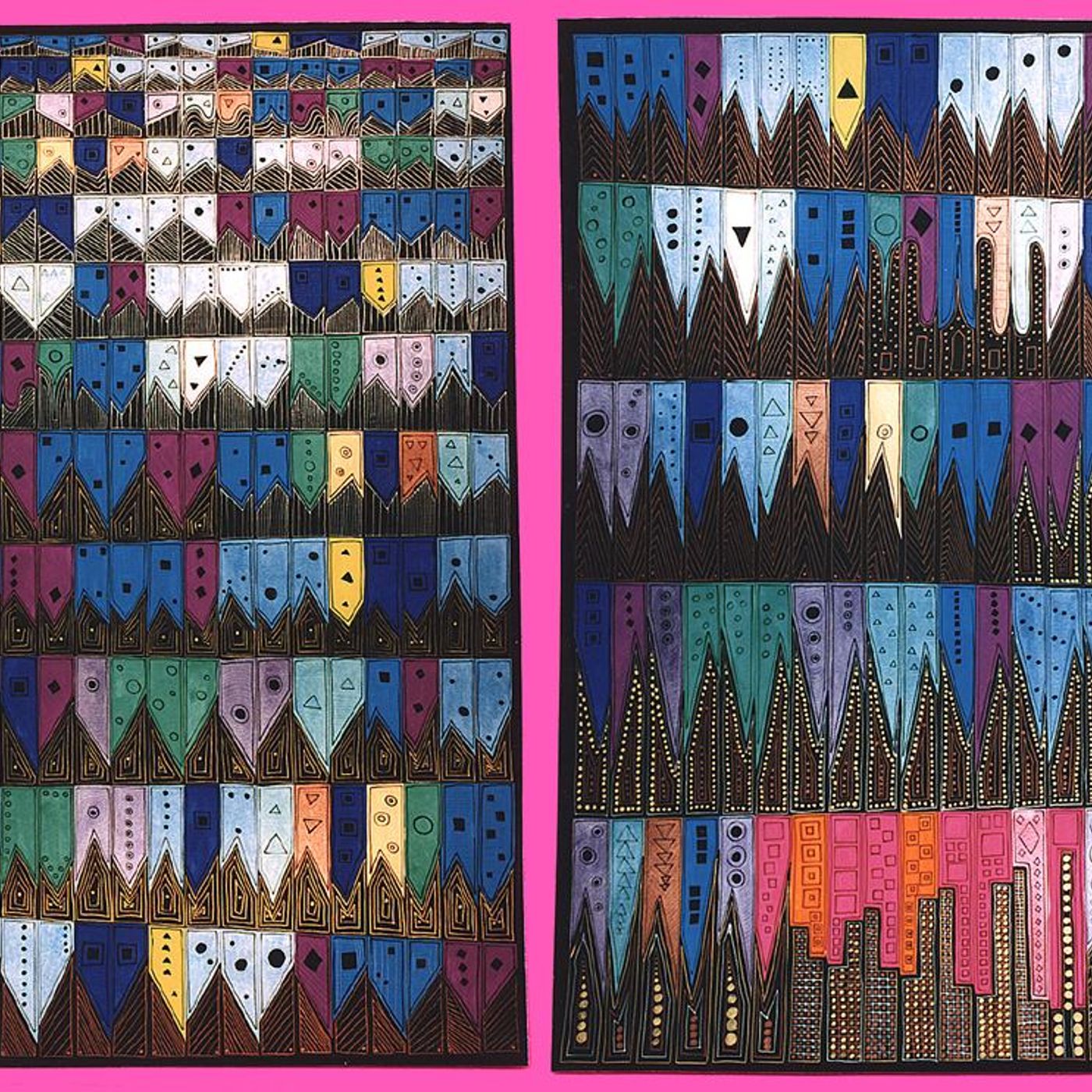
This week, we're throwing it back to an old favorite: a story about obsession, creativity, and a strange symmetry between a biologist and a composer that revolves around one famously repetitive piece of music. Anne Adams was a brilliant biologist. But when her son Alex was in a bad car accident, she decided to stay home to help him recover. And then, rather suddenly, she decided to quit science altogether and become a full-time artist. After that, her husband Robert Adams tells us, she just painted and painted and painted. First houses and buildings, then a series of paintings involving strawberries, and then ... "Bolero." At some point, Anne became obsessed with Maurice Ravel's famous composition and decided to put an elaborate visual rendition of the song to canvas. She called it "Unraveling Bolero." But at the time, she had no idea that both she and Ravel would themselves unravel shortly after their experiences with this odd piece of music. Arbie Orenstein tells us what happened to Ravel after he wrote "Bolero," and neurologist Bruce Miller helps us understand how, for both Anne and Ravel, "Bolero" might have been the first symptom of a deadly disease.  Support Radiolab today at Radiolab.org/donate. Read more: Unravelling Bolero: progressive aphasia, transmodal creativity and the right posterior neocortex Arbie Orenstein's Ravel: Man and Musician
Duration
27m
Broadcast on
22 May 2018
Audio Format
other

This week, we're throwing it back to an old favorite: a story about obsession, creativity, and a strange symmetry between a biologist and a composer that revolves around one famously repetitive piece of music.

Anne Adams was a brilliant biologist. But when her son Alex was in a bad car accident, she decided to stay home to help him recover. And then, rather suddenly, she decided to quit science altogether and become a full-time artist. After that, her husband Robert Adams tells us, she just painted and painted and painted. First houses and buildings, then a series of paintings involving strawberries, and then ... "Bolero."

At some point, Anne became obsessed with Maurice Ravel's famous composition and decided to put an elaborate visual rendition of the song to canvas. She called it "Unraveling Bolero." But at the time, she had no idea that both she and Ravel would themselves unravel shortly after their experiences with this odd piece of music. Arbie Orenstein tells us what happened to Ravel after he wrote "Bolero," and neurologist Bruce Miller helps us understand how, for both Anne and Ravel, "Bolero" might have been the first symptom of a deadly disease.

 Support Radiolab today at Radiolab.org/donate.

Read more:

Unravelling Bolero: progressive aphasia, transmodal creativity and the right posterior neocortex

Arbie Orenstein's Ravel: Man and Musician


Hosted by Simplecast, an AdsWizz company. See pcm.adswizz.com for information about our collection and use of personal data for advertising.

Hi, I'm Robert Kroll, which RadioLab is supported by Audible. As we explore this story of obsession, creativity, and symmetry, check out This is Your Brain on Music, both a cutting-edge study and a tribute to the beauty of music. Go to audible.com/radiolab or text RadioLab to 500500 for a free 30-day trial and a free audiobook. Hi, I'm Robert Kroll, which RadioLab is supported by Casper. As we continue this episode on creativity and symmetry, check out The Casper or The Wave mattress where the support system that mirrors your body shape. Get $50 towards select mattresses by visiting Casper.com/radiolab and using code RadioLab at checkout terms and conditions apply. This is Chad. Before we start, I would like to let you know about a new podcast that is out there in the world that is aimed at, drumroll please, kids. I must say, I'm particularly excited about this because my kids just discover podcasting. It's this thing that we can do together. This particular one, which is called This Podcast Has Fleas, tells the story of a dog and a cat who live in the same house and have competing podcasts. Hi, everybody. I'm Waffles. This is Dog Talk, a podcast by a dog. They both have podcasts. Everybody has podcasts these days. Why would pets be any different? Let me tell you a tease, a small soup song of what you can expect from this series. This is the moment when Waffles the Dog walks into the mudroom and discovers that she is not the only pet in the house with a podcast. Well, listeners, the cat is sitting in his litter box. He has a microphone and headphones and a big electronic thingy with a lot of buttons on it. He is doing a podcast. Well, I don't care. Sure won't be any good. Liza! Waffles the Dog! Liza the Liza the Liza the Dog! My for the litter box. Cat lovers, this is live from the litter box and I am Jones the cat coming at you with a show so hot, it just might explode. Thanks to all you cat lovers who downloaded my hit new single featured in last week's episode. Let's hear a little bit of it now. Wow. "I'm totally perfect, I'm totally worthy of maximum respect, always lands on their feet, who invented the nap, who sometimes has bonus toes." J Farrow, Saturday Night Live alum plays the cat, Emily Lynn plays the dog, Alec Baldwin plays the goldfish. If you have kids, if you don't check it out, it's called This Podcast Has Fleas from WNYC Studios. Wherever you get your podcast. Hey! You're pretty good at that.

Transcription truncated.

This week, we're throwing it back to an old favorite: a story about obsession, creativity, and a strange symmetry between a biologist and a composer that revolves around one famously repetitive piece of music. Anne Adams was a brilliant biologist. But when her son Alex was in a bad car accident, she decided to stay home to help him recover. And then, rather suddenly, she decided to quit science altogether and become a full-time artist. After that, her husband Robert Adams tells us, she just painted and painted and painted. First houses and buildings, then a series of paintings involving strawberries, and then ... "Bolero." At some point, Anne became obsessed with Maurice Ravel's famous composition and decided to put an elaborate visual rendition of the song to canvas. She called it "Unraveling Bolero." But at the time, she had no idea that both she and Ravel would themselves unravel shortly after their experiences with this odd piece of music. Arbie Orenstein tells us what happened to Ravel after he wrote "Bolero," and neurologist Bruce Miller helps us understand how, for both Anne and Ravel, "Bolero" might have been the first symptom of a deadly disease.  Support Radiolab today at Radiolab.org/donate. Read more: Unravelling Bolero: progressive aphasia, transmodal creativity and the right posterior neocortex Arbie Orenstein's Ravel: Man and Musician