The Radio Lab
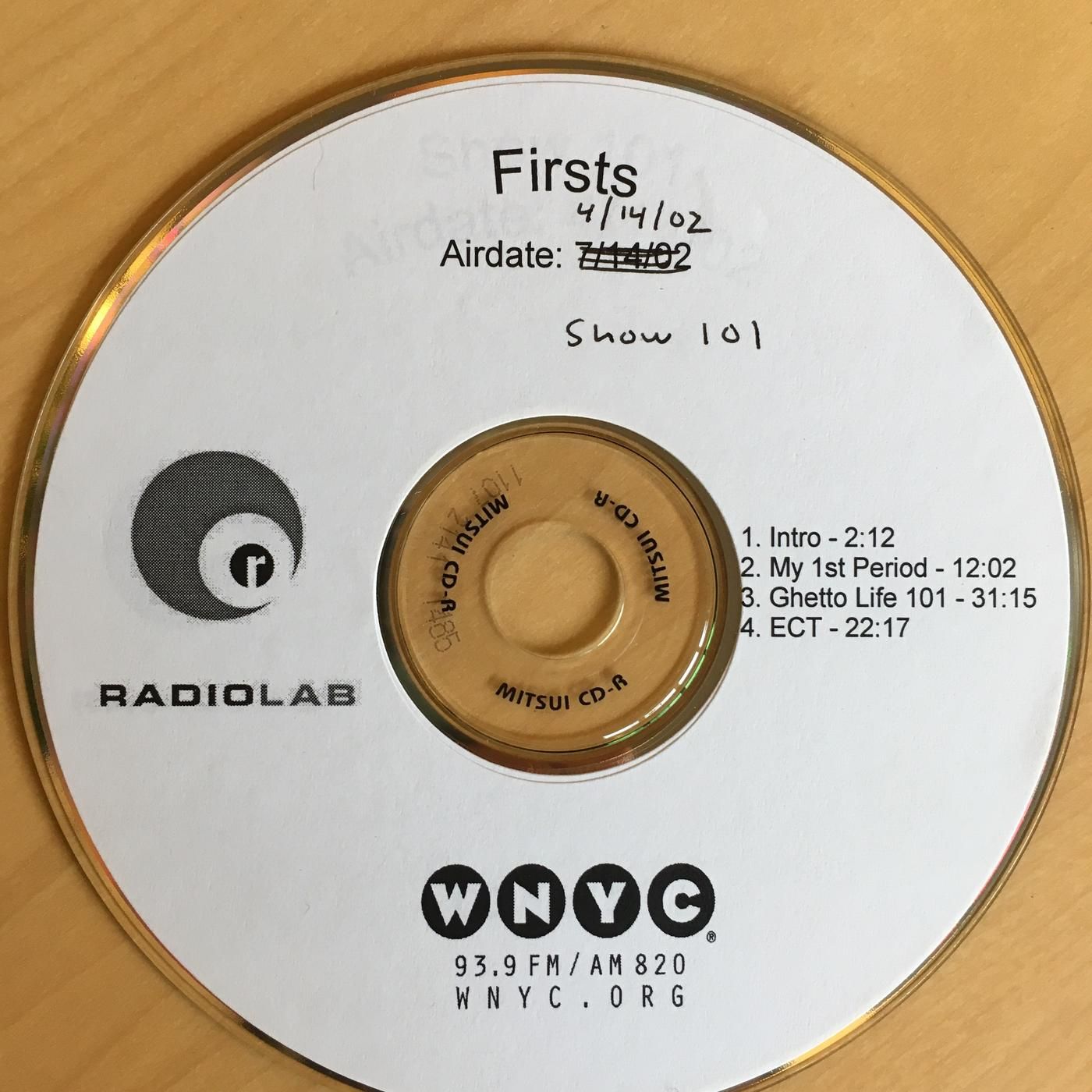
15 years ago the very first episode of Radiolab, fittingly called "Firsts," hit the airwaves. It was a 3-hour long collection of documentaries and musings produced by a solitary sleep-deprived producer named Jad Abumrad. Things have changed a bit since then.
Today, with help from our long time Executive Producer Ellen Horne, we celebrate our 15th birthday by surprising Jad and Robert in the studio and forcing them to look back on a time when “Radiolab” was just that: a lab for experimenting with radio.
Support Radiolab by becoming a member today at Radiolab.org/donate.
- Duration
- 42m
- Broadcast on
- 25 May 2017
- Audio Format
- other
This episode appears to contain dynamically inserted ads. Transcript timestamps may be approximate.
15 years ago the very first episode of Radiolab, fittingly called "Firsts," hit the airwaves. It was a 3-hour long collection of documentaries and musings produced by a solitary sleep-deprived producer named Jad Abumrad. Things have changed a bit since then.
Today, with help from our long time Executive Producer Ellen Horne, we celebrate our 15th birthday by surprising Jad and Robert in the studio and forcing them to look back on a time when “Radiolab” was just that: a lab for experimenting with radio.
Support Radiolab by becoming a member today at Radiolab.org/donate.
Hosted by Simplecast, an AdsWizz company. See pcm.adswizz.com for information about our collection and use of personal data for advertising.
you're listening to radio lab. You're listening to radio lab. I'm just public radio. I'm on New York Public Radio. Public Radio. W. J. W. J. W. J. W. J. W. J. W. J. W. J. Keep listening. Okay. Okay, so the, the other day, I, should we say who we are? Yeah, because we should. Okay, Jad, radio lab. Okay, so the other day, Soren, call us into the studio. There they are. Oh, and there was a giant human-sized rodent sitting in the engineering seat. Very large rodent. It was very familiar to us because it was a puppet head that we had toured with. Who is that under that big shooting? Well, that's the question. That is the question. Maybe you guys should guess or something. Oh, my goodness. Is it, um... Is this Alan? Oh, my gosh! Oh, my gosh! Oh, my gosh. Why? I even heard the radio! All right, so the story is, the reason that Soren got Alan to surprise us is that somewhere around now is the 15-year, crazy to say, a 15-year anniversary of making radio lab. 15 years? I know. We have some tape for you guys. Oh, there's more? We brought you some. That's just your presence? Well, I think, yeah, I mean, the presence, I mean, it seemed like you ought to have someone around who knew you when, you know? Okay. I brought your presence with my presence. So we sort of settled in, we didn't really know what was going on, and then Horne did something truly evil. She somehow, I don't know how, probably the archivist helped, got her hands on the very first one. No! This is my nightmare. The very, very, very... I had hoped these tapes, and that would never surface, but she found them. They were on BitTorrent for a second, and I thought they had disappeared, and I was like, so happy, but then... I'm so proud of you guys. You ready? Okay, let me roll tape. All right, here we go. 2002, very first one. Oh, God. Don't start talking. Please make the CD crash right now. Every radio producer has this idealized image in their head of you. Oh, God. Maybe you're sitting on the couch drinking coffee, staring out the window. Maybe you're the person who's driving, and you pull over to really concentrate on a story. Whatever the case, that image in the radio producer's brain of you, the listener, that's why they make this stuff. It's the lonely thing. You know, they don't get paid much. They lug around these heavy recorders and mics, and they look, frankly, silly, in those headphones they have to wear, but it doesn't matter, as long as you are there to listen to what they make. WNYC is about to embark on an experiment. We're calling it the radio lab, and what we're going to do is take great documentary radio and stories of different sizes and shapes, colors, from different places all over the planet, from different times even, and we're going to mix it all together, like this. A big brew of people and places, but it'll take two hours and 59 minutes to get through all of it. Do you hear that? Two hours. It was a three-hour show. That was that every week, by the way? Every freaking week. Every week. 8-11 every Sunday night. So they were giving you a huge hunk of airtime. A huge hunk of airtime, where no one was listening. Jad Evelyn Rod here. I'll be your host. It's not the right word. Curator. Guide, maybe. How about DJ of documentary? Oh, shut up. That was really? That's terrible. That doesn't work at all. Every moment of that was wrong. Every moment. I have to explain. The show was just super different back then. The idea of it back then was to just take all of these documentaries from around the world and smash them together, but what would end up happening is that I would line up three or four things, and I would have a 20-minute hole, which I would start to experiment in, and those spots were what the show grew out of. So that was in 2002, and then I met you the following spring. Wow, a whole year later. A whole year later. So there's a year worth of that. And by the time I met you back in New York, you were so sleep-deprived. Okay, so we reminisced for a little bit, and then we started talking about the moment when Robert got involved, which is the moment I'll never forget. So, you know, I was trying to fill one of those 20-minute holes. I had done an interview with a memory researcher, and it was just one of those science interviews that now we're super familiar with where, like, the scientist is using all this latinate words, and I couldn't figure out what she was saying, but it still seemed interesting. I just couldn't understand it. And so Robert and Ellen and I had breakfast one day at Kitchenette. It was like her-- it was our foundation restaurant as we go to for breakfast every week. And we were sitting there, and I was like, "I got this interview. I don't really know what to do. It's about memory." And here's what I think she's saying. I think she's saying something about how memories are never the same. You're always constantly remaking them, and then you just, like, snapped into this thing where, like, suddenly you were playing this, like,
Transcription truncated.
15 years ago the very first episode of Radiolab, fittingly called "Firsts," hit the airwaves. It was a 3-hour long collection of documentaries and musings produced by a solitary sleep-deprived producer named Jad Abumrad. Things have changed a bit since then.
Today, with help from our long time Executive Producer Ellen Horne, we celebrate our 15th birthday by surprising Jad and Robert in the studio and forcing them to look back on a time when “Radiolab” was just that: a lab for experimenting with radio.
Support Radiolab by becoming a member today at Radiolab.org/donate.