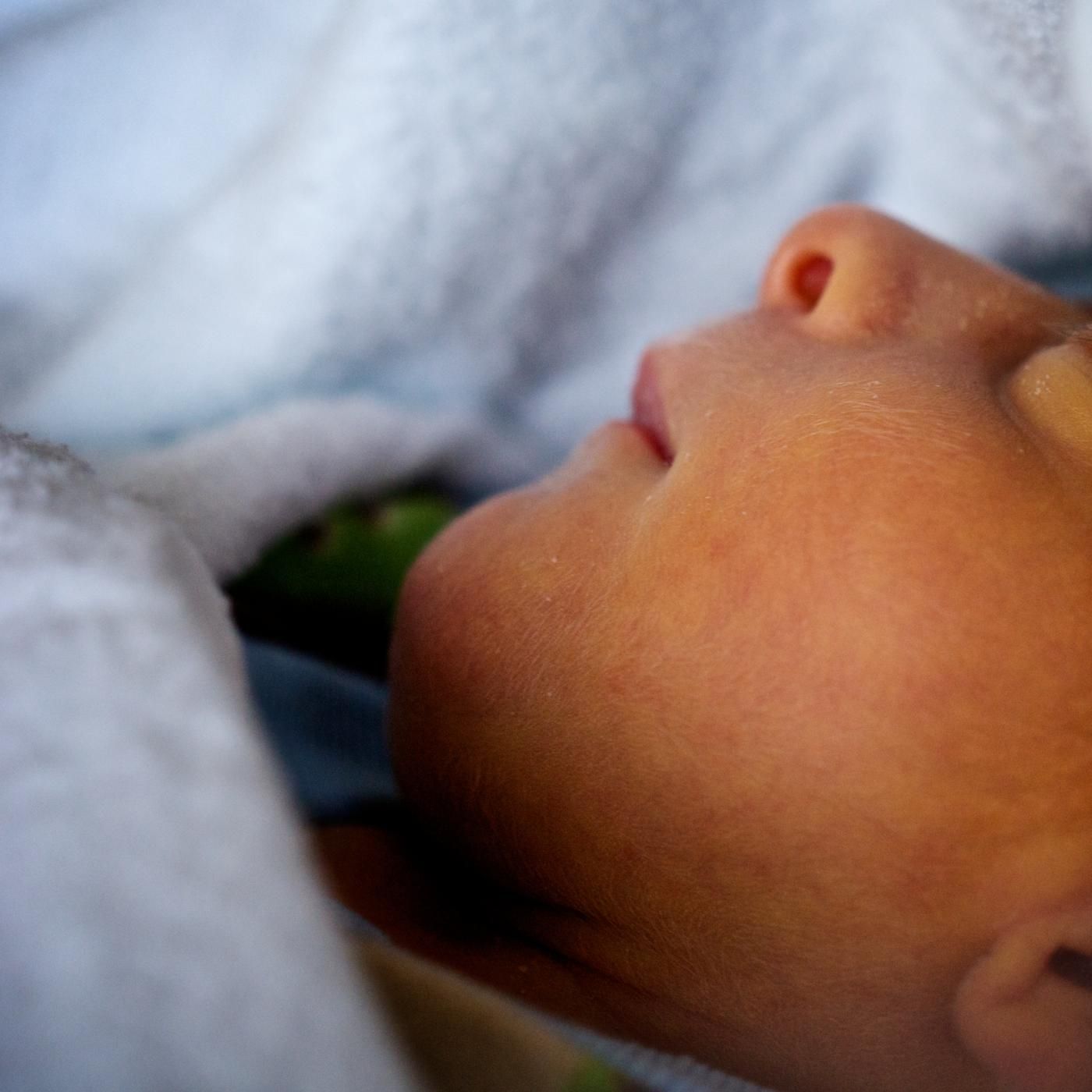
A donation leads Sarah and Ross Gray to places we rarely get a chance to see. In this surprising journey, they gain a view of science that is redemptive, fussy facts that are tender, and parts of a loved one that add up to something unexpected.
Before he was even born, Sarah and Ross knew that their son Thomas wouldn’t live long. But as they let go of him, they made a decision that reverberated through a world that they never bothered to think about. Years later, after a couple awkward phone calls and an unexpected family road trip, they managed to meet the people and places for whom Thomas’ short life was an altogether different kind of gift.
Since we first aired this segment, some exciting things have happened in the Gray's world. Our producer Tracie Hunte sat down with Sarah Gray to get the low-down on what's new. Check it out here:
Duration
27m
Broadcast on
16 Jul 2015
Audio Format
other
This episode appears to contain dynamically inserted ads. Transcript timestamps may be approximate.
A donation leads Sarah and Ross Gray to places we rarely get a chance to see. In this surprising journey, they gain a view of science that is redemptive, fussy facts that are tender, and parts of a loved one that add up to something unexpected.
Before he was even born, Sarah and Ross knew that their son Thomas wouldn’t live long. But as they let go of him, they made a decision that reverberated through a world that they never bothered to think about. Years later, after a couple awkward phone calls and an unexpected family road trip, they managed to meet the people and places for whom Thomas’ short life was an altogether different kind of gift.
Since we first aired this segment, some exciting things have happened in the Gray's world. Our producer Tracie Hunte sat down with Sarah Gray to get the low-down on what's new. Check it out here:
Hosted by Simplecast, an AdsWizz company. See pcm.adswizz.com for information about our collection and use of personal data for advertising.
-Wait, you're listening to Radio Lab from WNYC. -Hi, this is Jad. -Hi. -Hey, it's me, Jad. -I'm Robert. And today's story started when we bumped into an article in the Philadelphia Inquirer. We were a little bit weirded out as to why we were calling you. -Yes. -I know, you know, I mean, I just don't understand the whole thing. -The story really gets going with a phone call to this woman, Elizabeth Mason. -I'm a receptionist, last switchboard operator. -She works at a research lab in Boston, and one day she's sitting in her desk, and she gets a call from a woman who says that she has donated some eyes to them, and she wants to know what happened to them. -That's not a call you get every day. -I just remember it was just very unusual, right, and I decided to know what to do with it. I just felt like I got to find somebody to help this woman. -Today, we're going to tell you the story of the woman on the other end of that phone call. This is her story. You might say their story. -So, for my title, should I say, "I'm Sarah Gray, I'm the mom." -I'm Ross Gray, I'm Thomas's dad. -And how did you guys meet while we were-- -We met in a bar in Glasgow. -Really? -Yeah, I was on vacation with a girlfriend. And was it what happened without getting too many? -I think we've got different ideas, different recollection of what happened. -We started dating across the ocean for a year and a half, and then he moved to America. -Five days after he arrived, they were married. A few years after that, they were pregnant with twins. And when did you first know that something was up? -It was at the 12-week screening. They call it the first trimester screening, and they're checking for birth defects. I think the most common one is Down Syndrome. But it was September 30th, 2009. -They went in for the screening. The ultrasound tech took a scan of the two fetuses, and shortly after, the doc came into the room. -And said that only one of the twins would make it, and one of the twins had ended softly and would die within a few minutes or hours of being born. And he said he could see that because one of the twins had a round skull and the other one had a bumpy skull. The bumpy skull showed him that the skull wasn't correct, wasn't round enough. -The brain and skull weren't forming properly, which is what anencephaly is. -A bit of a shock, obviously. -I couldn't believe that. -It's difficult to process it, I think, because you think, "No, that can't be right."
Transcription truncated.
A donation leads Sarah and Ross Gray to places we rarely get a chance to see. In this surprising journey, they gain a view of science that is redemptive, fussy facts that are tender, and parts of a loved one that add up to something unexpected.
Before he was even born, Sarah and Ross knew that their son Thomas wouldn’t live long. But as they let go of him, they made a decision that reverberated through a world that they never bothered to think about. Years later, after a couple awkward phone calls and an unexpected family road trip, they managed to meet the people and places for whom Thomas’ short life was an altogether different kind of gift.
Since we first aired this segment, some exciting things have happened in the Gray's world. Our producer Tracie Hunte sat down with Sarah Gray to get the low-down on what's new. Check it out here: