ArchiveFM

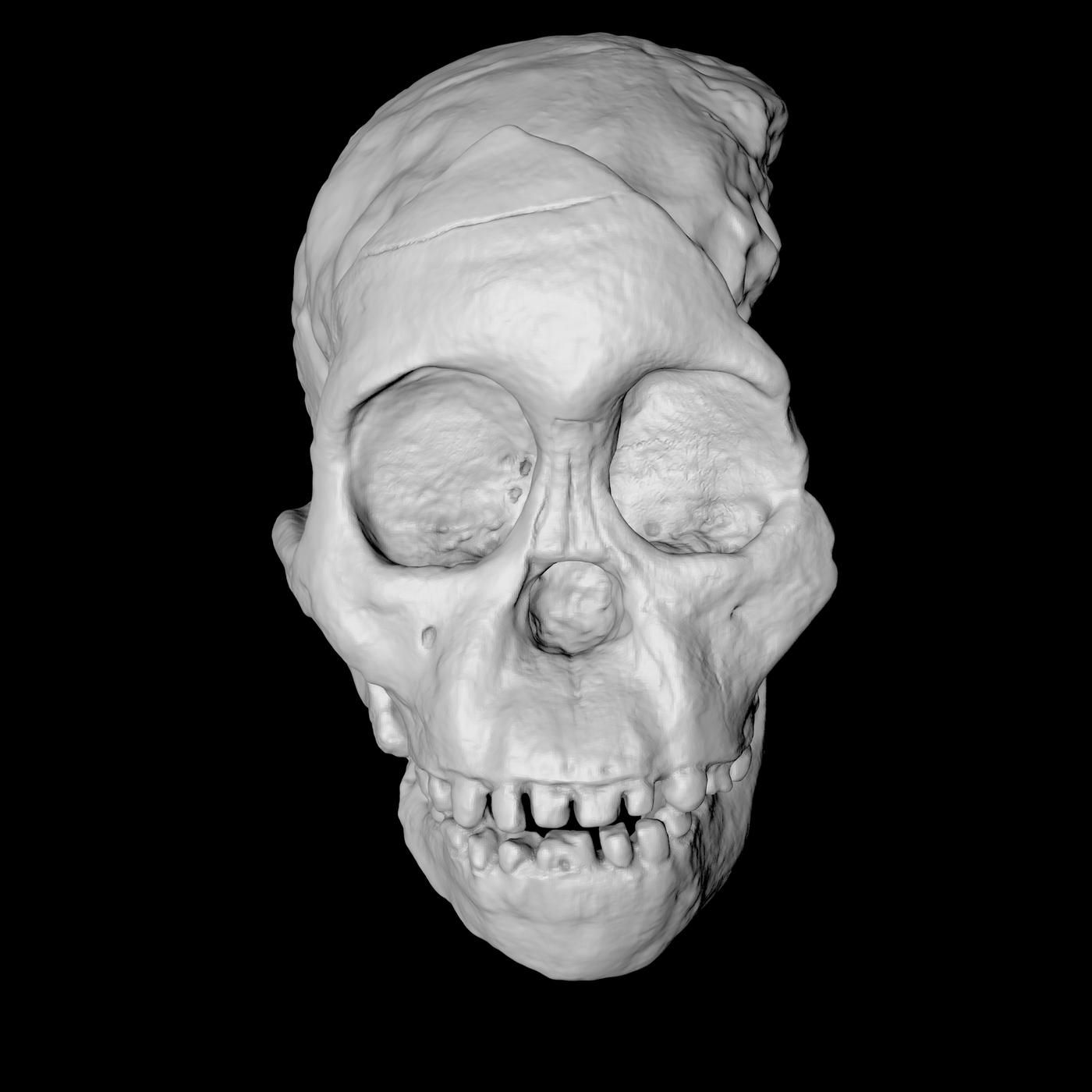
  Today, the story of one little thing that has radically changed what we know about humanity’s humble beginnings and the kinds of creatures that were out to get us way back when.   Wits University Professor Lee Berger and Dr. Chris Stringer from London’s Natural History Museum explain how a child’s skull, found in an ancient cave, eventually helped answer one of our oldest questions: Where do we come from? Then Lee takes us on a journey to answer a somewhat smaller question: how did that child die? Along the way, we visit Dr. Bernhard Zipfel at Wits University in Johannesburg to actually hold the skull itself.   We wanted to give you a chance to hold the skull, too. So we did a little experiment: we made a 3D scan of it. If you visit our page on Thingiverse, you’ll see the results. Anyone with access to a 3D printer can print their own copy of the skull. (We printed a bunch, with help from our friends at MakerBot—there’s even a purple one with sparkles.)   We also collaborated with the folks at Mmuseumm, a tiny (really tiny, it’s in an elevator shaft) museum in Manhattan. You can visit them to see the 3D printed skull, along with the other wonderful things in their collection: mosquitoes swatted mid-bite, toothpaste tubes from around the world, and much more.   Thanks to JP Brown, Emily Graslie and Robert Martin at the Field Museum in Chicago for scanning the skull. Thanks to Curtis Schmitt and shootdigital for refining the scan. Thanks to Bre Pettis and Jenifer Howard at MakerBot for guiding us through the world of 3D printing.    
Duration
20m
Broadcast on
15 May 2014
Audio Format
other


Today, the story of one little thing that has radically changed what we know about humanity’s humble beginnings and the kinds of creatures that were out to get us way back when.


Wits University Professor Lee Berger and Dr. Chris Stringer from London’s Natural History Museum explain how a child’s skull, found in an ancient cave, eventually helped answer one of our oldest questions: Where do we come from? Then Lee takes us on a journey to answer a somewhat smaller question: how did that child die? Along the way, we visit Dr. Bernhard Zipfel at Wits University in Johannesburg to actually hold the skull itself.


We wanted to give you a chance to hold the skull, too. So we did a little experiment: we made a 3D scan of it. If you visit our page on Thingiverse, you’ll see the results. Anyone with access to a 3D printer can print their own copy of the skull. (We printed a bunch, with help from our friends at MakerBot—there’s even a purple one with sparkles.)


We also collaborated with the folks at Mmuseumm, a tiny (really tiny, it’s in an elevator shaft) museum in Manhattan. You can visit them to see the 3D printed skull, along with the other wonderful things in their collection: mosquitoes swatted mid-bite, toothpaste tubes from around the world, and much more.


Thanks to JP Brown, Emily Graslie and Robert Martin at the Field Museum in Chicago for scanning the skull. Thanks to Curtis Schmitt and shootdigital for refining the scan. Thanks to Bre Pettis and Jenifer Howard at MakerBot for guiding us through the world of 3D printing.


Hosted by Simplecast, an AdsWizz company. See pcm.adswizz.com for information about our collection and use of personal data for advertising.

I don't think there'll ever be another specimen that'll be exactly what we're talking about. Actually, our next podcast is a full hour about stories that grow out of particular things, objects. But today we have a preview. Yes. Sort of. So that's the place, right? This is the place. It's a story about a thing. It's in this vault. It lives inside a steel vault, inside this huge laboratory, at Wits University in Johannesburg, South Africa. We asked a professor there, Dr. Bernard Zepfel, to pull it out and show it to our reporter, Patricia Hume. And this is the original specimen. This is it. We have it right in front of us here. I handle this a lot, but I get goose flesh every time I take this out. The reason it gives him goose flesh, goose bombs, is because this object seems to completely upend two basic questions about, you know, human history. Amazing. Where did we begin? And when we began, who was trying to take us out? Producer Andy Mills takes the story from here. Right. With Thunder and Vigor. And Gusto. With Gusto. Yes, I'd like to with Gusto, please. All right. Well, it's one of those discoveries that almost didn't happen. And here to help me tell you the story. Okay. I'm Professor Lee Berger. Is Lee. I am a research professor at the University of the Vitvotterstrad in Johannesburg and an explorer in residence at the National Geographic Society. And explore in residence. That's a weird title. It seems like you should be one or the other. It's almost an oxymoron, isn't it? Yeah. Lee says that our story begins back in the 1920s in South Africa at a place called Tong. Tong. It's T-A-N-U-G. Ta-Oom is the proper name in Swana. The western way of saying is Tong. It's a desert area on the southern edge of the Kalaharias Cartman. Kind of like your stereotypical picture of Africa. Rocks, Bayobob trees, Rumming gazelles.

Transcription truncated.

  Today, the story of one little thing that has radically changed what we know about humanity’s humble beginnings and the kinds of creatures that were out to get us way back when.   Wits University Professor Lee Berger and Dr. Chris Stringer from London’s Natural History Museum explain how a child’s skull, found in an ancient cave, eventually helped answer one of our oldest questions: Where do we come from? Then Lee takes us on a journey to answer a somewhat smaller question: how did that child die? Along the way, we visit Dr. Bernhard Zipfel at Wits University in Johannesburg to actually hold the skull itself.   We wanted to give you a chance to hold the skull, too. So we did a little experiment: we made a 3D scan of it. If you visit our page on Thingiverse, you’ll see the results. Anyone with access to a 3D printer can print their own copy of the skull. (We printed a bunch, with help from our friends at MakerBot—there’s even a purple one with sparkles.)   We also collaborated with the folks at Mmuseumm, a tiny (really tiny, it’s in an elevator shaft) museum in Manhattan. You can visit them to see the 3D printed skull, along with the other wonderful things in their collection: mosquitoes swatted mid-bite, toothpaste tubes from around the world, and much more.   Thanks to JP Brown, Emily Graslie and Robert Martin at the Field Museum in Chicago for scanning the skull. Thanks to Curtis Schmitt and shootdigital for refining the scan. Thanks to Bre Pettis and Jenifer Howard at MakerBot for guiding us through the world of 3D printing.