REBROADCAST: Emergence
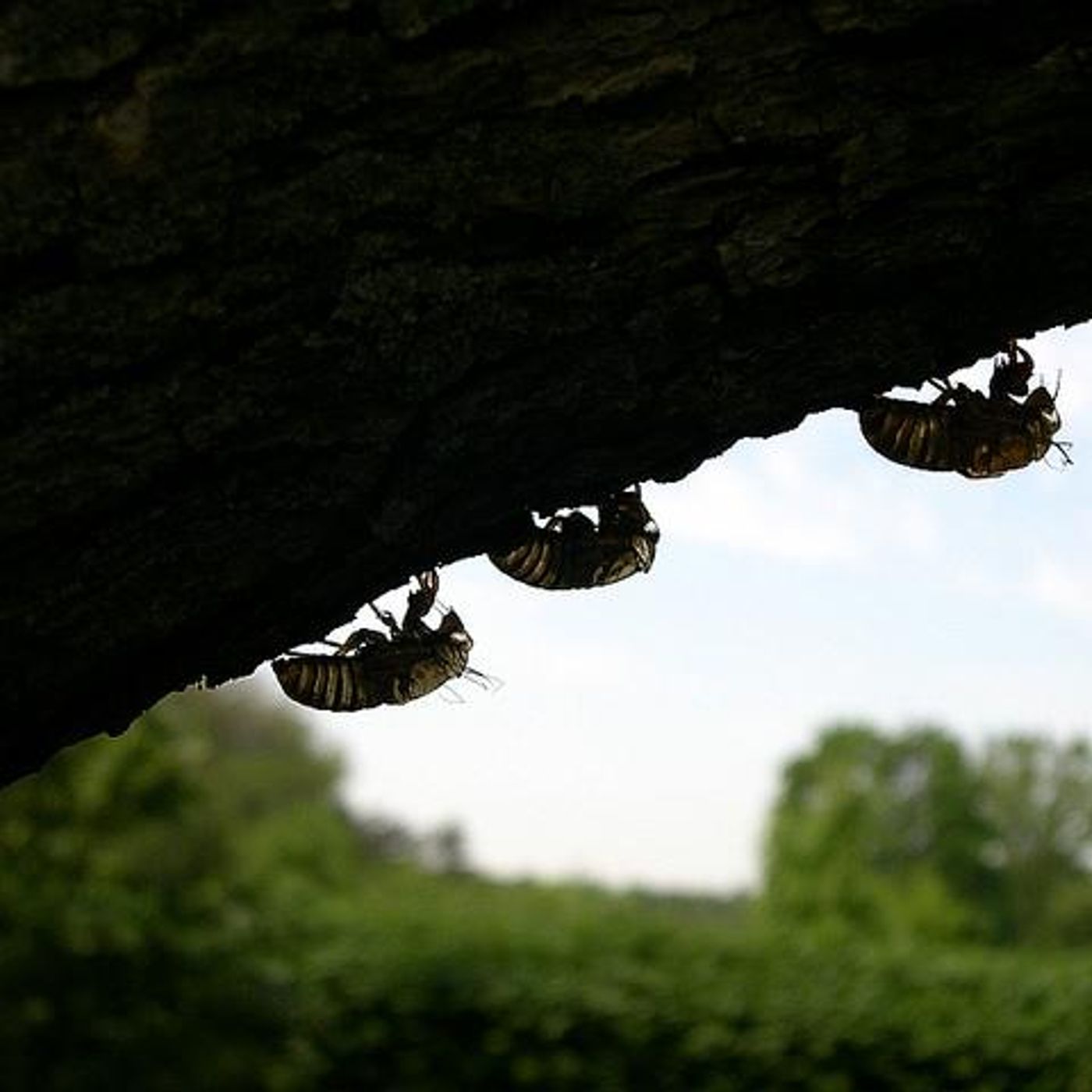
This spring, parts of the East Coast will turn squishy and crunchy -- the return of the 17-year cicadas means surfaces in certain locations (in patches from VA to CT) will once again be coated in bugs buzzing at 7 kilohertz. In their honor, we're rebroadcasting one of our favorite episodes: Emergence.
- Duration
- 1h 2m
- Broadcast on
- 19 Mar 2013
- Audio Format
- other
This episode appears to contain dynamically inserted ads. Transcript timestamps may be approximate.
This spring, parts of the East Coast will turn squishy and crunchy -- the return of the 17-year cicadas means surfaces in certain locations (in patches from VA to CT) will once again be coated in bugs buzzing at 7 kilohertz. In their honor, we're rebroadcasting one of our favorite episodes: Emergence.
Hosted by Simplecast, an AdsWizz company. See pcm.adswizz.com for information about our collection and use of personal data for advertising.
You're listening to Radial Lab. I'm Chad Abumrod. This is Radial Lab. And I am Robert Krollich. And let's begin today with something deceptively familiar. Fireflies are something that we have all loved as kids, right? Catching them in the backyard, putting them in a jar and watching them glow, so we don't tend to think of them as anything all that mysterious. Well, they do one thing very nicely, which is flash on and off. That's all fireflies do, flash. But what interests Steve Strogatz, a mathematician at Cornell University, is that there are places in the world. Not here, but in Southeast Asia, in Malaysia, or Thailand. Where fireflies don't just flash randomly, like we're used to, they somehow flash together. There are enormous congregations of fireflies along river banks. How many? It could be tens of thousands. Tree after tree, extending for literally miles along the rivers, all flashing in sink, like a Christmas tree, rows and rows of Christmas trees all wired together, going off. And it's one of the most hypnotic and spellbinding spectacles in nature, because you have to keep in mind it is absolutely silent. Let me picture it. There's a river bank in Thailand in the remote part of the jungle. You're in a canoe, slipping down the river. There's no sound of anything, maybe the occasional exotic jungle bird or something. When you're looking and you just see, woop, woop, woop, with thousands of lights on and then off, all in sink. Imagine all the trees, as far as you can see, are all brilliantly lit and then totally dark. Totally lit, total darkness. All of them in sink. Yeah, and no westerner had ever seen this site. There was folklore, there was stories about it, but nobody had gone in and photographed and captured samples. Well, not until 1965. This was done by John Buck. John Buck, E-U-C-K. One of the great researchers of the records on '92. Buck and his wife Elizabeth. The Elizabeth Masked Buck. Went to Thailand and captured bags full of mail fireflies. You could just reach up and shake the branches and the fireflies would rain down. And brought them back to their hotel room. And we turned off the lights. We turned them loose. And saw that the fireflies flitted around on the walls and ceiling. They flew back and forth. Flashing randomly. Elizabeth lay on the floor of the room. I was just tired and John stayed awake, and he was the one who saw it. Within a few minutes, little groups duos and trios formed.
Transcription truncated.
This spring, parts of the East Coast will turn squishy and crunchy -- the return of the 17-year cicadas means surfaces in certain locations (in patches from VA to CT) will once again be coated in bugs buzzing at 7 kilohertz. In their honor, we're rebroadcasting one of our favorite episodes: Emergence.