The Turing Problem
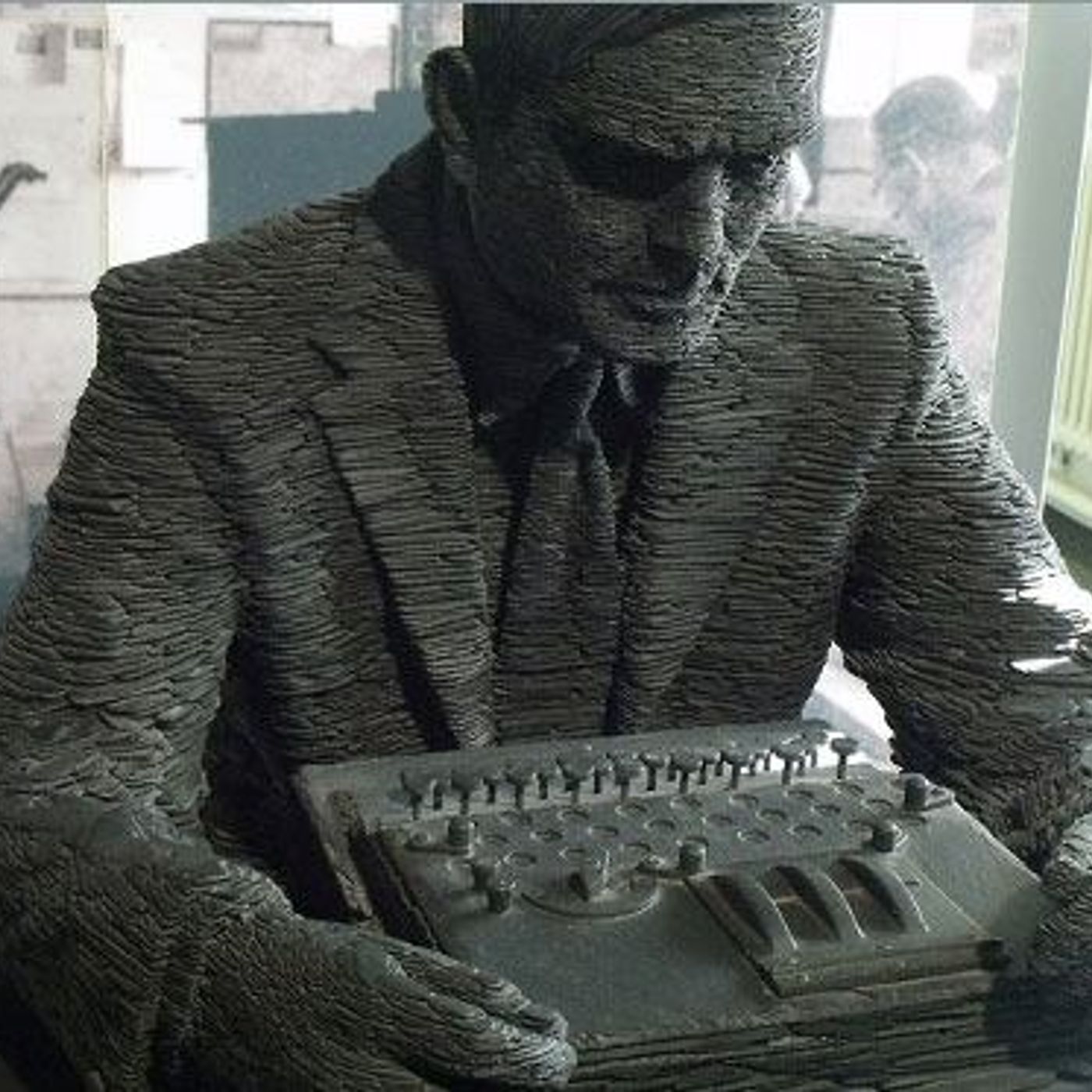
100 years ago this year, the man who first conceived of the computer age was born. His name was Alan Turing. He was also a math genius, a hero of World War II and he is widely considered to be the father of artificial intelligence. But the world wasn't kind to Alan Turing. In 1952, he was arrested and convicted under a British law that prohibited "acts of gross indecency between men, in public or private."
- Duration
- 23m
- Broadcast on
- 19 Mar 2012
- Audio Format
- other
This episode appears to contain dynamically inserted ads. Transcript timestamps may be approximate.
100 years ago this year, the man who first conceived of the computer age was born. His name was Alan Turing. He was also a math genius, a hero of World War II and he is widely considered to be the father of artificial intelligence. But the world wasn't kind to Alan Turing. In 1952, he was arrested and convicted under a British law that prohibited "acts of gross indecency between men, in public or private."
Hosted by Simplecast, an AdsWizz company. See pcm.adswizz.com for information about our collection and use of personal data for advertising.
WNYC Studios is supported by WISE. WISE, the smart way to manage the currencies you need around the world. With a WISE account, you can send, spend, and receive in up to 40 currencies with only a few simple taps. Be smart, get WISE. Download the WISE app today. Terms and conditions apply. WNYC Studios is supported by Odo. When you buy business software from lots of vendors, the costs add up and it gets complicated and confusing. Odo solves this. It's a single company that sells a suite of enterprise apps that handles everything from accounting to inventory to sales. Odo is all connected on a single platform in a simple and affordable way. You can save money without missing out on the features you need. Check out Odo at ODOO.com. WNYC Studios is on paternity leave. This is Radio Lab, the podcast. And today, I thought I'd introduce you to a particular guy on a particular day in Manchester, England. It's 1952, and Alan Turing, a math professor, discovers that a number of things have disappeared from his home. Look kind of like a burglar. He was missing a shirt, a pair of shoes. An old pair of pants, maybe a compass. It was stuff. It was just household stuff. Nothing of any value. That's Jan 11 and David Levin. Both of them have written books about Alan Turing. And so, being very literal-minded, he thought, "Well, what do you do when you're robbed? Do you call the police?" So the police come to his house, the detectives. He has this conversation, and they say, "You know, he's kind of a curious chap." They let him talk, and they're like, "It's real shame we're going to have to arrest him." Who? Turing. Why would they have to-- Because he's effectively implicated himself in terms of-- Here's what happened. The police sat Turing down and said, "Oh, who do you think made off with those things of yours?" And he says to them. He suspected the thief was an acquaintance of his boyfriend. His boyfriend? Yes. Yes. She, at the time, there was a law in England. Which criminalized, quote-unquote, "acts of gross indecency between adult men in public or private." So he told the cops that he was having sex with a guy? Was that why-- He doesn't exactly say we're having sex, but he says enough that it's clear. He was never ashamed of being gay. This was just not something, again, that he understood what the fuss was about. So what happened to him? Was he convicted? Yeah. He's convicted, and he's-- What's his sentence? Astrogen pills and implants, estrogen implants. Oh, my God. Yeah. Chemical castration. And when I learned this, I wondered if those policemen had any idea that the guy they were arresting was, first of all, one of the great minds of the 20th century, a war hero who single-handedly, almost by himself, shortened World War II by at least two years. And the questions he posed way back then are still, I think, the most provocative ideas I know, but we're getting ahead of ourselves. So let me back up to when he was a school boy, around 15 or 16, in England. He gets to Sherborne School, which is the public school, as they say in England. I guess we would call it a boarding school, boarding school for boys, where-- What did he look like? He had dark hair, very dark hair, sort of square face. He wasn't unattractive. He was just so goofy. So did the other kids make fun of him at school, or did he? I mean, he's teased, taunted, bullied, but he's not completely unhappy. He falls in love with another student named Krista for more come. He was very charming, very socially smooth, handsome. They have this bond of her science. It's an unrequited love. Did he express his love to this other kid, or-- I think it was pretty obvious. He was always sort of there, sitting next to Krist Markham, every class, right behind him, right next to him. And I think at some point, Krist commented that, you know, maybe it's a little too much attention, but I don't think he really made a formal declaration of his love. But he did maintain a relationship with Krista's mother, even after Krist died. Krist Markham died while he was still in school of Bavarian tuberculosis. And had kept his illness a secret just one day. It was just this announcement. He was dead. So I think it came as a complete shock to Alan. His memory really lingered, and I think that-- How do we know that a kid had a boy crush in school?
Transcription truncated.
100 years ago this year, the man who first conceived of the computer age was born. His name was Alan Turing. He was also a math genius, a hero of World War II and he is widely considered to be the father of artificial intelligence. But the world wasn't kind to Alan Turing. In 1952, he was arrested and convicted under a British law that prohibited "acts of gross indecency between men, in public or private."