In Defense of Darwin?
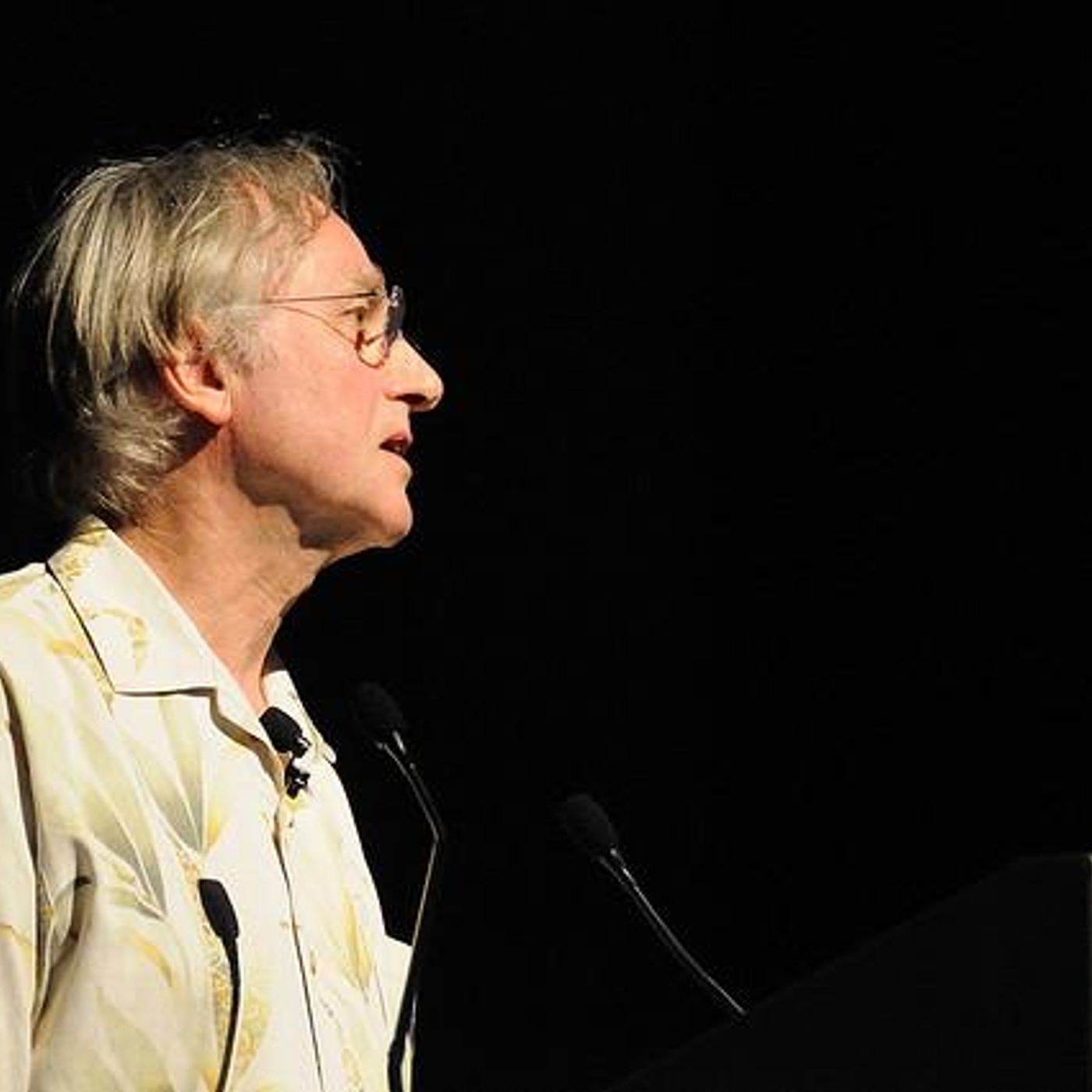
When evolutionary biologist Richard Dawkins' daughter was six years old, he told her that flowers are not here for beauty, not here for the bees, but instead merely to copy their own DNA. Sigh, what a Dad. So is Richard Dawkins always so gloomy and reductionist about the world? Well yes, but he would say that his vision of the world is anything but gloomy, he even calls it romantic. In this conversation from the 92nd St Y, Robert challenges Dawkins on this and a number of other sticky spots on the topic of biological evolution.
- Duration
- 18m
- Broadcast on
- 13 Jul 2009
- Audio Format
- other
This episode appears to contain dynamically inserted ads. Transcript timestamps may be approximate.
When evolutionary biologist Richard Dawkins' daughter was six years old, he told her that flowers are not here for beauty, not here for the bees, but instead merely to copy their own DNA. Sigh, what a Dad. So is Richard Dawkins always so gloomy and reductionist about the world? Well yes, but he would say that his vision of the world is anything but gloomy, he even calls it romantic. In this conversation from the 92nd St Y, Robert challenges Dawkins on this and a number of other sticky spots on the topic of biological evolution.
Hosted by Simplecast, an AdsWizz company. See pcm.adswizz.com for information about our collection and use of personal data for advertising.
-Oh, wait, you're listening to Radio Lab. -Radio Lab from WNYC and NPR. -Hi, I'm Robert Krillwich and this is Radio Lab. The podcast, Jed, a boomerad who's normally at my side is still at home, eking out the very end of his paternity leave with his brand new baby. So I've been very careful not to disturb him, which means though I do have to find somebody else to fight with. And I did manage to get into a nice little tussle with Richard Dawkins, one of the great defenders of Charles Darwin. He's the Charles Simone Professor of Public Understanding of Science at Oxford. He also comes from a long line of combative Englishmen, including a guy who tried to burn down an Ivy League college in the United States. In fact, why don't we begin with a little biographical sketch of Richard Dawkins that I used to introduce him to an audience at the 92nd Street Y in New York City and then we'll get on to the discussion. I told them that Dawkins is great, great, great, great, great, great, great, great grandfather going back to the 1700s. -Was the major commander of the British forces who fought George Washington here in the American Revolution. And it was Richard Dawkins, Dawkins is great, great, great, great, great, great, great, whatever. Sir Henry Clinton, who hired Benedict Arnold to be the British spy, who almost captured West Point, which is Washington's stronghold, didn't do it though, because they cut the spies and so forth. It was Dawkins, great, great, great, great, great, great, great grandfather who commanded the British occupation forces here in New York City in 1777-78. It was his great, great, great, great, great, great grandfather who authorized raiding parties on a variety of seashore communities. If you live in them, please hold your fire. Egg Harbor in New Jersey, attacked by his great, great, great, great grandfather. New Bedford, Massachusetts, a part of Martha's Vineyard called Vineyard Haven, most insidiously. He okayed an attack on New Haven, Connecticut, with the plan to burn down Yale College. Fortunately, his forces, as they often were, were repulsed. Ultimately, Sir Henry Clinton lost the war and went home. But Sir Henry's great, great, great, great, grand son, Richard Dawkins, has been back to America over and over and over again to do battle with more modern Americans whom he calls the most scientifically illiterate populace outside the Third World. So Richard Dawkins does not mince words, and when we began our conversation, which was about evolution in Charles Darwin, he opened with a surprisingly forceful statement. As an academic scientist, I am a passionate Darwinian, believing that natural selection is, if not the only driving force in evolution, certainly the only known force capable of producing the illusion of purpose which so strikes all who contemplate nature. But at the same time as I support Darwinism as a scientist, I am a passionate anti-Darwinian when it comes to politics and how we should conduct our human affairs. So he's given us something of a riddle, and he loves Darwin, but he also loads Darwin. And then for extra spice, he wants you to know that anybody who thinks there's a purpose, a reason why we live and look and behave the way we do, is under a terrible illusion. There is no purpose to our existence, no reason why we're here, that's basic Darwin, he says. So I thought, okay, I'll do the purpose thing first. The Darwin theory, I think, does a very good job on because.
Transcription truncated.
When evolutionary biologist Richard Dawkins' daughter was six years old, he told her that flowers are not here for beauty, not here for the bees, but instead merely to copy their own DNA. Sigh, what a Dad. So is Richard Dawkins always so gloomy and reductionist about the world? Well yes, but he would say that his vision of the world is anything but gloomy, he even calls it romantic. In this conversation from the 92nd St Y, Robert challenges Dawkins on this and a number of other sticky spots on the topic of biological evolution.