Salle Des Departs
This episode appears to contain dynamically inserted ads. Transcript timestamps may be approximate.
Imagine that you're a composer. Imagine getting the commission to write a song that will allow family members to face the death of a loved one.
Hosted by Simplecast, an AdsWizz company. See pcm.adswizz.com for information about our collection and use of personal data for advertising.
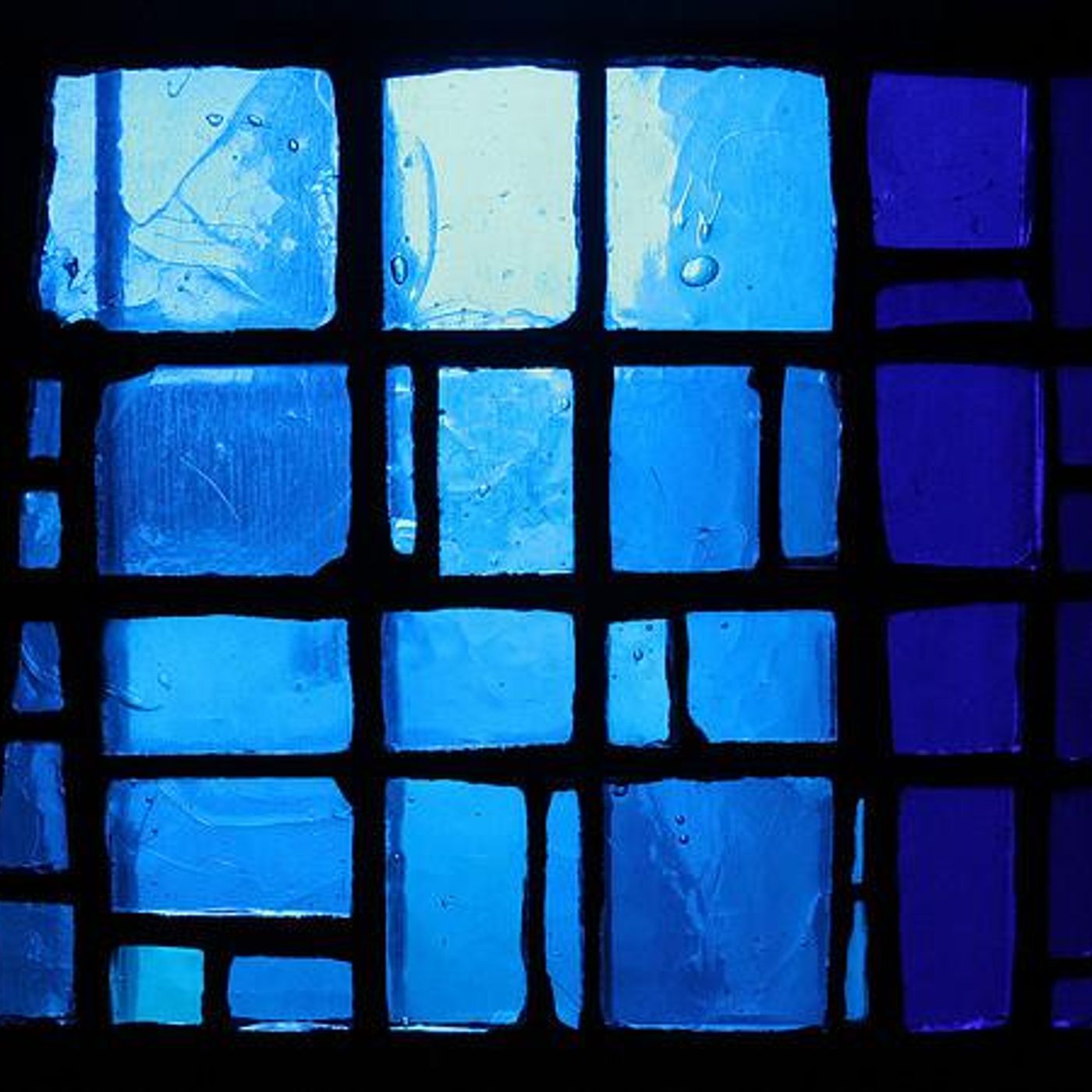
WNYC Studios is supported by ODU. When you buy business software from lots of vendors, the costs add up and it gets complicated and confusing. ODU solves this. It's a single company that sells a suite of enterprise apps that handles everything from accounting to inventory to sales. ODU is all connected on a single platform in a simple and affordable way. You can save money without missing out on the features you need. Check out ODU at ODOO.com. That's ODOO.com. WNYC Studios is supported by Wise. Wise, the smart way to manage the currencies you need around the world. With a Wise account, you can send, spend, and receive in up to 40 currencies with only a few simple taps. Be smart, get Wise. Download the Wise app today. Terms and conditions apply. Ice, kite. You're listening to RadioLab, the podcast from who you are, public radio, public radio, WNYC, and NPR. This is RadioLab. I'm John. I've been Ron. Welcome to the podcast. This week, a short little something that looks forward to a program we're going to make for season four. We're doing a program about music, kind of about pop music. I'm not really sure what to call it just yet. But it was inspired by this idea that everywhere you go, there's music playing. You go to a store. There's music playing. You go to a doctor's office. There's music playing. You are put on hold on a telephone. There's music playing. I think someone actually counted how many times you hear music in the course of a day. I think it was in the hundreds. I'm not sure. But this struck me as not a good thing while we were thinking about this show. But then, as we were poked around, we bumped into mention of a project from David Lang, composer David Lang, who's part of the whole bang on a can ensemble here in New York City. He's kind of a big contemporary classical guy. He does a lot of really interesting music. He was commissioned to create background music for the most unlikeliest of places, the morgue. He was asked to write background music for that moment when you see a loved one for the last time. What kind of music do you write in that circumstance? Do you even do it? If you do, what's the right mood? What, as a composer, do you want to accomplish in that situation? What's appropriate? Well, the project is called Sal de De Part. I think it means translates from French to chamber of departure, maybe. I don't know someone correct me if I'm wrong. And producer Jocelyn Gonzalez spoke with David Lang about it. When I was very young, I had a brother who died. I've had a lot of relatives who've died. And so in a lot of my work, I actually have many pieces which are about how to memorialize someone, how to use a piece of music as a way to capture a moment in a relationship between that person and me, or how to freeze something so that I never forget it, or how to express a feeling of rage at finding out that someone died that I knew was going to disappear as soon as time took the edge off. Some doctors from a very major hospital outside of Paris in a suburb of Paris called Garsh. And the doctors got together and thought, you know, we have so many people who die in this hospital, and they die in this very strange way. They die not after being sick for years and years. They just die instantaneously. One moment, they're alive on the road. The next moment, they're dead. Their family hasn't had a chance to grieve. So the doctors got together. They went to the Fondación de France and they commissioned an Italian artist, Etores Paletti, to make a little chapel. But it's really a morgue. It's beautiful, blue, sensuous, relaxing room. The idea being that when your loved one would die in this hospital, then they would take the body and move it into this room so that your last memory in the hospital wouldn't be, you know, in this bright white light in this horribly compromised position and this, you know, real message of eternal defeat. So they made this little space, and then they thought, now that we have the space, we should see if music can participate in this space. So they commissioned a piece both from scanner and from me. It's made for three cellos and women's voices, but I deliberately wanted to make a piece which could not be played live because I felt that the whole point of this was a piece of death. So the idea that this could have a live performance seemed really like cheating to me. So I made a piece that was supposed to have the unending vocal part that no human being could sing. There are singers who sing their part and through the beauty of the recording studio, there's no breath. Basically, it's sort of one
Transcription truncated.
Imagine that you're a composer. Imagine getting the commission to write a song that will allow family members to face the death of a loved one.