ArchiveFM

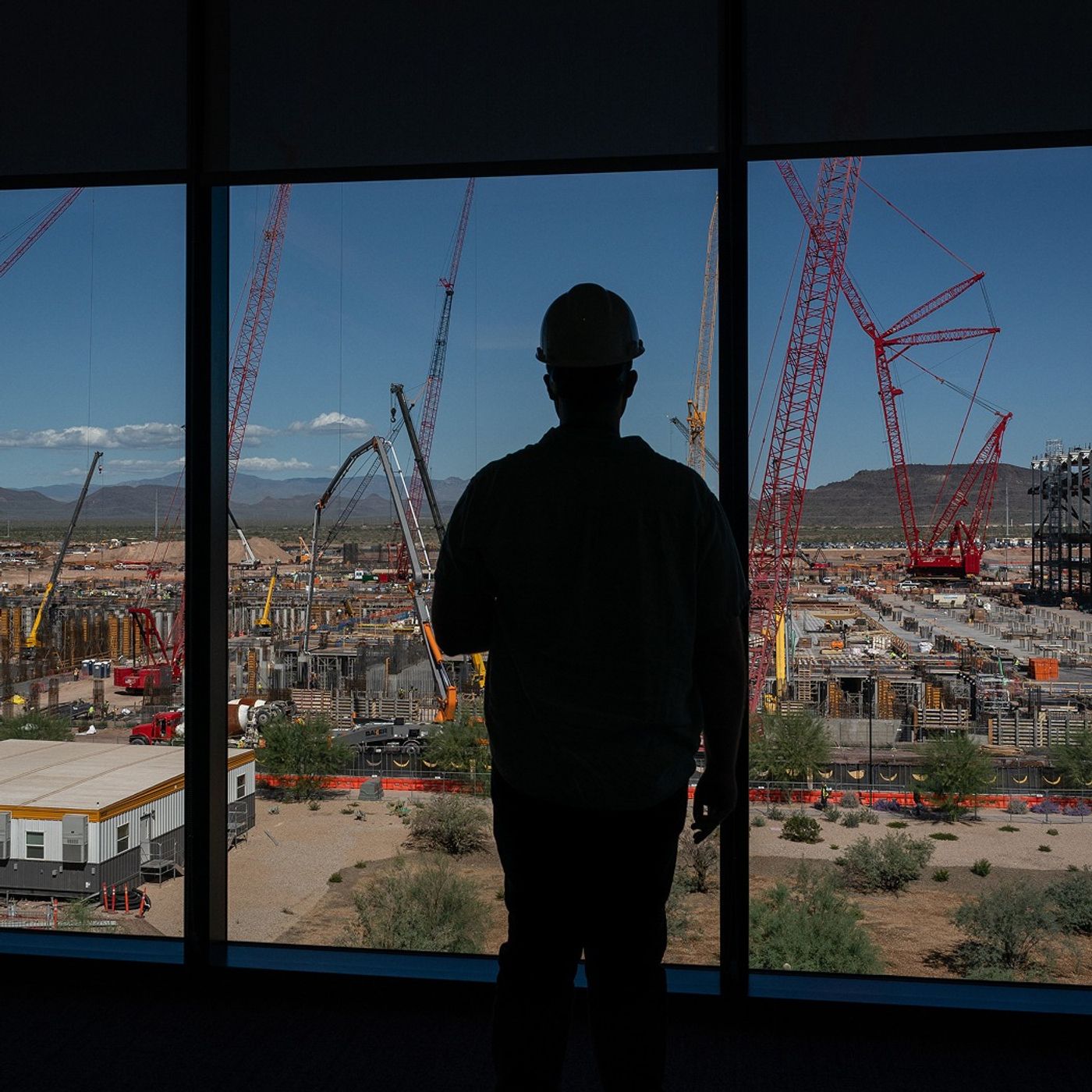
The construction of a giant factory complex in Arizona was supposed to embody the Trump administration’s ability to bring manufacturing back to the United States. But undertaking big projects is not as simple as it seems. Peter S. Goodman, who writes about the intersection of economics and geopolitics for The New York Times, explains why.
Duration
33m
Broadcast on
22 Dec 2025
Audio Format
other

The construction of a giant factory complex in Arizona was supposed to embody the Trump administration’s ability to bring manufacturing back to the United States.

But undertaking big projects is not as simple as it seems. Peter S. Goodman, who writes about the intersection of economics and geopolitics for The New York Times, explains why.

Guest: Peter S. Goodman, who covers the global economy for The New York Times.

Background reading: 

  • Read about the 18,000 or so reasons that make it so hard to build a chip factory in the United States.

Photo: Loren Elliott for The New York Times

For more information on today’s episode, visit nytimes.com/thedaily. Transcripts of each episode will be made available by the next workday. 

For more information on today’s episode, visit nytimes.com/thedaily. Transcripts of each episode will be made available by the next workday.

Subscribe today at nytimes.com/podcasts or on Apple Podcasts, Spotify and Amazon Music. You can also subscribe via your favorite podcast app here https://www.nytimes.com/activate-access/audio?source=podcatcher. For more podcasts and narrated articles, download The New York Times app at nytimes.com/app.


Hosted by Simplecast, an AdsWizz company. See pcm.adswizz.com for information about our collection and use of personal data for advertising.

This podcast is supported by TikTok. Sometimes the most interesting discoveries are the ones you weren't looking for. That happens every day on TikTok. A science experiment can spark a whole new interest. A recipe you stumble upon can become a meal you make for the people you love. And a restaurant you've never heard of might become your new favorite spot. That's the thing about TikTok. Follow your curiosity and see where it leads. Your next discovery is waiting on TikTok. From the New York Times, I'm Michael Labarro. This is the Daily. The construction of a massive factory in Arizona was supposed to embody the Trump administration's ability to bring manufacturing back to the US. Instead, as my colleague, Peter Goodman, found out, it's provided companies around the world with literally 18,000 reasons to think twice about building in America. It's Monday, December 22nd. Peter, good of you to come to the studio. Delighted. I wonder just to start this conversation. If you can describe this factory that you recently visited to us. Yeah, sure. So it's about 9/20 in the morning on Friday and I'm just arriving. I mean, there's this giant, mostly empty desert valley in the extreme north of Phoenix, as far as the eye could see, really, emptiness. I'm standing on a gravel road looking at cactuses and various desert scrub just flowing out to other horizons that this is all gonna get filled up with housing and offices to be-- So this factory, I've seen a lot of factories in my day. You sure have. Is on a scale that I've never even imagined. We're talking about more than a thousand acres. The complex itself, I'm looking at a long, low gray building with a bunch of smoke stacks visible on top. You can see at least a dozen cranes. You can hear the roar of something. There's black smoke now coming out of the top of one of these buildings. And beyond, you can see these cranes that are working. And there are construction cranes in every direction. Now, I lived in Shanghai, China,

Transcription truncated.

The construction of a giant factory complex in Arizona was supposed to embody the Trump administration’s ability to bring manufacturing back to the United States. But undertaking big projects is not as simple as it seems. Peter S. Goodman, who writes about the intersection of economics and geopolitics for The New York Times, explains why.