ArchiveFM

A dramatic pop music comeback story is underway: Celine Dion is performing again. In 2022, Dion, the renowned Canadian singer, announced that she had stiff person syndrome, a rare and incurable neurological disorder that causes painful muscle spasms and affects roughly one in a million people. The announcement came as a shock to her fans, and in a raw and revealing documentary released in 2024, “I Am: Celine Dion," she shared her struggle to overcome her condition, and sing again. But Dion worked her way back to performing, and is now appearing in a run of sold out shows in Paris. The culture reporter Elisabeth Vincentelli was there on opening night, and in this episode of “The Sunday Daily,” she talks with our host Natalie Kitroeff about the remarkable comeback of Celine Dion.
Duration
41m
Broadcast on
11 Oct 2026
Audio Format
other

A dramatic pop music comeback story is underway: Celine Dion is performing again.

In 2022, Dion, the renowned Canadian singer, announced that she had stiff person syndrome, a rare and incurable neurological disorder that causes painful muscle spasms and affects roughly one in a million people. The announcement came as a shock to her fans, and in a raw and revealing documentary released in 2024, “I Am: Celine Dion," she shared her struggle to overcome her condition, and sing again. But Dion worked her way back to performing, and is now appearing in a run of sold out shows in Paris.

The culture reporter Elisabeth Vincentelli was there on opening night, and in this episode of “The Sunday Daily,” she talks with our host Natalie Kitroeff about the remarkable comeback of Celine Dion.

On Today’s Episode:

Background Reading:

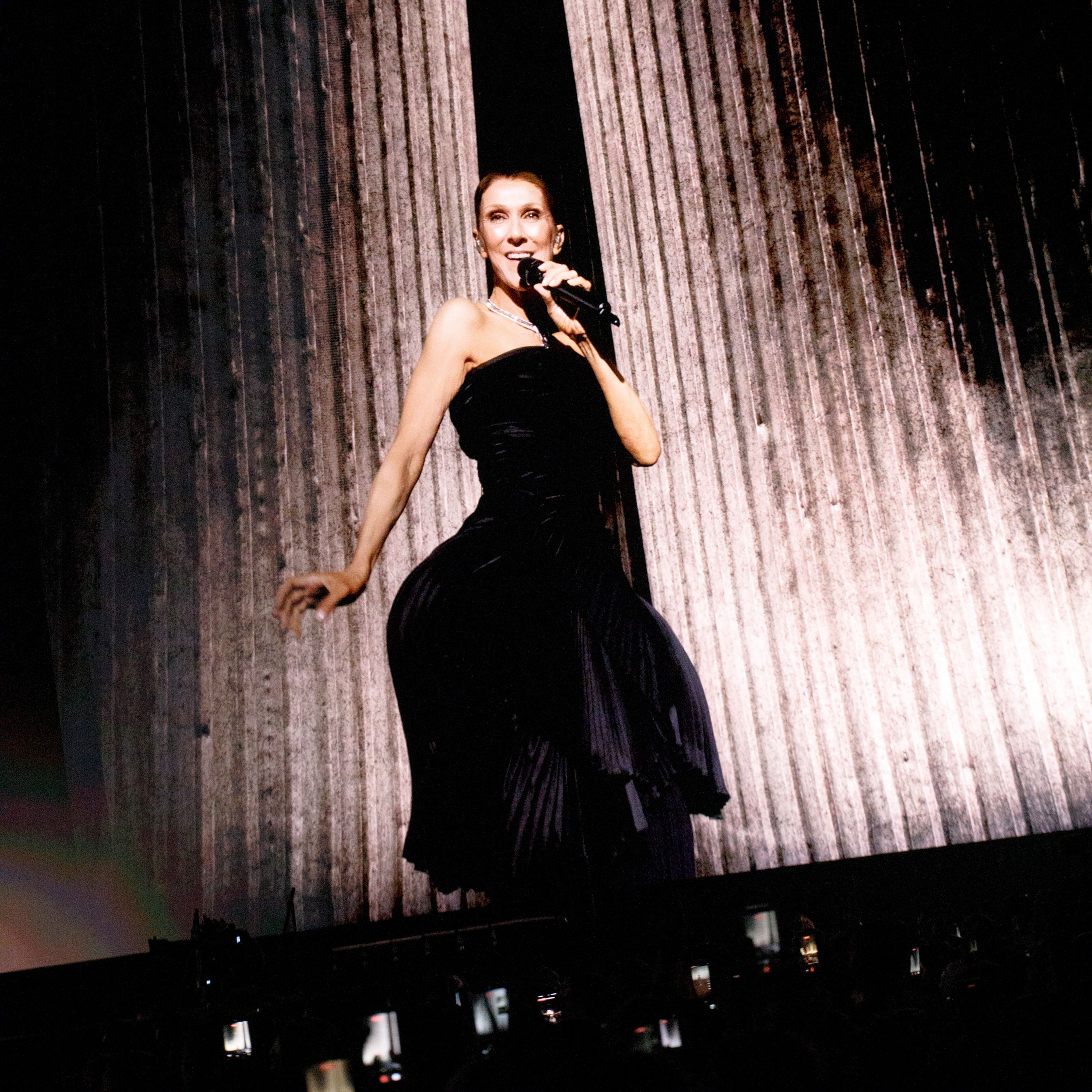
Photo credit: Clementine Schneidermann for The New York Times.

For more information on today’s episode, visit nytimes.com/thedaily. Transcripts of each episode will be made available by the next workday.

Subscribe today at nytimes.com/podcasts or on Apple Podcasts, Spotify and Amazon Music. You can also subscribe via your favorite podcast app here https://www.nytimes.com/activate-access/audio?source=podcatcher. For more podcasts and narrated articles, download The New York Times app at nytimes.com/app.


Hosted by Simplecast, an AdsWizz company. See pcm.adswizz.com for information about our collection and use of personal data for advertising.

Hey everyone, it's Natalie. If you're not yet a time subscriber, I have some news for you. You can enjoy full access to the times without a paywall for 30 days. All you have to do is download the app to get your first month completely free. And if you're already a time subscriber, thank you, thank you, thank you. Okay, here's today's show. There's a classic moment in every Selenium concert that everybody in the room is waiting for and it's when she's doing all by myself. So we're all waiting for it. Maybe I'm projecting my own feelings, but there's really a strong performance anxiety. Is she going to pull off that note, that note that we're all waiting for? You could feel the arena just holding its collective breath and she does it. And then she lets out this very visible sigh of relief. It looked like she surprised herself. It was just a fantastic moment and the people around us were screaming and crying and I talked to the woman who was sitting behind me after it was and she said, "That's when I knew she was back." From The New York Times, I'm Natalie Kitrof. This is The Daily on Sunday. Last month, Selenium, widely considered to be one of the greatest singers of our time, made a triumphant and emotional return to the stage. She followed years of uncertainty about whether or not she'd ever be able to perform again after being diagnosed with a rare neurological condition called Stiff Person Syndrome. My colleague Elizabeth Finchand Telly was there to see it and today she'll tell us about how Dion found her way back to her voice and to her fans. So I love her so much. Can I say that? It's Sunday, October 11th. Elizabeth, welcome to the Sunday Daily. I'm very happy to be here. I want to start by proposing a theory about why this Selenium comeback is so compelling. She has clearly captivated so many people all around the world and I think it's because her fans have this very special relationship with her. Not just her music but her personality, who she is as a person. She is a diva, yes, but unlike most divas, she somehow feels very accessible. She lets us into her world, she's vulnerable, she's extremely quirky in a way that feels unusual for a person of her status and fame. I think that all of those things have made us, myself included, deeply invested in her return to the stage. What do you think of that? Well, Selenium is an interesting case because on the one hand she has all the signifiers of the diva. She lives in a gated community in Las Vegas. She has a warehouse of clothes, literally a warehouse of clothes. She's always very well put together. And yet, you get that very deep-seated feeling that she has not changed. She comes from a very hard-scrabble family in Quebec. She's the youngest of 14 kids and her parents were running a little café piano bar. And there is a feeling that she is still that person, that underneath everything she has this very unique way to connect with people.

Transcription truncated.

A dramatic pop music comeback story is underway: Celine Dion is performing again. In 2022, Dion, the renowned Canadian singer, announced that she had stiff person syndrome, a rare and incurable neurological disorder that causes painful muscle spasms and affects roughly one in a million people. The announcement came as a shock to her fans, and in a raw and revealing documentary released in 2024, “I Am: Celine Dion," she shared her struggle to overcome her condition, and sing again. But Dion worked her way back to performing, and is now appearing in a run of sold out shows in Paris. The culture reporter Elisabeth Vincentelli was there on opening night, and in this episode of “The Sunday Daily,” she talks with our host Natalie Kitroeff about the remarkable comeback of Celine Dion.