ArchiveFM

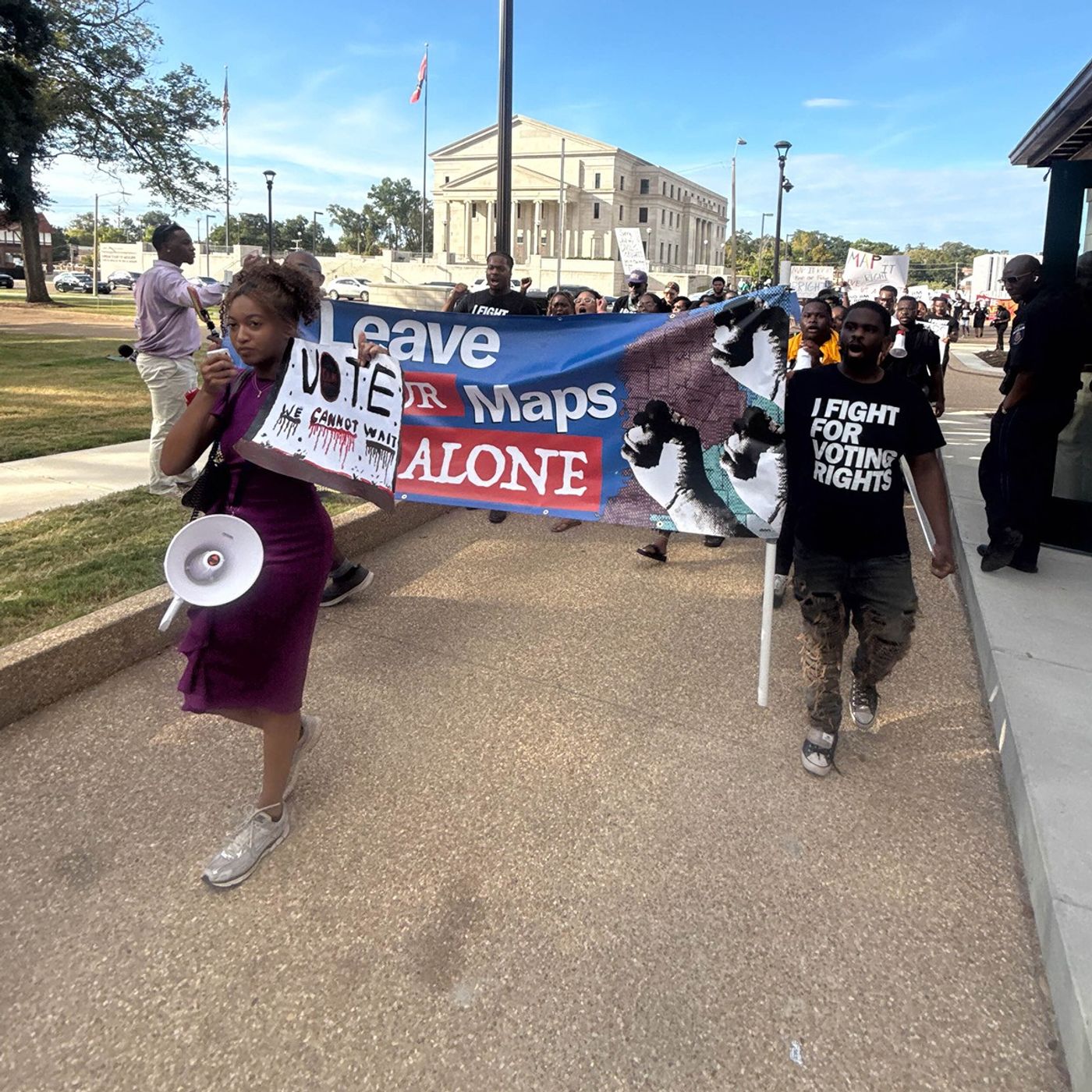
The approach to this year’s midterms has brought two hugely consequential changes to voting for Black Americans: the gutting of the Voting Rights Act, and redistricting. In the wake of those actions, efforts are underway to mobilize Black voters in the South. In Mississippi, the Senate battle is being seen as a sleeper race, and the Black Democrat running has a chance of flipping the seat, but state lawmakers are trying to redraw the maps and do away with their one majority Black district. Today, Emily Cochrane, a reporter covering the American South for The New York Times, addresses the implications for voters across the region — not just in the midterms, but for years to come.
Duration
32m
Broadcast on
23 Oct 2026
Audio Format
other

The approach to this year’s midterms has brought two hugely consequential changes to voting for Black Americans: the gutting of the Voting Rights Act, and redistricting. In the wake of those actions, efforts are underway to mobilize Black voters in the South.

In Mississippi, the Senate battle is being seen as a sleeper race, and the Black Democrat running has a chance of flipping the seat, but state lawmakers are trying to redraw the maps and do away with their one majority Black district.

Today, Emily Cochrane, a reporter covering the American South for The New York Times, addresses the implications for voters across the region — not just in the midterms, but for years to come.

Guest: Emily Cochrane, a national reporter for The New York Times covering the American South.

Background reading: 

Photo: Anna Foley/The New York Times

For more information on today’s episode, visit nytimes.com/thedaily. Transcripts of each episode will be made available by the next workday. 

For more information on today’s episode, visit nytimes.com/thedaily. Transcripts of each episode will be made available by the next workday.

Subscribe today at nytimes.com/podcasts or on Apple Podcasts, Spotify and Amazon Music. You can also subscribe via your favorite podcast app here https://www.nytimes.com/activate-access/audio?source=podcatcher. For more podcasts and narrated articles, download The New York Times app at nytimes.com/app.


Hosted by Simplecast, an AdsWizz company. See pcm.adswizz.com for information about our collection and use of personal data for advertising.

From The New York Times, I'm Rachel Abrams, and this is The Daily. This year has presented arguably the biggest challenge to political representation for black Americans in decades, for major court decisions, to partisan gerrymandering, and nowhere has this been felt more than in the South. And so today, my colleague Emily Cochran explains the implications for voters across the region, not just in the midterms, but for years to come. It's Friday, October 23rd. Emily Cochran, thank you so much for joining us. Thanks for having me. So Emily, you cover the South for the New York Times. And just to say, that is an enormous region for one person to report on. I share it with two other people for the record. But yes, it's eight states. I spend a lot of time on the road going back and forth from place to place, one of the best parts of the job. Yeah, I'm sure you've logged a ton of miles in the lead up to this year's midterms. And that's because, of course, you've been really focused on two major impacts to voting this election cycle. One is the Supreme Court decision on the Voting Rights Act, which we've talked about on the show. And the second is the redistricting battle that we've seen happen in a bunch of states, which we've also talked about. And very specifically, you have been looking at how the combination of those two things has really affected black voters in the South. Exactly. I mean, those two things really led to the start of what could be a huge political transformation for the South. So this November election is the first time we're going to get a glimpse of what the new landscape is. So I want to just kind of remind people what we're talking about here. And let's start with the Voting Rights Act. Can you just give us kind of a brief thumbnail 101, reminding us what it was, what it was supposed to do, and what specifically changed this year? So the Voting Rights Act of 1965 is one of the crown jewels of the civil rights movement. It was a landmark bill that outlawed some of the Jim Crow era voter suppression tactics, poll taxes, all these barriers that were preventing black Americans in the South from easy access to the polls. And it also put in some requirements for state governments to give black voters the opportunity to elect a representative of their choice. That's everything from the congressional level down to your local school board. And over the last 60 years or so, you can see how that has completely transformed the ability of black voters across the South to participate in the political process. As recently as two years ago, a decision tied to the Voting Rights Act led Alabama to send two black representatives to Congress at the same time for the first time in its history. But obviously, things began to change. So tell us a little bit about when that started. Over the last few years, there are

Transcription truncated.

The approach to this year’s midterms has brought two hugely consequential changes to voting for Black Americans: the gutting of the Voting Rights Act, and redistricting. In the wake of those actions, efforts are underway to mobilize Black voters in the South. In Mississippi, the Senate battle is being seen as a sleeper race, and the Black Democrat running has a chance of flipping the seat, but state lawmakers are trying to redraw the maps and do away with their one majority Black district. Today, Emily Cochrane, a reporter covering the American South for The New York Times, addresses the implications for voters across the region — not just in the midterms, but for years to come.