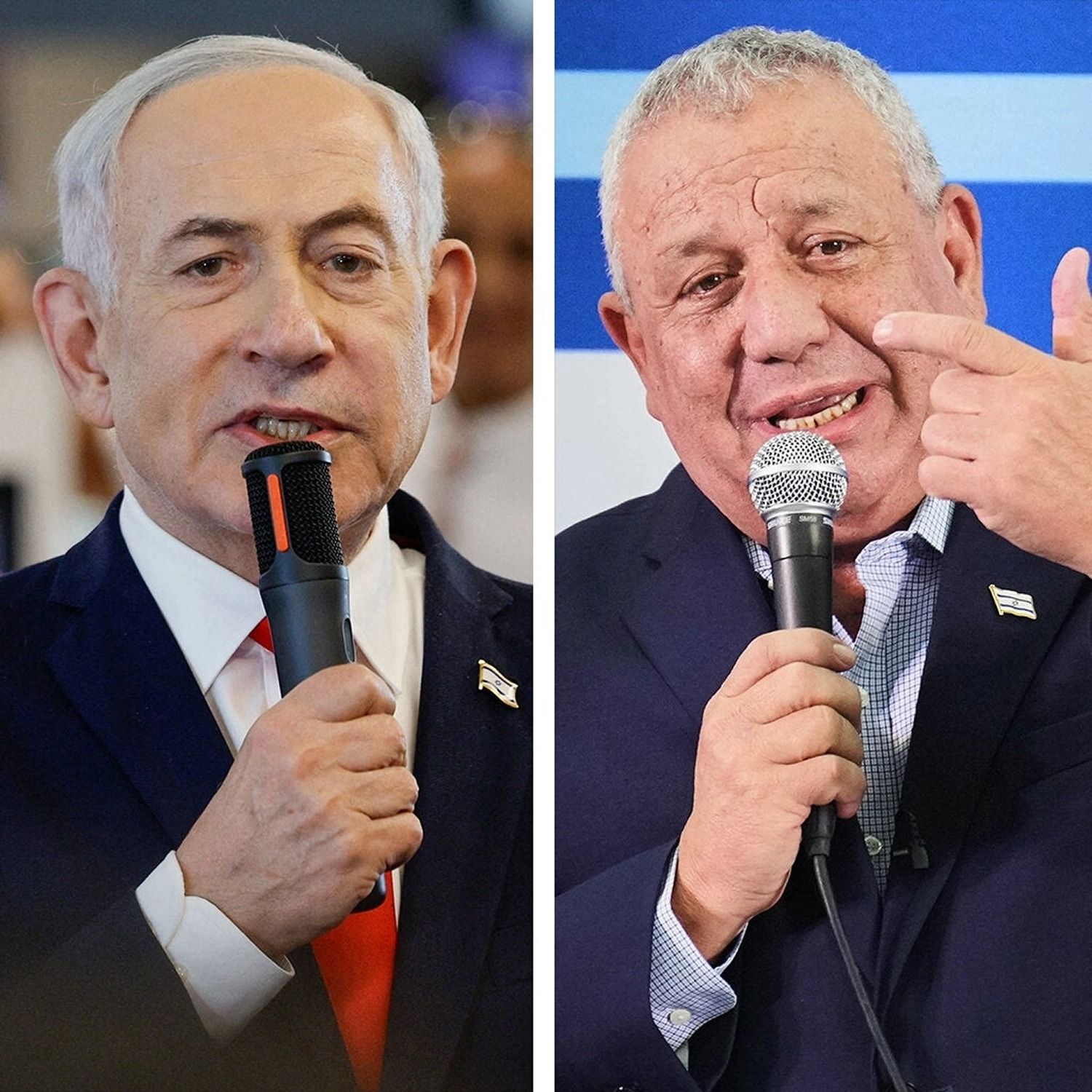
Israelis on both sides of the political spectrum see next week’s vote as the most consequential in their country’s history.
Duration
37m
Broadcast on
22 Oct 2026
Audio Format
other
This episode appears to contain dynamically inserted ads. Transcript timestamps may be approximate.
Israelis head to the polls next week. On the ballot is the future of a country that has become isolated on the world stage, because of both its war in Gaza and a growing outcry over settler violence in the West Bank.
David M. Halbfinger, the Jerusalem bureau chief for The New York Times, explains how Prime Minister Benjamin Netanyahu differs from his biggest challenger.
Guest: David M. Halbfinger, the Jerusalem bureau chief for The New York Times.
Hosted by Simplecast, an AdsWizz company. See pcm.adswizz.com for information about our collection and use of personal data for advertising.
From The New York Times, I'm Rachel Abrams, and this is The Daily. Israelis head to the polls next week, and on the ballot is the future of a country that's become increasingly isolated on the world stage, both because of the war in Gaza and a growing outcry over settler violence in the West Bank. So today, our colleague Jerusalem bureau chief, David Helpfinger, explains how Prime Minister Benjamin Netanyahu differs from his biggest challenger on the issues that have divided the country, and why Israelis on both sides view this election as existential. It's Thursday, October 22nd. Good to be here. So David, you are now in your second stint as Jerusalem bureau chief. How many Israeli elections have you covered at this point? This would be number four. Wow. I covered three inconclusive elections the last time, and here I am again, we'll see what this one is like. This one feels different, at least from here in the United States. The election is on Tuesday, and this will be the first election since October 7th. And I wonder, David, if you could just sort of lay out how Israelis see this moment and how we, the rest of the world, should see this moment. Yeah. It's really striking. I've covered a lot of elections. I've never covered one in which so many people feel like this election is the most important, the most fateful, the most consequential election in their country's history. Really, there are two blocks here. There's the Netanyahu-led government block, and there's the opposition block. The numbers and the polls suggest each have roughly half the country. The polls vary by a few points in either direction for both of them, and it's making some people, at least many people, certainly in the opposition camp, feel like if it doesn't go the way they're hoping, they might even not see a future for themselves in this country. It's really quite something. And it's not just about Netanyahu. Netanyahu, obviously, is a symbol to the outside world of this Israel, the Israel of the Gaza war, the Israel that's in an ongoing conflict where its extremist settlers are marauding through much of the West Bank. These are the things that much of the world sees Netanyahu as symbolizing and leading and representing. For Israelis, it's about a lot more than the conflict of the Palestinians. In fact, that is something that is not discussed as much on the campaign trail as one might imagine. For Israelis, it's really about the fate of their democracy, about what's going to become of a social contract that has been really torn in the past few years. It's about fairness in the sacrifice that is demanded of people in defending the country. And it's really about what kind of Jewish state this will be. And that's really what's on the ballot. I mean, it really sounds like this election is about a lot of different issues. And none of them are the issues that feel like the rest of the world has been focused on. Namely, this election is not about whether the next government of Israel will support Palestinian statehood.
Transcription truncated.
Israelis on both sides of the political spectrum see next week’s vote as the most consequential in their country’s history.