Democrats won big on Tuesday. What happens now?
This episode appears to contain dynamically inserted ads. Transcript timestamps may be approximate.
Democrats won big on Tuesday. Not only did they take back the US House and Senate, but they flipped seats that were considered solidly Republican. What were the major takeaways from election night - and what comes next?
This episode was produced by Kai McNamee, with audio engineering by Ted Mebane. Our director is Jonas Adams.
It was edited by Kelsey Snell, Rebekah Metzler, Patrick Jarenwattananon, and Tinbete Ermyas.
Our executive producer is Courtney Dorning.
Support public media with NPR+ and enjoy perks for over 25 podcasts like this one. This show’s perks include bonus episodes and sponsor-free listening. Learn more at plus.npr.org.
See pcm.adswizz.com for information about our collection and use of personal data for sponsorship and to manage your podcast sponsorship preferences.
NPR Privacy Policy
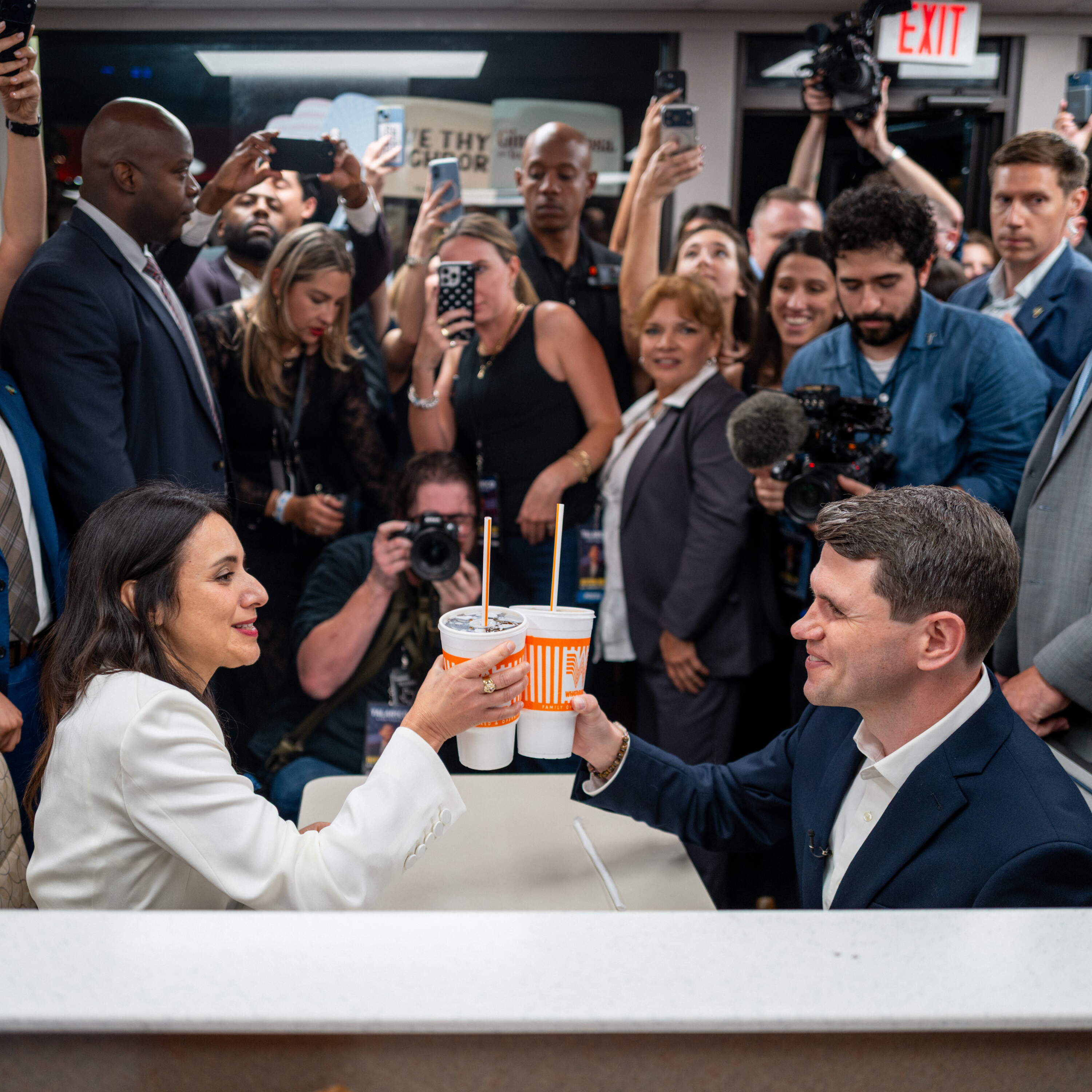
it's considered this, where every day we go deep on one big news story. Today, huge midterm wins for Democrats. Not only did they take back the US House and the Senate, but they flipped seats that were considered solidly read not so long ago, like Texas, where James Tallarico just won his Senate race. We just took back Texas. And Kansas, where Adam Hamilton just won his Senate race. In deeply red camps, the heart of America, I want us to model what it looks like when thoughtful people actually worked together to solve problems essentially about each other. Democrats also flipped a number of House seats retaking that chamber, something Republican leaders were coming to terms with last night. Here's what House Speaker Mike Johnson said Tuesday. It's only happened twice in 90 years that a sitting president has picked up or held seats for his party. And that first two year cycle. And there's a lot of reasons for it. It's very, very difficult to overcome. And it looks like history will be caps tonight. It was also a night of firsts. To name a few, Democrat Keisha Lance Bottoms won Georgia's gubernatorial race, making her the first black woman to be elected governor in the United States. Democrat Gina Inahosa became the first Latina woman to be elected as Texas governor. And New Hampshire elected the first openly gay male Senator Democrat Chris Papas. Consider this. It was a historic election night. Lots of moving parts will wrap up the big themes and ask what comes next. From NPR, I'm Nuri Luis Kelly. Stay tuned for the following announcements and messages from our sponsors. This message comes from Saatva. Big days require deep, restorative sleep the night before. The kind of sleep Saatva mattresses are designed for. And now save 15% off purchases of $100 or more at Saatva.com/NPR. This message comes from zero, a powerful platform built for small business owners that makes managing business finances easier. In fact, 91% of customers agree zero is easy to use, accounting, payments, payroll, and analytics, and one connected platform. Join 5 million customers worldwide who love using zero. Learn more at xero.com. The 91% claim is based on a 2024 zero survey conducted in the US, UK, and Australia. This message comes from Crown, publishers of Department of Fate, The Promise, The Power, and The Collapse of America's Most Consequential Institution, The New Book by Rachel Maddow, Department of Fate, available wherever books are sold. It's considered this from NPR. Unbelievable, unprecedented, stunning. Just a few of the words being used today to describe democratic victories across the country in midterm elections. So, how did they do it? And what might democratic control of Congress look like? Those are a couple of the questions I'm going to put now to NPR White House correspondent, Emily Fang, congressional reporter, Eric McDaniel, and senior political editor and correspondent, Domenico Montanaro. We've got a whole team here at Domenico. I'm going to throw you the question that I had waking up this morning. Did the Democrats win or did the Republicans lose? Yeah, it's not really an either or. Clearly, the overriding factor, though, was Donald Trump, I mean, his unpopularity, the war in Iran, rising prices, the growing gap between the Uber rich and the middle class. I mean, some $12 billion spent on this election, while other people are struggling to buy gas. All of that together created a huge backlash, maybe call it a Trump lash. Democrats, though, also did recruit very good candidates. You don't win in places like Iowa, Texas, Kansas, as Democrats without candidates who can make the most of the moment and be good fits for their states. They showed real level of authenticity that will give them a big opportunity to show what Democrats did wasn't just a big midterm asterisk. And one more to you, Domenico, because we've been talking a lot, you and I about polling these last few weeks where the polls going to work. Could we trust them? In the end, they did all right. In the end, they did do OK, you know, they pointed in the right direction. If anything, they underestimated Democratic support, but we don't know how many people decided late, you know, after when the polls had been conducted before the election, and things usually do break in one direction in midterms. It happened in 2006. It happened again in this election. Polls predicted Democrats plus eight on the generic congressional ballot. It wound up being
Transcription truncated.