ArchiveFM

Most of us would sacrifice one person to save five. It’s a pretty straightforward bit of moral math. But if we have to actually kill that person ourselves, the math gets fuzzy. That’s the lesson of the classic Trolley Problem, a moral puzzle that fried our brains in an episode we did almost 20 years ago, then updated again in 2017. Historically, the questions posed by The Trolley Problem are great for thought experimentation and conversations at a certain kind of cocktail party. Now, new technologies are forcing that moral quandary out of our philosophy departments and onto our streets. So today, we revisit the Trolley Problem and wonder how a two-ton hunk of speeding metal will make moral calculations about life and death that still baffle its creators. Special thanks to Iyad Rahwan, Edmond Awad and Sydney Levine from the Moral Machine group at MIT. Also thanks to Fiery Cushman, Matthew DeBord, Sertac Karaman, Martine Powers, Xin Xiang, and Roborace for all of their help. Thanks to the CUNY Graduate School of Journalism students who collected the vox: Chelsea Donohue, Ivan Flores, David Gentile, Maite Hernandez, Claudia Irizarry-Aponte, Comice Johnson, Richard Loria, Nivian Malik, Avery Miles, Alexandra Semenova, Kalah Siegel, Mark Suleymanov, Andee Tagle, Shaydanay Urbani, Isvett Verde and Reece Williams. EPISODE CREDITS  Reported and produced by - Amanda Aronczyk and Bethel HabteOur newsletter comes out every Wednesday. It includes short essays, recommendations, and details about other ways to interact with the show. Sign up (https://radiolab.org/newsletter)! Radiolab is supported by listeners like you. Support Radiolab by becoming a member of The Lab (https://members.radiolab.org/) today. Follow our show on Instagram, Twitter and Facebook @radiolab, and share your thoughts with us by emailing [email protected] Leadership support for Radiolab’s science programming is provided by the Gordon and Betty Moore Foundation, Science Sandbox, a Simons Foundation Initiative, and the John Templeton Foundation. Foundational support for Radiolab was provided by the Alfred P. Sloan Foundation.
Duration
42m
Broadcast on
15 Sep 2023
Audio Format
other

Most of us would sacrifice one person to save five. It’s a pretty straightforward bit of moral math. But if we have to actually kill that person ourselves, the math gets fuzzy.

That’s the lesson of the classic Trolley Problem, a moral puzzle that fried our brains in an episode we did almost 20 years ago, then updated again in 2017. Historically, the questions posed by The Trolley Problem are great for thought experimentation and conversations at a certain kind of cocktail party. Now, new technologies are forcing that moral quandary out of our philosophy departments and onto our streets.

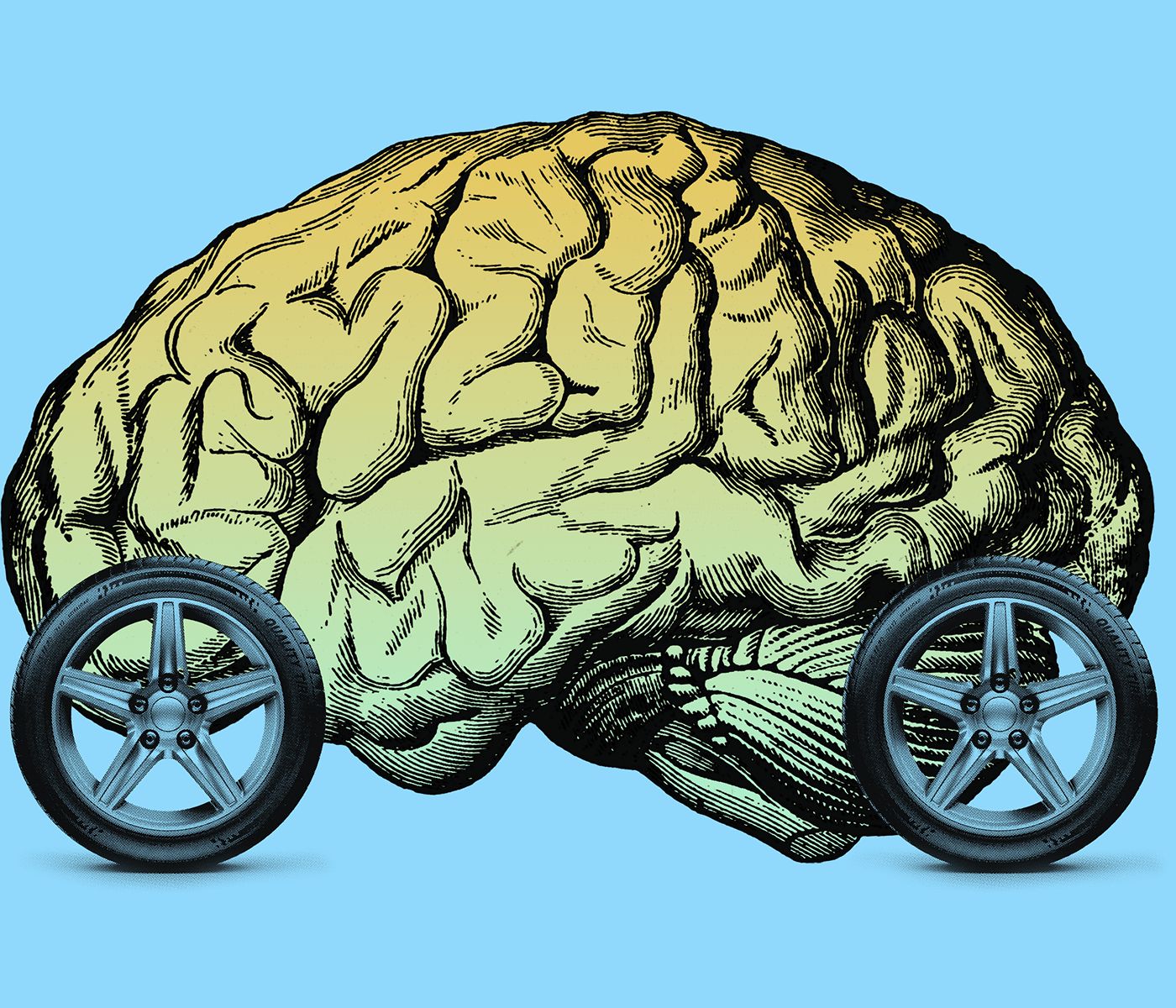
So today, we revisit the Trolley Problem and wonder how a two-ton hunk of speeding metal will make moral calculations about life and death that still baffle its creators.

Special thanks to Iyad Rahwan, Edmond Awad and Sydney Levine from the Moral Machine group at MIT. Also thanks to Fiery Cushman, Matthew DeBord, Sertac Karaman, Martine Powers, Xin Xiang, and Roborace for all of their help. Thanks to the CUNY Graduate School of Journalism students who collected the vox: Chelsea Donohue, Ivan Flores, David Gentile, Maite Hernandez, Claudia Irizarry-Aponte, Comice Johnson, Richard Loria, Nivian Malik, Avery Miles, Alexandra Semenova, Kalah Siegel, Mark Suleymanov, Andee Tagle, Shaydanay Urbani, Isvett Verde and Reece Williams.

EPISODE CREDITS 

Reported and produced by - Amanda Aronczyk and Bethel HabteOur newsletter comes out every Wednesday. It includes short essays, recommendations, and details about other ways to interact with the show. Sign up (https://radiolab.org/newsletter)!

Radiolab is supported by listeners like you. Support Radiolab by becoming a member of The Lab (https://members.radiolab.org/) today.

Follow our show on Instagram, Twitter and Facebook @radiolab, and share your thoughts with us by emailing [email protected]

Leadership support for Radiolab’s science programming is provided by the Gordon and Betty Moore Foundation, Science Sandbox, a Simons Foundation Initiative, and the John Templeton Foundation. Foundational support for Radiolab was provided by the Alfred P. Sloan Foundation.


Hosted by Simplecast, an AdsWizz company. See pcm.adswizz.com for information about our collection and use of personal data for advertising.

WNYC Studios is supported by WISE. WISE, the smart way to manage the currencies you need around the world. With a WISE account, you can send, spend, and receive in up to 40 currencies, with only a few simple taps. Be smart, get WISE. Download the WISE app today. Terms and conditions apply. WNYC Studios is supported by Odu. When you buy business software from lots of vendors, the costs add up and it gets complicated and confusing. Odu solves this. It's a single company that sells a suite of enterprise apps that handles everything from accounting to inventory to sales. Odu is all connected on a single platform in a simple and affordable way. You can save money without missing out on the features you need. Check out Odu at ODOO.com. That's ODOO.com. Hey, it's Latef.
Feels like all anyone is talking about these days is AI. We have a few new AI stories in the pipeline that I'm excited about. But in the meantime, I wanted to play you this one. It's a rerun from the old JAD and Robert days, but it's actually not just a rerun. It's a rerun embedded in another rerun, which sounds confusing, but it's actually fascinating because in addition to all the baseline interesting stuff in the episode about ethics and human nature, the experience of hearing these stacked reruns actually helps you feel the speed of technology, like how fast newfangled things become old hat, and then how despite that, despite all of that rapid technological change, how the things we all need to think about, the kind of fundamental questions that we struggle with as humans, pretty much stay the same. And that's, I don't know, that's sort of, it's kind of interesting to hear. It's pretty humbling, actually. Take a listen. I hope you enjoy this episode is called The Driverless Dilemma. Wait, wait, you're listening to Radio Lab from WNYC.
I'm Chad Abumrod. I'm Robert Krollowich, and you know what this is. It's Radio Lab. Okay, so we're going to play you a little bit of tape first just to set up what we're going to do today. About a month ago, we were doing the thing about the fake news. Yeah, we were very worried about a lot of fake news. A lot of people are, but in the middle of doing that reporting, we were talking with a fellow from Vanity Fair. My name is Nick Bilton. I'm a special correspondent for Vanity Fair. And in the course of our conversation, Nick, and this had nothing to do with what we were talking about. By the way, Nick just got into a sort of a, well, he went into a kind of a nervous reverie, I'd say. Yeah, he was like, you know, you guys want to talk about fake news, but that's not actually what's eating at me. The thing that I've been pretty obsessed with lately is actually not fake news, but it's automation and artificial intelligence and driverless cars, because it's going to have a larger effect on society than any technology that I think has ever been created in the history of mankind. I know that's kind of a bold statement, but you've got to imagine that that there will be in the next 10 years, 20 to 50 million jobs that will just vanish to automation. You've got million truckers that will lose their jobs. But it's not, we think about like automation and driverless cars, and we think about the fact that they are going to, the people that

Transcription truncated.

Most of us would sacrifice one person to save five. It’s a pretty straightforward bit of moral math. But if we have to actually kill that person ourselves, the math gets fuzzy. That’s the lesson of the classic Trolley Problem, a moral puzzle that fried our brains in an episode we did almost 20 years ago, then updated again in 2017. Historically, the questions posed by The Trolley Problem are great for thought experimentation and conversations at a certain kind of cocktail party. Now, new technologies are forcing that moral quandary out of our philosophy departments and onto our streets. So today, we revisit the Trolley Problem and wonder how a two-ton hunk of speeding metal will make moral calculations about life and death that still baffle its creators. Special thanks to Iyad Rahwan, Edmond Awad and Sydney Levine from the Moral Machine group at MIT. Also thanks to Fiery Cushman, Matthew DeBord, Sertac Karaman, Martine Powers, Xin Xiang, and Roborace for all of their help. Thanks to the CUNY Graduate School of Journalism students who collected the vox: Chelsea Donohue, Ivan Flores, David Gentile, Maite Hernandez, Claudia Irizarry-Aponte, Comice Johnson, Richard Loria, Nivian Malik, Avery Miles, Alexandra Semenova, Kalah Siegel, Mark Suleymanov, Andee Tagle, Shaydanay Urbani, Isvett Verde and Reece Williams. EPISODE CREDITS  Reported and produced by - Amanda Aronczyk and Bethel HabteOur newsletter comes out every Wednesday. It includes short essays, recommendations, and details about other ways to interact with the show. Sign up (https://radiolab.org/newsletter)! Radiolab is supported by listeners like you. Support Radiolab by becoming a member of The Lab (https://members.radiolab.org/) today. Follow our show on Instagram, Twitter and Facebook @radiolab, and share your thoughts with us by emailing [email protected] Leadership support for Radiolab’s science programming is provided by the Gordon and Betty Moore Foundation, Science Sandbox, a Simons Foundation Initiative, and the John Templeton Foundation. Foundational support for Radiolab was provided by the Alfred P. Sloan Foundation.