ArchiveFM

In online news, stories live forever. The tipsy photograph of you at the college football game? It’s there. That news article about the political rally you were marching at? It’s there. A charge for driving under the influence? That’s there, too. But what if... it wasn’t? Several years ago a group of journalists in Cleveland, Ohio, tried an experiment that had the potential to turn things upside down: they started unpublishing content they’d already published. Photographs, names, entire articles. Every month or so, they met to decide what content stayed, and what content went. In this episode from 2019, Senior Correspondent Molly Webster takes us inside the room where the editors decided who, or what, got to be deleted. And we talk about how the “right to be forgotten” has spread and grown in the years since. It’s a story about time and memory, mistakes and second chances, and society as we know it. Our newsletter comes out every Wednesday. It includes short essays, recommendations, and details about other ways to interact with the show. Sign up (https://radiolab.org/newsletter)! Radiolab is supported by listeners like you. Support Radiolab by becoming a member of The Lab (https://members.radiolab.org/) today.Follow our show on Instagram, Twitter and Facebook @radiolab, and share your thoughts with us by emailing [email protected] Leadership support for Radiolab’s science programming is provided by the Gordon and Betty Moore Foundation, Science Sandbox, a Simons Foundation Initiative, and the John
Duration
55m
Broadcast on
04 Aug 2023
Audio Format
other

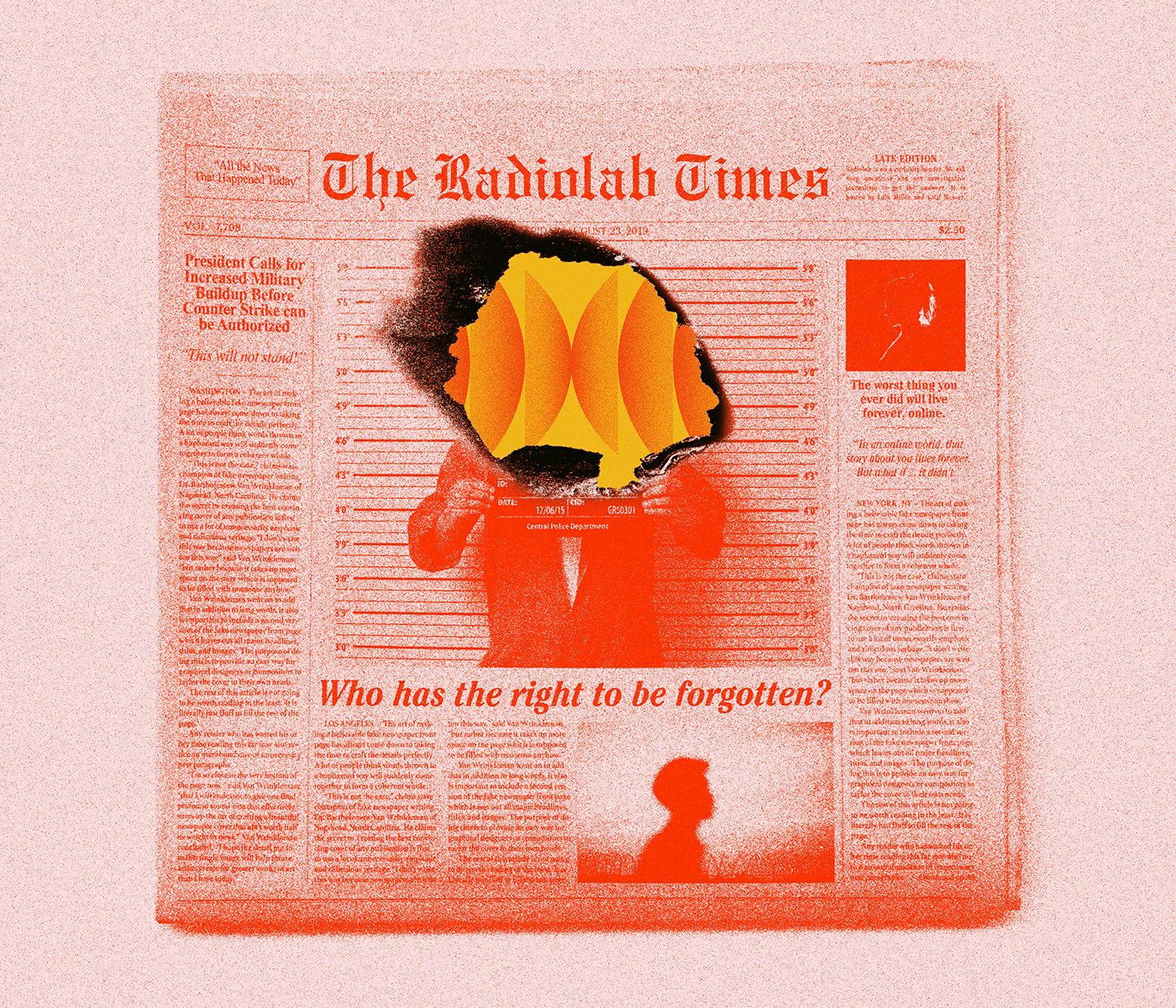
In online news, stories live forever. The tipsy photograph of you at the college football game? It’s there. That news article about the political rally you were marching at? It’s there. A charge for driving under the influence? That’s there, too. But what if... it wasn’t?

Several years ago a group of journalists in Cleveland, Ohio, tried an experiment that had the potential to turn things upside down: they started unpublishing content they’d already published. Photographs, names, entire articles. Every month or so, they met to decide what content stayed, and what content went. In this episode from 2019, Senior Correspondent Molly Webster takes us inside the room where the editors decided who, or what, got to be deleted. And we talk about how the “right to be forgotten” has spread and grown in the years since. It’s a story about time and memory, mistakes and second chances, and society as we know it.

Our newsletter comes out every Wednesday. It includes short essays, recommendations, and details about other ways to interact with the show. Sign up (https://radiolab.org/newsletter)!

Radiolab is supported by listeners like you. Support Radiolab by becoming a member of The Lab (https://members.radiolab.org/) today.Follow our show on Instagram, Twitter and Facebook @radiolab, and share your thoughts with us by emailing [email protected]

Leadership support for Radiolab’s science programming is provided by the Gordon and Betty Moore Foundation, Science Sandbox, a Simons Foundation Initiative, and the John


Hosted by Simplecast, an AdsWizz company. See pcm.adswizz.com for information about our collection and use of personal data for advertising.

(air whooshing) RadioLab is supported by AT&T. We all love to connect via video, a text, or a group chat that never stops. And right now, AT&T has a deal that will keep the connection going. You can get the new iPhone 18 Pro for $0 with eligible trade-in. It has the Ultimate Pro camera system and a big leap in battery life, so you can turn this deal into a long lasting connection. Learn how you can trade in your phone for the new iPhone 18 Pro at AT&T. Connecting changes everything. Required trade-in of $230 or more and eligible plan, terms, and restrictions apply, subject to change, visit an AT&T store for details. - Hey, this is RadioLab, I'm Soren Wheeler. I'm sitting in today for Lulu and Latif because I have a show that I wanna look back on. A little rewind into our past, something we do every other week, which means that some of you may have already heard this one, but not to fear, we'll be back with brand spanking new content next week. And also this is a really good story, and it's one that feels to me as relevant, if not more relevant today than it was when we heard it. And on top of that, at the end of the show, I will have an update from our senior correspondent, Molly Webster, who reported this piece and together with our former producer, Bethal Hapte, put it together. Anyway, the show is called The Right to Be Forgotten, originally released in 2019. And what you'll hear is Molly telling the story to our host at the time, Chad, Adam Rob. - Yeah, wait, wait, you're listening. - Okay. - All right. - Okay. - All right. - You're listening to RadioLab. - RadioLab. - From. - WNYC. - Hey. - Yeah. - Rewind. - All right, here's a good one. His, this is a guy whose murder conviction overturned, but he shot and killed somebody.

Transcription truncated.

In online news, stories live forever. The tipsy photograph of you at the college football game? It’s there. That news article about the political rally you were marching at? It’s there. A charge for driving under the influence? That’s there, too. But what if... it wasn’t? Several years ago a group of journalists in Cleveland, Ohio, tried an experiment that had the potential to turn things upside down: they started unpublishing content they’d already published. Photographs, names, entire articles. Every month or so, they met to decide what content stayed, and what content went. In this episode from 2019, Senior Correspondent Molly Webster takes us inside the room where the editors decided who, or what, got to be deleted. And we talk about how the “right to be forgotten” has spread and grown in the years since. It’s a story about time and memory, mistakes and second chances, and society as we know it. Our newsletter comes out every Wednesday. It includes short essays, recommendations, and details about other ways to interact with the show. Sign up (https://radiolab.org/newsletter)! Radiolab is supported by listeners like you. Support Radiolab by becoming a member of The Lab (https://members.radiolab.org/) today.Follow our show on Instagram, Twitter and Facebook @radiolab, and share your thoughts with us by emailing [email protected] Leadership support for Radiolab’s science programming is provided by the Gordon and Betty Moore Foundation, Science Sandbox, a Simons Foundation Initiative, and the John