ArchiveFM

Since the beginning of the space program, we’ve expected astronauts to be fully-abled athletic overachievers—one-part science geeks, two-part triathletes—a mix the writer Tom Wolfe called “the right stuff.” But what if, this whole time, we’ve had it wrong? In this episode from 2022, reporter Andrew Leland joins blind Linguistics Professor Sheri Wells-Jensen and a crew of 11 other disabled people. They embark on a mission to prove not just that they have what it takes to go to space, but that disability gives them an edge. On Mission AstroAccess, the crew members hop on an airplane to take a zero-gravity flight—the same NASA uses to train astronauts. With them, we learn that the challenges to making space accessible may not be the ones we thought. And Andrew, who is legally blind, confronts unexpected conclusions of his own. By the way, Andrew’s new book is out. In The Country of the Blind: A Memoir at the End of Sight (https://zpr.io/nLZ8H), Andrew recounts his transition from sighted to blind. Suspended between anxiety and anticipation, he also begins to explore the many facets of blindness as a culture. It’s well worth a read.  Read the article by Sheri Wells-Jensen, published in The Scientific American in 2018. “The Case for Disabled Astronaut” (https://zpr.io/nLZ8H).  This episode was reported by Andrew Leland and produced by María Paz Gutiérrez, Matt Kielty and Pat Walters. Jeremy Bloom contributed music and sound design. Production sound recording by Dan McCoy.Special thanks to William Pomerantz, Sheyna Gifford, Jim Vanderploeg, Tim Bailey, and Bill Barry Our newsletter comes out every Wednesday. It includes short essays, recommendations, and details about other ways to interact with the show. Sign up (https://radiolab.org/newsletter)! Radiolab is supported by listeners like you. Support Radiolab by becoming a member of The Lab (https://members.radiolab.org/) today.   Follow our show on Instagram, Twitter and Facebook @radiolab, and share your thoughts with us by emailing [email protected] support for Radiolab’s science programming is provided by the Gordon and Betty Moore Foundation, Science Sandbox, a Simons Foundation Initiative, and the John Templeton Foundation. Foundational support for Radiolab was provided by the Alfred P. Sloan Foundation.
Duration
41m
Broadcast on
21 Jul 2023
Audio Format
other

Since the beginning of the space program, we’ve expected astronauts to be fully-abled athletic overachievers—one-part science geeks, two-part triathletes—a mix the writer Tom Wolfe called “the right stuff.”

But what if, this whole time, we’ve had it wrong?

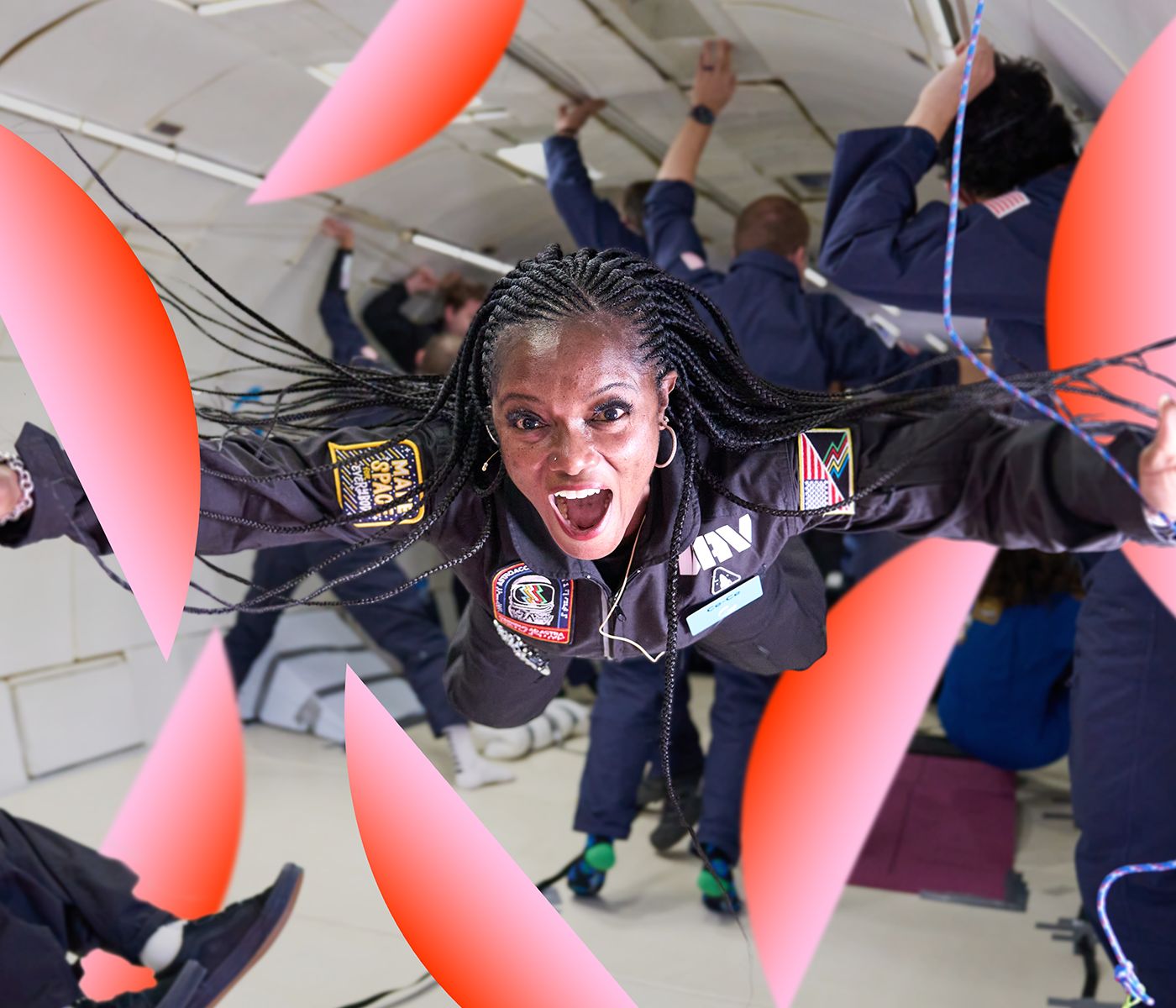
In this episode from 2022, reporter Andrew Leland joins blind Linguistics Professor Sheri Wells-Jensen and a crew of 11 other disabled people. They embark on a mission to prove not just that they have what it takes to go to space, but that disability gives them an edge. On Mission AstroAccess, the crew members hop on an airplane to take a zero-gravity flight—the same NASA uses to train astronauts. With them, we learn that the challenges to making space accessible may not be the ones we thought. And Andrew, who is legally blind, confronts unexpected conclusions of his own.

By the way, Andrew’s new book is out. In The Country of the Blind: A Memoir at the End of Sight (https://zpr.io/nLZ8H), Andrew recounts his transition from sighted to blind. Suspended between anxiety and anticipation, he also begins to explore the many facets of blindness as a culture. It’s well worth a read. 

Read the article by Sheri Wells-Jensen, published in The Scientific American in 2018. “The Case for Disabled Astronaut” (https://zpr.io/nLZ8H). 

This episode was reported by Andrew Leland and produced by María Paz Gutiérrez, Matt Kielty and Pat Walters. Jeremy Bloom contributed music and sound design. Production sound recording by Dan McCoy.Special thanks to William Pomerantz, Sheyna Gifford, Jim Vanderploeg, Tim Bailey, and Bill Barry

Our newsletter comes out every Wednesday. It includes short essays, recommendations, and details about other ways to interact with the show. Sign up (https://radiolab.org/newsletter)!

Radiolab is supported by listeners like you. Support Radiolab by becoming a member of The Lab (https://members.radiolab.org/) today.


Follow our show on Instagram, Twitter and Facebook @radiolab, and share your thoughts with us by emailing [email protected]Leadership support for Radiolab’s science programming is provided by the Gordon and Betty Moore Foundation, Science Sandbox, a Simons Foundation Initiative, and the John Templeton Foundation. Foundational support for Radiolab was provided by the Alfred P. Sloan Foundation.


Hosted by Simplecast, an AdsWizz company. See pcm.adswizz.com for information about our collection and use of personal data for advertising.

Hello, I'm Louis Miller today, we are going back into the past with a freaking awesome rerun That'll take us all into the future. Hope you enjoy Listening to radio lab radio from WNY Hey Hey, I'm Lotif Nasser. I'm Louis Miller. This is radio lab And today we're gonna start. All right, here we go with reporter Andrew Leeland I'm just gonna hold my mic like I'm doing a karaoke. Where are you on on planet Earth? Where are you doing karaoke from? I'm in Long Beach, California All right, so now I'm just gonna wander around talking to people gathering gathering at all at a place Called the FBO which is like a tiny private airport just one building sitting on a giant tarmac And so I walk into the building through these sliding glass doors and It's this big bright room with a fish tank in it and these fancy chairs and it's full. Hi guys Of people. Good. There is film crew. How are you today? There's some family members Diana can I come in and linger always linger and a whole place is just sort of a buzz How's the team has the team feeling? You seem good because today is after months of preparation flight day It's this training flight for potential astronauts to experience near zero gravity and so scattered about the room Are these people wearing with the with the jumpsuit these jumpsuits these flight suits? How you feeling? Got your ticket? Got my boarding car. Got your flight suit. You're ready to rock. You're on a rock and roll Some of them look nervous some of them. So we're gonna play a game of cards. All right a little table And these people are the people who everybody's here to see they're known as the ambassadors So you're one of the ambassadors. I should say that I was also wearing a flight suit. No That's why I'm confused. Okay. I'm not I'm okay, but you could be I could be because technically I'm Disabled okay. Take it away. I'm still arranging the deck. Don't worry. I'm not fixing it. That's a braille deck We're really excited. This is the blind crew because what this flight day is is Essentially an experiment. We're gonna head for the plane. Okay. Let's do it this first step to see what would happen if disabled people were to go to space You ready to rock? Oh, you got it. Thanks man. You think you're flying today. And so these ambassadors Are all people with disabilities? There are blind people. What the hell are we doing? Oh my god. Death people. What my first recorded words be? What the hell are we doing? Oh my god. People who use wheelchairs People who have prosthetics who are here to be a part of this experiment. Go on now. Yeah, sure. That's good And I was there To simply report on it Basically, I was there to go on this flight as a journalist But it's you know, there is I'm coming at it from an angle that I'm interested personally So Andrew is a writer that we've long admired here at the show and it was a few months ago that he told us about this effort to get disabled people into space that was just in its kind of early experimental phase and he really wanted to go he really wanted to be a part of it and observe it because what they were really up to seem to be wrapped up in things he thinks about a lot stuff I think about all the time which is namely What does disability mean and how does the world look at disability and how does that view need to change? Well outer space is not the obvious place I would go to for that to answer that question. I think I'm with you. Well, he maybe Maybe just explain like what were the steps that brought you to Long Beach to get on this fight thing you're on so I'm legally blind and I'm getting blinder at a very slow rate and I've been writing and thinking about disability and in particular blindness a lot more intensively in the last couple years as

Transcription truncated.

Since the beginning of the space program, we’ve expected astronauts to be fully-abled athletic overachievers—one-part science geeks, two-part triathletes—a mix the writer Tom Wolfe called “the right stuff.” But what if, this whole time, we’ve had it wrong? In this episode from 2022, reporter Andrew Leland joins blind Linguistics Professor Sheri Wells-Jensen and a crew of 11 other disabled people. They embark on a mission to prove not just that they have what it takes to go to space, but that disability gives them an edge. On Mission AstroAccess, the crew members hop on an airplane to take a zero-gravity flight—the same NASA uses to train astronauts. With them, we learn that the challenges to making space accessible may not be the ones we thought. And Andrew, who is legally blind, confronts unexpected conclusions of his own. By the way, Andrew’s new book is out. In The Country of the Blind: A Memoir at the End of Sight (https://zpr.io/nLZ8H), Andrew recounts his transition from sighted to blind. Suspended between anxiety and anticipation, he also begins to explore the many facets of blindness as a culture. It’s well worth a read.  Read the article by Sheri Wells-Jensen, published in The Scientific American in 2018. “The Case for Disabled Astronaut” (https://zpr.io/nLZ8H).  This episode was reported by Andrew Leland and produced by María Paz Gutiérrez, Matt Kielty and Pat Walters. Jeremy Bloom contributed music and sound design. Production sound recording by Dan McCoy.Special thanks to William Pomerantz, Sheyna Gifford, Jim Vanderploeg, Tim Bailey, and Bill Barry Our newsletter comes out every Wednesday. It includes short essays, recommendations, and details about other ways to interact with the show. Sign up (https://radiolab.org/newsletter)! Radiolab is supported by listeners like you. Support Radiolab by becoming a member of The Lab (https://members.radiolab.org/) today.   Follow our show on Instagram, Twitter and Facebook @radiolab, and share your thoughts with us by emailing [email protected] support for Radiolab’s science programming is provided by the Gordon and Betty Moore Foundation, Science Sandbox, a Simons Foundation Initiative, and the John Templeton Foundation. Foundational support for Radiolab was provided by the Alfred P. Sloan Foundation.